
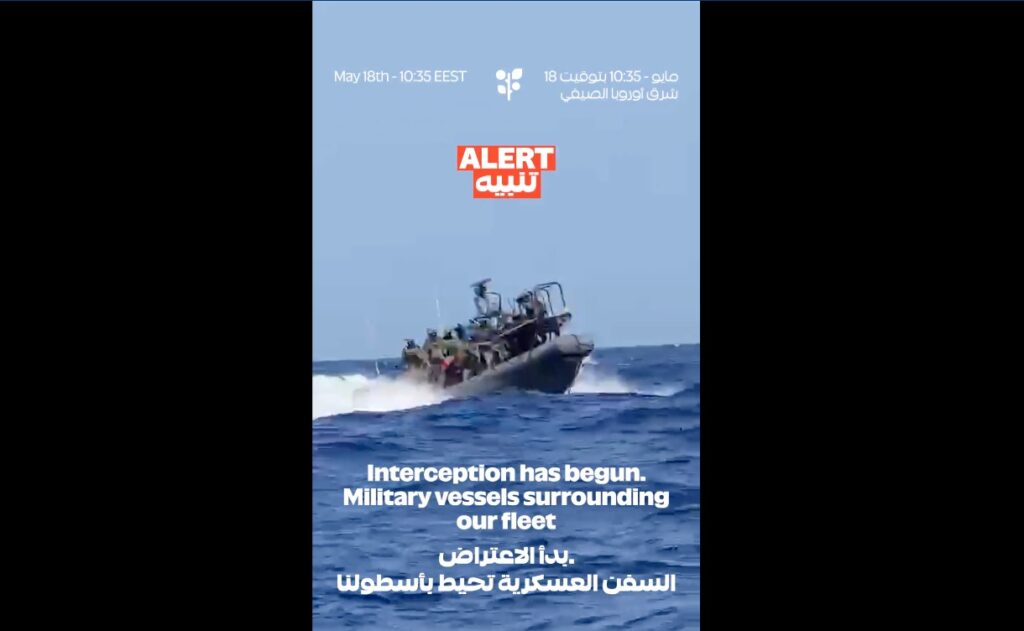
A new international ‘Flotilla for Gaza’ was intercepted by the Israeli military off the coast of Cyprus on Monday. According to the organizers, this fleet consisted of about 50 vessels that departed from Turkey last week. This action symbolically reflects the international division surrounding the Gaza war and the long-controversial Israeli naval blockade of the Gaza Strip.
The organizers of the ‘Global Sumud’ initiative reported on Platform X that Israeli warships intercepted the flotilla and began boarding some vessels. Activists described their mission as ‘legal, humanitarian, and nonviolent,’ demanding safe passage to the Gaza Strip.
Israel responded harshly as expected. Just before the interception, the Foreign Ministry declared that the Jewish state ‘will not allow violations of the legitimate naval blockade of the Gaza Strip.’ It requested all participants to change course and turn back.
Symbolic Politics with International Impact
The flotilla actions have held high symbolic significance in the Middle East conflict for years. In 2010, an Israeli special forces raid on the ‘Mavi Marmara’ caused an international crisis. At that time, 10 Turkish activists were killed, severely damaging relations between Ankara and Jerusalem.
The current actions are also deliberately connected to this tradition. The organizers aim to increase pressure on Israel through international attention while simultaneously drawing attention to the humanitarian situation in the Gaza Strip. Since the war began after the Hamas attack on October 7, 2023, the supply situation of essentials in Gaza has become a central issue in international diplomacy.
Relief organizations have been warning for months that living conditions will deteriorate dramatically. In particular, the supply situation for medicines, fuel, and food is considered critical. Israel, on the other hand, argues that maritime control is necessary to block weapons supplies to Hamas and other armed groups.
Legal Controversy of the Blockade
The core of the debate is the international legal legitimacy of Israel’s maritime blockade. Israel claims the blockade is a legitimate security measure based on international maritime law in response to armed conflict with Hamas.
Critics accuse the blockade of effectively constituting collective punishment of civilians. International human rights organizations and various UN representatives have repeatedly criticized the restrictive measures. The legal situation is complex: states are generally permitted to impose naval blockades during armed conflict but must adhere to the principle of proportionality and allow humanitarian aid.
The flotilla movement has been trying for years to politically highlight this legally ambiguous issue. Activists define themselves as agents of international civil resistance, while Israel regards this as a deliberate provocation with the potential to significantly escalate tensions.
Ankara between Solidarity and Geopolitical Calculations
The fact that the flotilla has set sail again from Turkey carries significant political symbolism. President Recep Tayyip Erdoğan has been one of the critics of Israel’s Gaza policy for years and has portrayed himself as a defender of Palestine in both domestic and international politics.
However, Ankara is increasingly pursuing a pragmatic foreign policy. Despite tough rhetoric, diplomatic relations with Israel have been gradually normalized in recent years. Economic interests, Eastern Mediterranean energy issues, and the strategic role of the United States require both countries to maintain a cautious balance.
If this flotilla operation leads to violence or the arrest of international activists, it could put pressure on this delicate approach.
Europe’s Limited Influence
The European Union is increasingly concerned about the situation but remains politically divided. Some member states advocate for increased pressure on Israel, while others emphasize Israel’s right to self-defense.
Cyprus is increasingly taking on a geopolitically sensitive role. This island nation is hundreds of kilometers away from Gaza and often serves as a logistics hub for escape and humanitarian aid following the outbreak of conflict.
The fact that the flotilla was already intercepted off the coast of Cyprus clearly demonstrates the operational reach of the Israeli navy and the Jerusalem government’s determination to prevent attempts to break the blockade early.
This incident shows how the Gaza war is having a much broader impact beyond a mere regional conflict. The military confrontation between Israel and Hamas has evolved into a global political issue intricately tied to humanitarian issues, international law, and geopolitical power interests. While actions like the new Gaza flotilla do not drastically change the strategic realities on the ground, they contribute to maintaining public diplomatic pressure on Israel in the international community and clearly demonstrate how difficult a political resolution to the current conflict is.