
Franco-Algerian relations have developed an unusual volatility in recent years. Rarely does another bilateral relationship in the Mediterranean oscillate so much between historical closeness, strategic necessity, and open political confrontation. The decision by both states on May 18, 2026, to resume judicial cooperation after about two years of de facto suspension is therefore more than just a simple technical administrative act. It marks an attempt to avoid total diplomatic damage – without, however, resolving the underlying political conflicts.
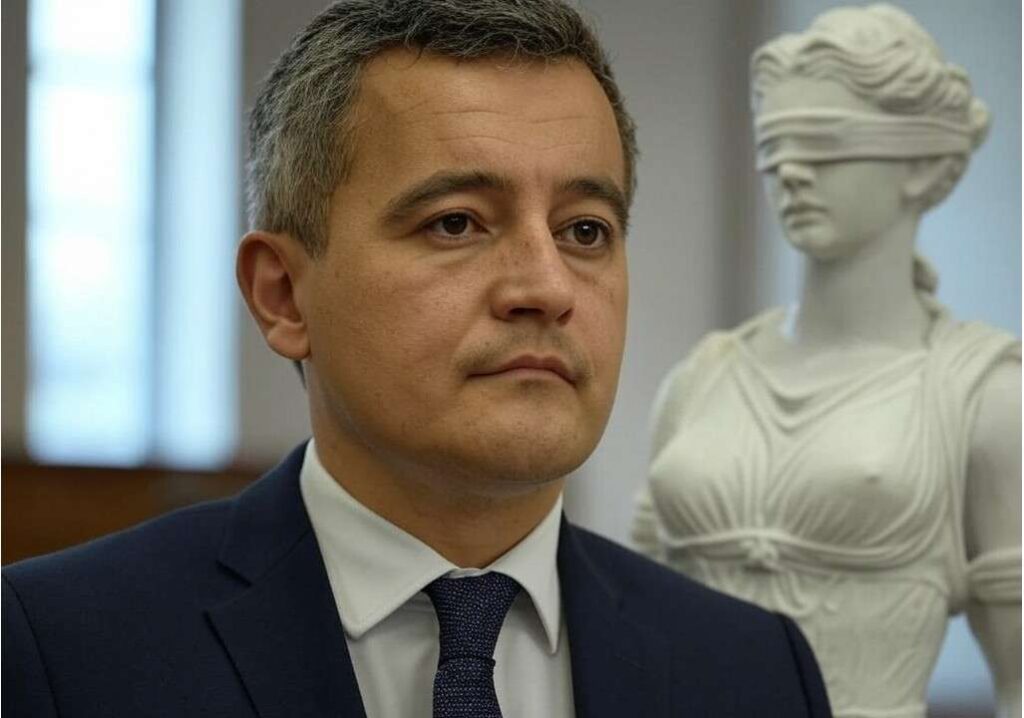
During his visit to Algiers, the French Minister of Justice Gérald Darmanin spoke together with his Algerian counterpart Lotfi Boudjemaa about a “concrete resumption” of operational cooperation. Behind this sober formulation lies a sensitive dossier. Investigations into organized crime, prison cooperation issues, mutual legal assistance procedures, and procedures concerning the so-called “ill-gotten gains,” i.e., assets presumably acquired illegally by foreign elites, are involved.
Above all, however, one case clouds this new rapprochement: that of the French journalist Christophe Gleizes, sentenced in Algeria to seven years’ imprisonment for alleged “apology for terrorism.” In Paris, the trial is considered politically motivated; in Algiers, it is defended as an expression of national sovereignty.
A relationship under permanent stress
The crisis between France and Algeria has gradually worsened since 2024. Among the causes was also the changed French position on the Western Sahara issue. Paris had expressed its support for the Moroccan autonomy plan more clearly – a step perceived in Algiers as a strategic provocation. Algeria has considered the Polisario the legitimate representative of the Sahrawi independence movement for decades and views Moroccan control over Western Sahara with extreme skepticism.
This was compounded by reciprocal expulsions of diplomats, restrictions on visa procedures, and a near-frozen political dialogue. However, the suspension of practical collaborations between judicial authorities had a particularly severe impact. Investigation requests went unanswered, extradition procedures stalled, and information was no longer exchanged systematically.
Thus, a problem beyond symbolic politics arose for both states. Despite all the tensions, France and Algeria are closely intertwined in terms of security. Millions of people have family or economic ties on both sides of the Mediterranean. Criminal networks operate transnationally; money laundering, human trafficking, drug routes, and Islamist environments cannot be controlled with tense diplomacy alone.
Precisely for this reason, the resumption of cooperation has a strongly pragmatic character. Neither Paris nor Algiers can afford in the long term to completely break off communication between judicial and security apparatuses.
The limits of the thaw
However, it cannot be said that there is a true reconciliation. Mutual distrust remains deep. In France, political polarization towards Algeria has been growing for years. Right-wing and conservative forces regularly accuse Algiers of poor cooperation in the repatriation of Algerian citizens subject to expulsion. At the same time, colonial history remains a constant source of conflict. Issues of historical responsibility, memory politics, and reparations regularly reappear on the diplomatic agenda.
Also in Algeria, France is a highly sensitive internal topic. Parts of the political establishment continue to use anti-colonial narratives for internal mobilization. France is often used as a mirror for social tensions and economic frustrations. Any rapprochement with Paris is therefore carefully calibrated so as not to be interpreted as a sign of political weakness.
The current resumption of judicial cooperation thus follows less a new basis of political trust and more a logic of functional necessity. Both governments seek to separate operational collaboration from ideological and historical conflicts. It remains to be seen whether this will succeed in the long term.
Christophe Gleizes as a political test case
This ambivalence is particularly evident in the case of Christophe Gleizes. For France, the journalist is now much more than an isolated consular case. His conviction is increasingly becoming a symbol of the limits of the announced thaw.
Paris will hardly be willing to politically legitimize the rapprochement without progress in this matter. At the same time, it is likely that in Algiers there is little interest in yielding under French pressure. Authoritarian regimes react sensitively to external attempts to influence justice because they directly affect state sovereignty.
Thus, the case takes on a strategic dimension. If in the coming months there were consular facilitation, a reduction of the sentence, or even a solution through humanitarian channels, this could be interpreted as a sign of a serious thaw. If, on the other hand, Gleizes remained in prison and media attention increased in France, the current rapprochement could quickly erode.
Security interests prevail
Despite political tensions, important geopolitical reasons push toward a limited stabilization of relations. Algeria remains a central actor for France in North Africa and the Sahel region. After the political changes in Mali, Niger, and Burkina Faso, Paris has significantly lost influence. Meanwhile, the presence of Russia, China, and regional powers is growing.
Algeria, in turn, seeks room for maneuver in foreign policy within an increasingly multipolar world order. The country tries to consolidate its role as a regional mediator and strategically leverage energy exports. Europe remains an indispensable partner – especially given Europe’s desire to diversify energy sources.
Then there is the migration issue. France requires cooperation in repatriations and consular procedures; Algeria, on the other hand, is interested in visa facilitation and economic collaborations. Judicial cooperation is therefore part of a broader political exchange in which security, migration, energy, and diplomacy are closely linked.
Pragmatism instead of trust
The true significance of the latest development lies less in the symbolic gesture than in its practical sustainability. It will be crucial to verify whether the announced cooperation will actually work: will requests for judicial assistance be answered? Will there be new joint investigations? Will information channels between prosecutors and security services become reliable again? Will extraditions or transfers of detainees be carried out?
Only through these concrete mechanisms can it be judged whether relations between Paris and Algiers will enter a more stable phase or only experience a tactical pause. The history of both states is full of diplomatic restarts that only rarely turned back into mistrust and confrontation after a few months.
The current moment therefore primarily suggests a sober recognition: even the most troubled states cannot afford to live in an interconnected security order without functioning judicial cooperation. However, pragmatism does not replace trust. And it is precisely here that the structural fragility of Franco-Algerian relations lies.