
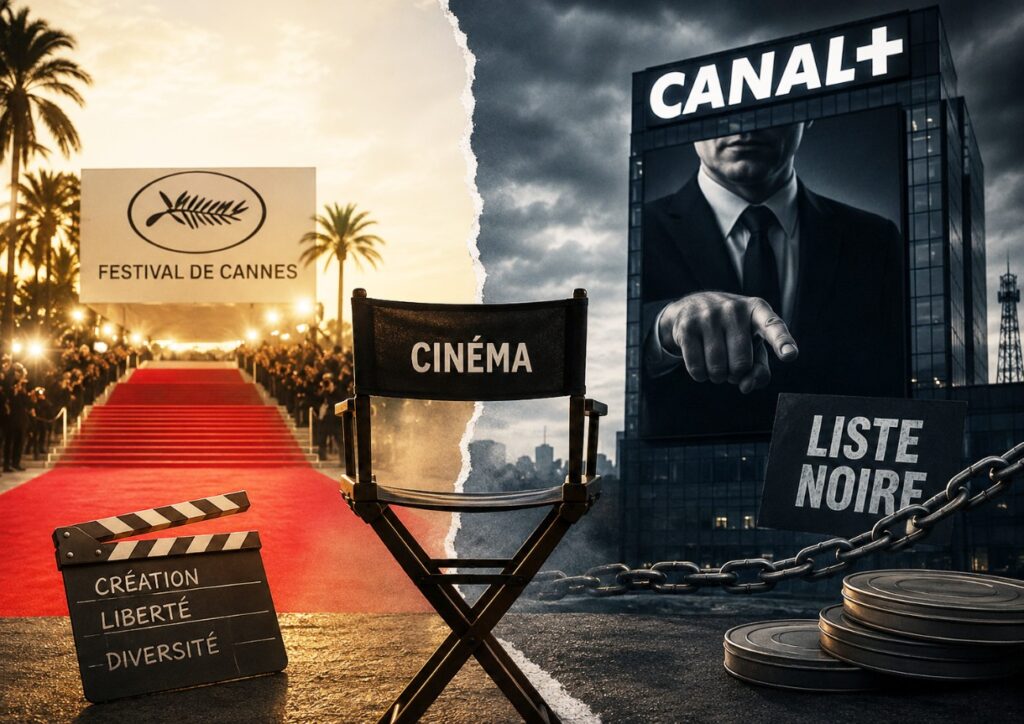
On the Croisette, cameras glitter, designer gowns sweep over red carpets, champagne flows in streams — and yet this year a peculiar heaviness hangs over the Cannes Film Festival. Instead of golden palms, major directorial debuts, or the next sensation from Hollywood, the industry suddenly speaks of boycott, political influence, and the limits of freedom of expression.
Precisely where France traditionally celebrates its cinema like a national art religion, an open cultural conflict has erupted.
At the center of the affair is Canal+ chief Maxime Saada. His announcement hit the French film world like a thunderclap. Going forward, he explained in Cannes, Canal+ would no longer collaborate with filmmakers who had signed an anti-Bolloré platform. Around 600 actors, producers, and directors had previously publicly opposed the growing influence of media entrepreneur Vincent Bolloré.
Suddenly, a question arose that seems almost sacred in France: Should economic power decide who is still allowed to participate in cinema?
The conflict goes far beyond a simple dispute between artists and a television channel. Canal+ holds a position in the French film system that cannot be overstated. For decades, the channel has financed a significant portion of domestic productions. Many films exist only because of these investments. Those who lose access quickly lose visibility, funding, and reach. In the industry, a word is already circulating—one typically known from darker political times: blacklist.
This is exactly what is causing nervousness.
Because France does not understand its cinema simply as an entertainment industry. Film is considered the cultural backbone of the country — a space for dissent, diversity, and creative freedom. This idea is almost part of the republican DNA. If political positioning might now have professional consequences, many filmmakers see this as a taboo break.
The trigger was a statement published in the newspaper Libération. In it, prominent signatories warned against the increasing concentration of media power around Vincent Bolloré. For years, critics have accused his media empire of shifting political and social debates increasingly to the right. The strong networking of TV channels, publishers, and production structures in particular causes unease among many cultural creators.
That Cannes of all places is now the stage for this confrontation is almost symbolic.
Between luxury yachts and flashbulbs, the other side of the French cultural industry suddenly appears — rough, politicized, and quite tense. Behind the scenes, producers now talk less about scripts and more about power relations. Some already speak of American-style dynamics, others of a dangerous overreaction. Still others just shrug and say, “That was predictable a long time ago.”
It all sounds a bit like a family dispute at Sunday dinner — only with multi-million budgets and national significance.
Even the president of the French film funding center CNC has already sought to calm the situation. The statements from Canal+ might have been an emotional reaction, he said cautiously. But even this diplomatic wording shows how delicate the situation has become.
Because behind the debate lies a bigger question: Who owns France’s cultural narrative? The artists? The media corporations? Or those who finance both?
This year, Cannes offers no simple answer. Instead, the world’s most famous film festival is turning into a political laboratory for France — with an open outcome.
By C. Hatty