
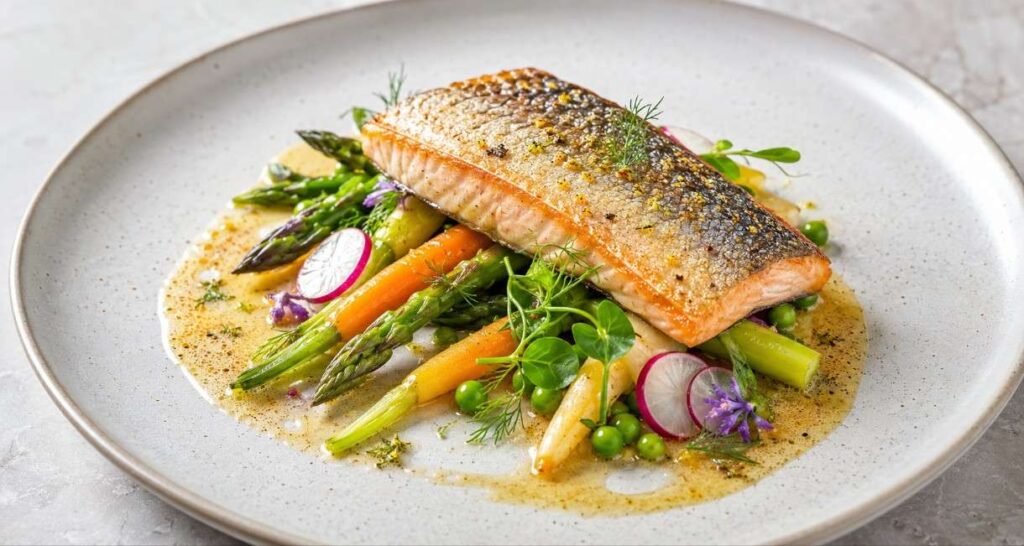
Modern French Spring Cuisine Between Elegance and Lightness
Modern French cuisine thrives on clarity, craftsmanship, and respectful handling of high-quality ingredients. Instead of heavy sauces and opulent garnishes, the focus today is on fine aromas, seasonal ingredients, and balanced compositions. A dish like char with fennel pollen, beurre noisette, and spring vegetables embodies this style in an especially elegant way.
The char brings a delicate, almost nutty aroma and has a tender texture that harmonizes wonderfully with the warm depth of a classic beurre noisette. Fennel pollen provides a subtle anise-like spice that refines the fish without overpowering it. Accompanying it are young spring vegetables like green asparagus, peas, small carrots, and radishes, which bring freshness, color, and lightness to the plate.
This dish is ideal as a festive main course for a spring or Pentecost menu, combining French culinary tradition with modern sophistication.
The Concept Behind the Dish
The special appeal of this dish lies in the play of roasted aromas, freshness, and texture.
Beurre noisette – French for “brown butter” – is created by gently browning butter. During this process, the milk proteins caramelize and develop intense flavors of hazelnut and warm brioche. This classic French preparation pairs wonderfully with fish.
Fennel pollen is considered one of the finest spice rarities of Mediterranean cuisine. Its scent recalls fennel, anise, citrus, and blossom honey. Even small amounts impart the char with elegant aromatic depth.
The spring vegetables bring balance to the dish: light sweetness, crisp textures, and natural freshness.
Recipe: Char with Fennel Pollen, Beurre Noisette, and Spring Vegetables
Ingredients for 4 people
For the Char
- 4 char fillets with skin, approx. 160–180 g each
- 1 tsp fennel pollen
- Fleur de Sel
- white pepper
- 1 tbsp olive oil
For the Beurre Noisette
- 150 g butter
- 1 small sprig of thyme
- 1 lightly crushed garlic clove
- a few drops of lemon juice
For the Spring Vegetables
- 8 green asparagus spears
- 100 g young peas
- 8 small baby carrots
- 6 radishes
- 1 small shallot
- 1 tbsp butter
- 50 ml vegetable stock
- salt
- white pepper
For Garnish
- young herbs, such as chervil or dill
- some lemon zest
- some edible flowers as desired
Preparing the Ingredients
Preparing the Vegetables
Peel the carrots and leave a bit of greens on them. Peel the bottom third of the green asparagus and remove the ends. Halve or thinly slice the radishes. Blanch the peas briefly.
Finely dice the shallot.
Making the Beurre Noisette
Slowly heat the butter in a small pot. Once it starts foaming, add the thyme and garlic clove.
Continue to simmer the butter until golden brown particles form at the bottom and a nutty aroma arises. Attention is crucial: the butter should turn golden brown, not burn.
Then strain through a fine sieve and season with a few drops of lemon juice. Keep warm.
The finished beurre noisette has a deep golden color and an intense aroma of roasted nuts and caramelized butter.
Glazing the Spring Vegetables
Sauté the shallot cubes in butter until translucent. Add the carrots and briefly sauté. Deglaze with vegetable stock and reduce slightly.
Add the asparagus and peas and cook for only a few minutes to retain freshness and texture.
Finally, fold in the radishes and season everything with salt and white pepper.
The vegetables should shine but not swim in liquid. Modern French cuisine favors naturalness and precision over heavy thickening.
Perfectly Pan-Frying the Char
Carefully pat the char fillets dry. Slightly score the skin so the fish does not curl while frying.
Season with salt and white pepper and lightly sprinkle with fennel pollen.
Heat a non-stick pan and add some olive oil. Place the fish first skin-side down and fry slowly over medium heat.
The key moment is patience: the skin should become crispy while the flesh remains juicy. Only shortly before the cooking time ends, turn the fish and let it cook for just a few seconds on the flesh side.
The char is perfect when still slightly translucent inside.
Plating Like in Modern French Cuisine
First, loosely spread the glazed spring vegetables on warmed plates.
Place the char on or slightly beside the vegetables, so the crispy skin remains visible.
Generously drizzle the warm beurre noisette around the fish.
Finish with fresh herbs, a bit of lemon zest, and a few edible flowers.
The presentation should feel airy and restrained. Modern French cuisine thrives on elegance and deliberate understatement.
Culinary Tips and Variations
Replacing Fennel Pollen
If fennel pollen is not available, lightly toasted fennel seeds finely crushed can be used. The flavor will be stronger and less floral but remains harmonious.
Additional Acidity
A little fermented lemon or preserved lemon peel adds extra complexity and pairs excellently with the beurre noisette.
Seasonal Adjustments
In early summer, the following can also be wonderfully integrated:
- young zucchini
- fava beans
- white asparagus
- kohlrabi
- sugar snap peas
.
Alternative Fish Varieties
This recipe also works excellently with:
- trout
- sea bass
- turbot
- brook trout
- pike-perch
Wine Recommendation
Elegant white wines with freshness and fine minerality pair particularly well with this dish.
Recommended are:
- a Pouilly-Fumé from the Loire
- a Chablis Premier Cru
- a dry Silvaner
- a Pinot Blanc from Alsace
- a mineral Sauvignon Blanc
The fine acidity supports the beurre noisette, while the herb and fennel aromas are wonderfully complemented.
Why This Dish Is Perfect for Pentecost
Pentecost marks the culinary transition from spring to early summer. Markets are full of fresh vegetables, herbs, and young flavors. This lightness is perfectly reflected in this dish.
The char feels noble but not heavy. The beurre noisette brings warmth and depth without dominating the dish. The spring vegetables provide freshness and color.
This creates a plate that is modern French in style, seasonal in thought, and yet creates a festive atmosphere – ideal for long tables, garden meals, and special spring moments.