
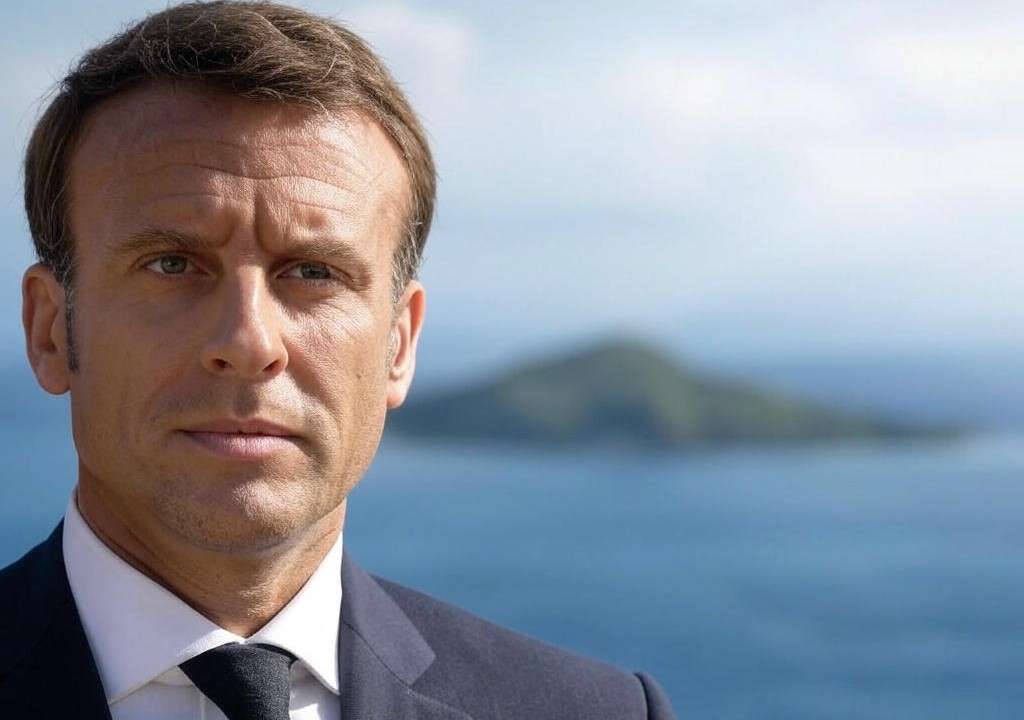
The crisis around the Strait of Hormuz has sharply escalated in recent weeks. France’s President Emmanuel Macron is now trying to prevent further escalation through a diplomatic initiative on the international level. Paris is advocating, together with Great Britain, for an international maritime mission that is officially described as “neutral” and “defensive” and aims to secure shipping traffic in the strategically crucial strait with broad international participation.
Macron is pursuing a dual strategy: On the one hand, freedom of navigation should be guaranteed; on the other hand, France wants to avoid becoming part of a direct military confrontation between the USA and Iran. For this reason, the French government repeatedly emphasizes that any possible mission must not be understood as an offensive operation against Tehran.
The world’s most important energy route
The Strait of Hormuz remains one of the most sensitive geopolitical hotspots of the global economy. About one-fifth of global oil and liquefied gas transport passes through the waterway only a few kilometers wide between the Persian Gulf and the Indian Ocean. Even smaller incidents are enough to unsettle energy markets and cause oil prices worldwide to rise.
Since the beginning of the recent escalation in the Middle East, the situation has increasingly gotten out of control. Iran has severely restricted maritime traffic, commercial ships have been attacked, insurance premiums for tankers have exploded, and numerous shipping companies now completely avoid the route. International observers are now openly speaking of a serious global supply crisis with potentially far-reaching consequences for energy prices, inflation, and supply chains.
The effects are clearly noticeable. Particularly energy-dependent economies in Europe and Asia are watching the development with growing concern. Companies from the chemical, transport, and heavy industries warn of rising production costs and renewed stresses on international supply chains.
France between Washington and Tehran
Against this background, France is trying to take on an independent foreign policy role. Macron consciously distances himself from a purely American-led military strategy. While Washington is discussing a more robust military securing of the route under the slogan “Project Freedom,” Paris officially advocates for an international solution with diplomatic legitimacy.
The French government speaks of a “neutral” mission that is not directed against Iran. Macron has repeatedly stated that France will not participate in “violent operations” and is not considering a unilateral military intervention without coordination with regional actors. At the same time, Paris unequivocally demands the restoration of free navigation.
This position reflects the traditional French Middle East policy: Paris has been trying for years to position itself as a mediating power between Western interests and regional actors. France maintains close relations with the Gulf states but simultaneously strives for diplomatic channels to Tehran.
International coalition under difficult conditions
Meanwhile, France and Great Britain are working on a broader international alliance to secure shipping. Several European countries as well as other partners have indicated willingness to participate in a defensive monitoring and escort mission. France has also moved the aircraft carrier “Charles de Gaulle” and other warships towards the Red Sea, officially as a preparatory security measure.
However, the political situation remains extremely complicated. Iran views any additional Western military presence in the region as a provocation. Tehran has repeatedly threatened attacks on ships using the passage without Iranian consent. At the same time, Western countries accuse Iran of laying mines, supporting drone attacks, and deliberately destabilizing international commercial shipping.
There are also significant differences within the international community. Russia and China are skeptical of Western security initiatives and reject further militarization of the region. An official UN mission would therefore be politically difficult to enforce.
Europe’s Strategic Vulnerability
The crisis also reveals a structural problem for Europe: the ongoing dependence on global energy and trade routes. After the experiences of the energy crises since 2022, it is becoming increasingly clear in European capitals how vulnerable modern economies remain to geopolitical shocks.
For France, the crisis also has a strategic dimension. Macron has argued for years for greater European “strategic autonomy” in security and energy matters. The events around Hormuz significantly strengthen this debate. Should the blockade last longer, not only rising energy prices but also political tensions within Europe over sanctions, military missions, and dealing with Iran will threaten.
Added to this is the danger of uncontrolled military escalation. Already today, American, British, French, and Iranian forces operate in immediate proximity to each other. Any incident could trigger a far-reaching chain reaction.
Macron’s initiative at the United Nations is therefore not merely a diplomatic move to secure a trade route. It is also an expression of the attempt to maintain an international order in which multilateral solutions still seem possible. Whether this will succeed in light of the hardened geopolitical fronts, however, remains open.