
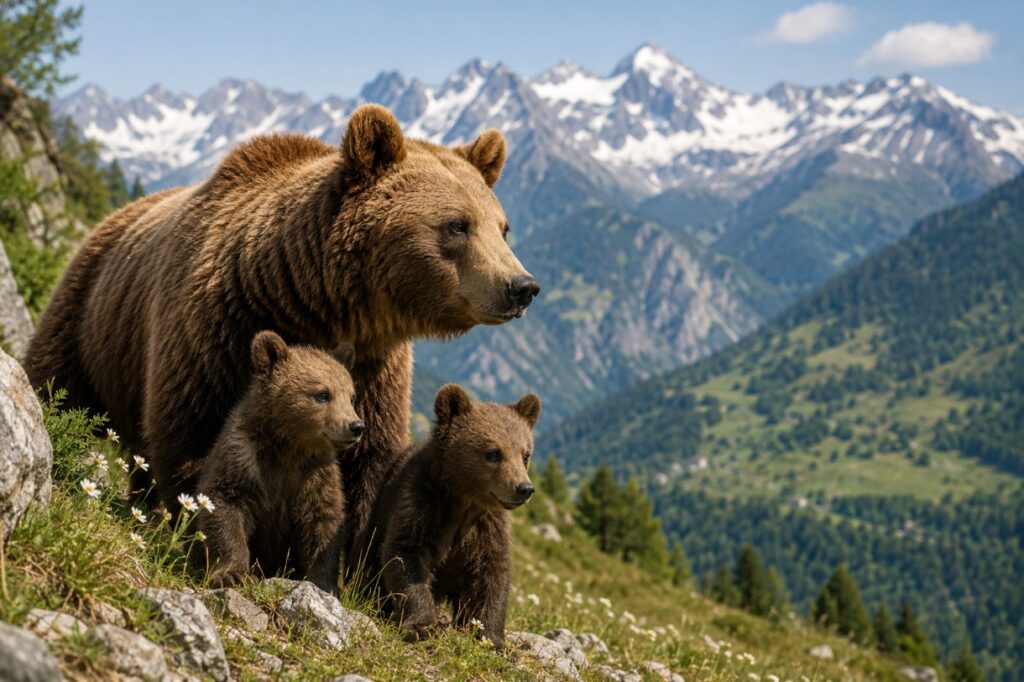
The first sightings of the year are giving conservationists reason for optimism. Several brown bear females are roaming the mountain landscape of the Pyrenees with their young in different regions. The offspring show that the population is continuing to reproduce successfully – an encouraging sign for a species that, only a few decades ago, had almost disappeared from this mountain range.
As late as the early 1990s the situation was considered dramatic. Only a few native brown bears lived at that time in remote valleys of the Pyrenees. To prevent extinction, France launched a reintroduction program. Several bears from Slovenia found a new home in the border mountains. Their genetic background resembles that of the former native Pyrenean bears and helped stabilize the population.
Today more than 80 brown bears live again in the Pyrenees. Their range extends across France, Spain and Andorra. Each new litter provides valuable evidence that the populations are continuing to develop and that conservation measures are taking effect.
The young are usually born in the middle of winter. While the mother hardly leaves her den, the bears, initially weighing only a few hundred grams, grow. Only in spring or early summer do they leave the den together with the mother and appear for the first time before the eyes of researchers or hikers. Nevertheless, their start in life remains difficult. Harsh weather conditions, a scarce food supply or natural hazards mean that by no means all cubs survive their first years of life.
Despite the positive development, the return of the brown bear remains controversial. Sheep farmers in particular repeatedly complain about attacks on their flocks, especially during the summer months on the high pastures. Livestock guardian dogs, additional shepherds, bringing animals together at night, and compensation for damages mitigate some conflicts, but do not completely resolve them.
From a conservation perspective, the brown bear plays an important role in the mountain ecosystem. As an omnivore it disperses seeds, consumes carrion and thus contributes to the natural nutrient cycle. At the same time scientists warn against overestimating the recovery of the population. The number of animals remains comparatively small and their genetic diversity limited. Added to this are changes to their habitat from tourism, infrastructure projects and climate change.
This year’s bear offspring therefore represents not only a welcome conservation success. It also symbolizes the hope that endangered wildlife can permanently regain their place in Europe’s nature through long-term commitment and cross-border cooperation.
Author: C.H.