
The devastating wildfires in the eastern Pyrenees fundamentally changed the third stage of the 2026 Tour de France. For the first time since the years of the coronavirus pandemic, a section of the world’s most famous cycling race was held virtually without spectators. The long-established publicity caravan also had to stop its activities on French soil entirely — an extraordinary measure that underlined the seriousness of the situation.
Despite the dramatic situation, authorities together with the organizers decided to run the stage from Granollers in Spain to Les Angles in France. However, a strict safety concept applied. The final 40 kilometres of the route between Ur and Les Angles were completely closed to spectators so that emergency services and firefighters could deploy their resources without restriction in the fight against the flames.
At the time of the decision, the fires had already destroyed more than 1,600 hectares of land. High temperatures and strong winds further complicated the firefighting efforts. More than 700 firefighters as well as firefighting aircraft and helicopters were in continuous operation to prevent further spread of the blaze.
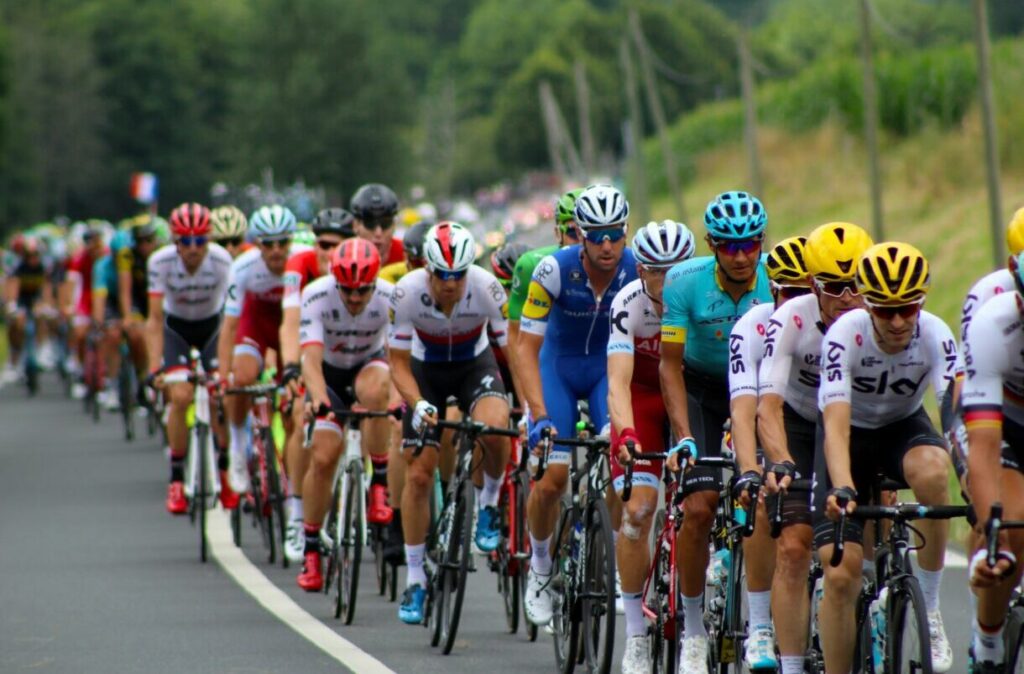
The familiar image of the Tour de France therefore changed considerably. Normally thousands of fans line the mountain stages, loudly cheer on the riders and create a unique atmosphere. This time there was an unusual silence on the decisive climbs. Only the riders, their support vehicles and the organizational vehicles essential to the race operation were allowed to pass the closed section of the route.
The legendary publicity caravan was also left out. For decades it has been an integral part of the Tour de France, distributing small gifts to spectators along the route. This time its journey ended before the French border. For the numerous partners and sponsors this meant a significant loss of visibility. Many communities also had to do without the popular spectacle that attracts large numbers of visitors each year.
The organizers made it clear, however, that safety took precedence in this exceptional situation. Authorities also announced checks and penalties for people who attempted to enter the danger zones despite the closures.
The situation also required an adjustment from the pros. Several teams reported that riders had to mentally prepare for a completely different race atmosphere. Especially on demanding mountain stages, the reactions of the crowd often serve as orientation and extra motivation. Without cheering fans, an important component of the usual Tour experience was missing.
Tour director Christian Prudhomme stood firmly behind the decision. From his point of view it would have been irresponsible to assign security personnel to look after spectators while every available resource was needed to combat the wildfires. At times a route change or the complete cancellation of the stage was even under consideration before they decided on the compromise now implemented.
The events vividly show how strongly major sporting events are now affected by extreme weather. After heat waves, storms and landslides, large-scale wildfires are now also among the challenges that organizers must respond to flexibly. The 2026 Tour de France thus provides another example of how closely elite sport and the consequences of climate change are now linked.