
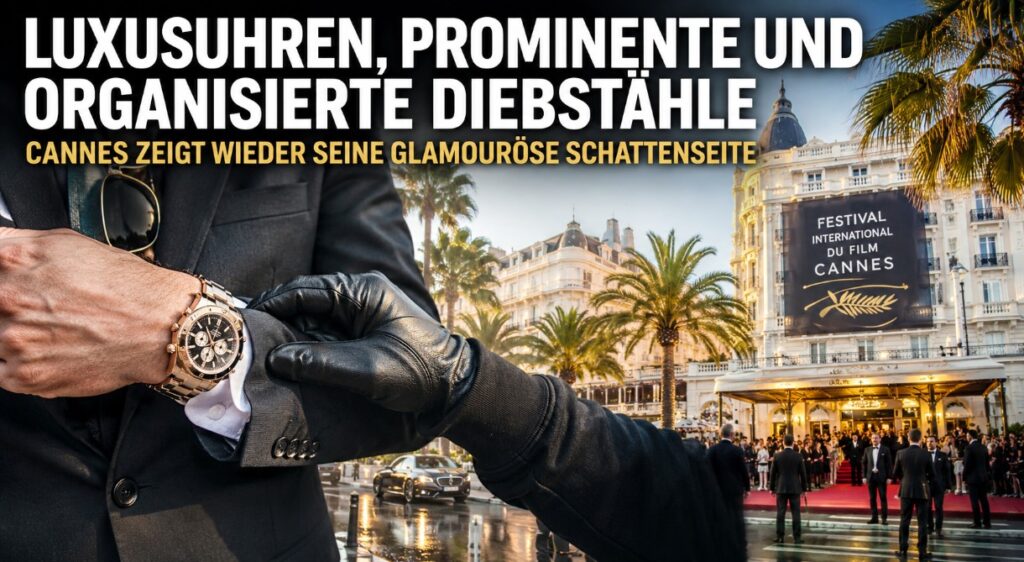
When the flashlights go off in Cannes, luxury cars slowly drive along the seaside promenade, and actors wearing sunglasses bigger than their movie characters step out of upscale hotels, the French Riviera seems to become a parallel world in just a few days. Everything shines, everything sparkles. And it is precisely all this that attracts not only photographers.
Surrounding this year’s film festival, astonishing reports of luxury watch thefts are emerging one after another. The victims include millionaires, producers, influencers, and entrepreneurs—people who conspicuously display their wealth on their wrists. Rolex, Patek Philippe, or Richard Mille watches are now more than just watch brands. They are like small, portable fortunes, extremely valuable and as sought after on the black market as gold bars.
French authorities now openly state that these are crimes committed by professionally organized gangs. They are not isolated incidents nor opportunistic robberies, but well-structured teams specializing in traveling to Cannes during the film festival. Their targets are restaurants, beach clubs, and hotel lobbies. A quick glance at the wrist is enough.
Then everything develops very quickly.
A shove at the hotel entrance, a brief distraction, and sometimes even a direct snatch while passing by. Within seconds, a watch worth an apartment disappears. To onlookers, it is almost surreal—like a scene from a 1970s French gangster film, just without the movie soundtrack.
What is particularly striking is that criminals have become increasingly bold. In the past, such thefts were more discreet, but now they even happen openly on the seaside promenade, in front of luxury hotels, and right under the eyes of many passers-by. Cannes once again shows its extreme side. On one hand, there are luxury yachts, champagne parties, and diamond jewelry; on the other, there is organized crime specifically targeting this world.
Political debate follows.
Conservative commentators see these incidents as a symbol of the state’s weakening control over public safety. The left-wing viewpoint argues that Cannes provocatively displays luxury wealth almost every year, inevitably attracting criminals. In fact, the film festival sometimes acts like a showcase for global luxury capitalism. Those wanting to show off often display watches on their wrists worth more than others earn in a year.
This is precisely what makes these cases psychologically special.
Luxury watches have long ceased to be merely timekeeping tools. They represent status, influence, and belonging to a unique circle. On social networks, influencers flaunt their watches like trophies. Entrepreneurs’ enthusiasm for limited editions even exceeds that of others discussing classic cars or art collections. The problem is: conspicuous wealth equally creates obvious targets for attacks.
Many celebrity guests now consciously avoid wearing conspicuous watches or carry additional security personnel. Some hotels have strengthened security measures, others offer private transport or private entrances. Nevertheless, tension is always present. Behind sunglasses and flashing cameras, the atmosphere feels more like a high-security zone than a film festival venue.
Cannes is therefore a fascinating paradox. It is a showcase for cinema, glamour, and power — and at the same time a place that reveals the dark side of extreme exposure. The more dazzling the luxury, the more obvious those who want to benefit from it become.
It is indeed a bit crazy.
Perhaps this reflects the reality of modern France more than any political debate. Because in Cannes, it is often only a few meters from the red carpet to the sound of sirens.
Andreas M. Brucker