
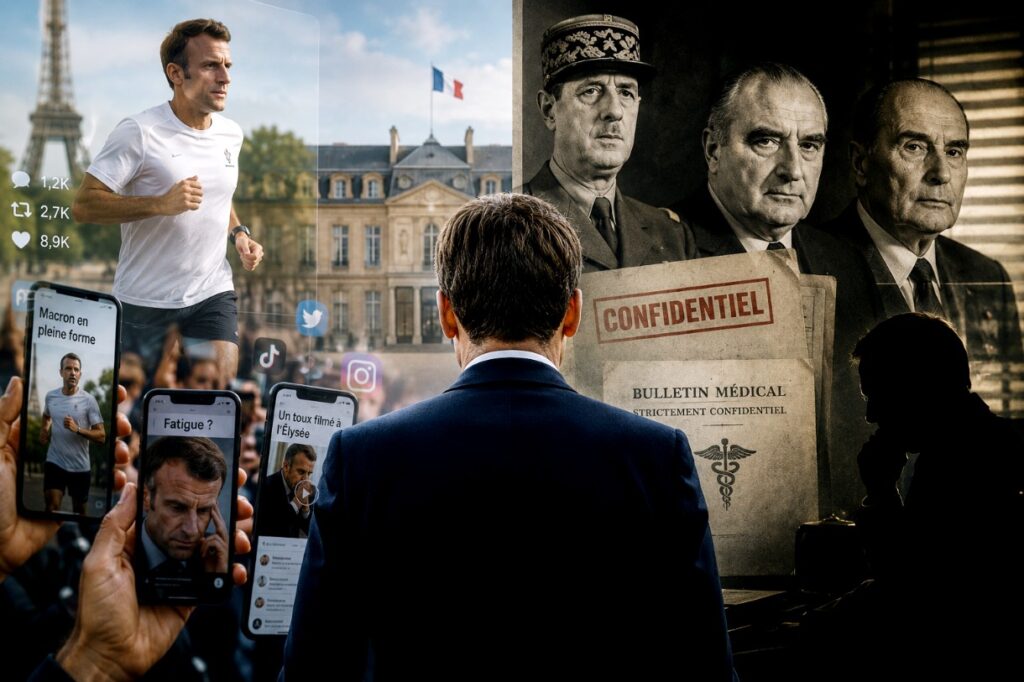
As one of the quiet revolutions in the French Republic, today not only political decisions but also the physical condition of the president himself have become the subject of public debate. What was once considered strictly a private matter has now become a permanent part of democratic oversight. The health of the head of state is no longer a state secret, but a political signal.
French history has a long tradition of silence. Charles de Gaulle leaked very little information about his physical condition. Georges Pompidou also concealed his serious illness until the very end. François Mitterrand, on the other hand, systematically downplayed the condition of his cancer for many years, beautified medical announcements, and rejected doubts, becoming a symbol of the republican culture of concealment. At that time, the presidency seemed like an institution above the usual rules of transparency.
Behind this silence was a particular view of the state. The Fifth Republic was deliberately constructed by de Gaulle as a kind of republican monarchy. The president was supposed to embody stability, authority, and the continuity of the state. Illness did not fit that image. Weakness could potentially undermine the political order itself.
Today, a completely opposite logic prevails.
Emmanuel Macron reveals himself jogging, politicians publish health data, and electoral candidates promote fitness, vitality, and endurance. At the same time, fatigue, weight loss, and even coughing are commented on within minutes on social networks. The president’s body has become a site of public projection.
This indicates a profound change in modern democracy. Transparency is now considered a basic requirement of democracy. Citizens expect visibility, sincerity, and constant accountability. However, this complete visibility simultaneously undermines the distance from which political authority once arose.
The president today is expected to embody many qualities at once: strong leadership, humanity, approachability, empathy, vitality, yet resistance to attack. Vulnerability is expected, but weakness is not tolerated. Here arises the constant contradiction of modern politics.
Social media fundamentally amplifies this trend. Whereas political elites once controlled the flow of information, the digital society now analyzes every gesture, facial expression, and sign of fatigue. Politics becomes psychologized, personalized, and emotionalized. No longer only decisions, but also the physical and mental state of decision-makers themselves are under scrutiny.
France is particularly suited as an example of this change. Because the contrast could not be clearer: from de Gaulle’s almost sacred presidency to modern permanent surveillance. The republican king has become the glass president.
Therefore, the essential question is not how much exposure the president must endure, but whether political authority can maintain the stability that once formed the foundation of the Fifth Republic under these conditions of permanent visibility.
P.T.