
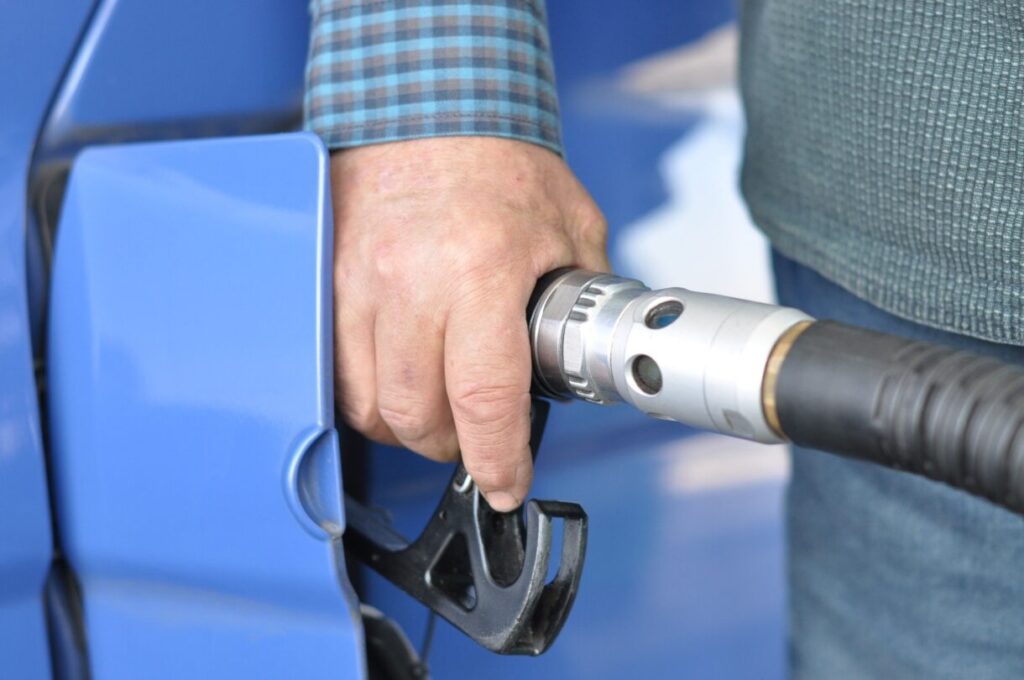
Given the ongoing tensions in the Middle East and the sharply rising energy prices, the French government is tightening its economic policy regarding protective measures. Prime Minister Sébastien Lecornu announced a new support package in Paris, which is primarily intended to relieve those professional groups that are particularly hard hit by the high fuel prices. The government is responding to growing fears of a prolonged energy crisis due to instability around the Strait of Hormuz.
The new strategy focuses on targeted support for specific sectors instead of a broadly reduced fuel price. Paris has deliberately chosen against a general subsidy at the pump. According to the government, large-scale tax reductions would be financially hardly feasible given the tense budget situation. France is currently anyway looking for additional billions to consolidate public finances.
Finance Minister David Amiel estimated the total volume of the new measures at around 1.2 billion euros. Of this, approximately 710 million euros is earmarked for additional support. Especially truck drivers, transport companies, farmers, fishermen, craft businesses in the construction sector, and energy-dependent small and medium-sized enterprises are to benefit from this.
One of the core measures concerns the so-called „Prime carburant“, a tax- and levy-free fuel premium from employers. The ceiling is increased from 300 to 600 euros. The government hopes to relieve commuters and employees in rural areas in particular, where the car often remains indispensable.
In addition, Paris is placing greater emphasis on the accelerated shift to alternative drives. Taxi drivers will now receive better government support when purchasing or leasing electric vehicles. This also fits into the long-term goal of reducing France’s structural dependence on imported fossil energy.
The measures reflect not only economic considerations but also considerable political nervousness. Within government circles, fears are growing that the geopolitical crisis in the Middle East could extend for months. Already, disruptions in shipping traffic around the Strait of Hormuz are causing strong fluctuations on international energy markets. A significant part of the crude oil traded worldwide passes through this strategically important strait.
Although France, thanks to its extensive nuclear energy sector, is less dependent on gas imports than other European countries, the economy in the transport and industrial sectors remains highly vulnerable to rising oil prices. The transport sector, in particular, suffers from high energy costs, which increasingly affect supply chains and consumer prices.
There is also a domestic factor that still plays a role in Paris: the memory of the protest movement of the “Yellow Vests”. The massive demonstrations against rising fuel prices deeply shook French politics from 2018 onwards. The government is now visibly trying to prevent a similar social escalation — but without allowing the already high national debt to increase enormously.
P.T.