
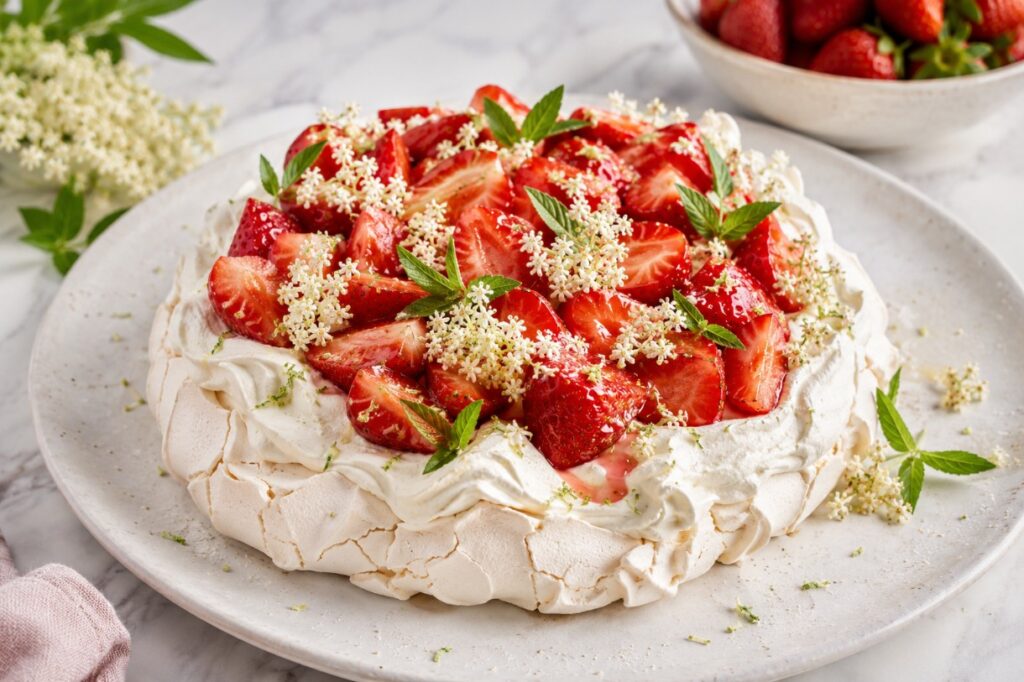
A modern French-inspired spring dessert for Pentecost
Pavlova is one of those desserts that uniquely combines lightness and elegance. Crisply delicate on the outside, soft and marshmallow-like on the inside, it creates the perfect stage for fresh fruit, fragrant blossoms, and fine herbs. In this springtime interpretation, the classic meringue base meets sweet strawberries, floral elderflower, and the subtle citrus note of lemon verbena. The result is a dessert that seems both refined and uncomplicated — ideal for a festive Pentecost menu in modern French style.
Especially at Pentecost, when the first warm days transition spring into early summer, Pavlova fits perfectly on the festively set table. It feels light and luxurious at the same time, without being heavy or overloaded. The combination of fruit, herbs, and floral aromas evokes French patisserie but remains pleasantly fresh and contemporary.
The idea behind the combination
Strawberries form the aromatic centerpiece of this dessert. Their natural sweetness harmonizes excellently with the fine acidity of the meringue. Elderflower adds an elegant, almost perfumed freshness reminiscent of early summer gardens. Lemon verbena provides a precise citrus note that is noticeably finer and more complex than classic lemon or mint.
Particularly appealing is the play of textures: crisp meringue crust, creamy whipped cream, juicy berries, and fragrant syrup. The dessert appears opulent yet remains surprisingly light.
Recipe: Pavlova with Strawberries, Elderflower, and Lemon Verbena
Ingredients for 6 persons
For the Pavlova
- 4 egg whites
- 220 g fine sugar
- 1 tsp cornstarch
- 1 tsp white wine vinegar
- 1 pinch of salt
For the cream
- 250 ml cream
- 150 g mascarpone
- 2 tbsp powdered sugar
- 1 tsp elderflower syrup
For the strawberries
- 400 g strawberries
- 2 tbsp elderflower syrup
- 1 tsp lemon juice
- 4–5 fresh lemon verbena leaves
- some finely grated lemon zest
For garnish
- fresh elderflowers
- small lemon verbena leaves
- powdered sugar as desired
Preparation
1. Prepare the Pavlova
Preheat the oven to 120 °C (upper/lower heat).
Beat the egg whites slowly with a pinch of salt. Once the mixture becomes foamy, gradually add the sugar tablespoon by tablespoon and continue beating for several minutes until a glossy, stable mass forms. The meringue should be firm enough to hold peaks.
Gently fold in the cornstarch and white wine vinegar. These ingredients help create the characteristically soft core of the Pavlova later.
Shape a circle about 20 centimeters in diameter on a baking sheet lined with parchment paper. Slightly hollow out the center so the cream can be placed there later.
Bake the Pavlova for about 90 minutes. Then turn off the oven and let the meringue cool completely inside with the door slightly ajar. This prevents cracks from sudden temperature changes.
2. Flavor the strawberries
Depending on size, halve or quarter the strawberries.
Mix them with elderflower syrup, lemon juice, a little lemon zest, and finely chopped lemon verbena. Let sit for about 20 minutes so the fruit can absorb the floral and citrus flavors.
Use lemon verbena sparingly. Its aroma is intense and can quickly dominate.
3. Make the cream
Lightly whip the cream.
Mix mascarpone with powdered sugar and elderflower syrup until smooth. Then gently fold in the whipped cream. The cream should remain airy and not too firm.
4. Finish the dessert
Place the cooled Pavlova on a serving plate.
Generously spoon the cream into the center and spread loosely. Distribute the marinated strawberries on top. Drizzle some of the resulting strawberry juice over the dessert.
Garnish with fresh elderflowers and small lemon verbena leaves. Dust lightly with powdered sugar if desired.
Culinary Tips for an Especially Elegant Result
The Right Consistency of the Meringue
A good Pavlova thrives on the contrast between a crispy shell and a soft interior. The key factors are:
- very finely whipped egg whites
- slow baking at a low temperature
- complete cooling in the oven
Temperatures that are too high cause the meringue to become dry and brittle.
Use Elderflower Subtly
Elderflower should never taste dominant. The goal is a fine scent in the background that supports the strawberries. High-quality elderflower syrup or fresh blossoms work far better than artificial flavors.
Lemon Verbena Instead of Mint
While mint often feels very cool, lemon verbena carries an elegant, almost perfume-like freshness. It is commonly used in modern French desserts because it enhances fruit aromas without overpowering them.
Serving Idea for a Pentecost Menu
This Pavlova is perfect as a finale to a light spring menu:
- Starter: Green asparagus with beurre blanc
- Main course: Char or lamb loin with herbs
- Dessert: Pavlova with strawberries, elderflower, and lemon verbena
Suggested pairings:
- a well-chilled rosé Crémant
- elderflower lemonade
- light jasmine or verbena tea
Variations of Pavlova
With Rhubarb
Part of the strawberries can be replaced with poached rhubarb. Its acidity adds additional excitement to the dessert.
With White Chocolate
Fine shards of white chocolate provide extra creaminess and a luxurious character.
As Individual Portions
The Pavlova can also be baked as small individual nests. This looks especially elegant for festive menus.
Conclusion
Pavlova with strawberries, elderflower, and lemon verbena combines classic dessert artistry with modern French lightness. The interplay of crispy meringue, creamy filling, and floral fruit aromas makes this dessert an ideal highlight of a festive Pentecost meal.
It appears sophisticated and delicate while remaining surprisingly uncomplicated to prepare. This balance of elegance and freshness makes Pavlova a contemporary classic of spring cuisine.