
France loves big gestures. In Provence, lavender fields spread out like stage sets, the Atlantic coast poses with rugged elegance, and Paris sells its own boulevard like an eternal promise. And then there are places like Grande Brière that make no noise. They simply exist. Damp, dark, and quiet. Almost eerily unremarkable. It is precisely this that magically draws people in.
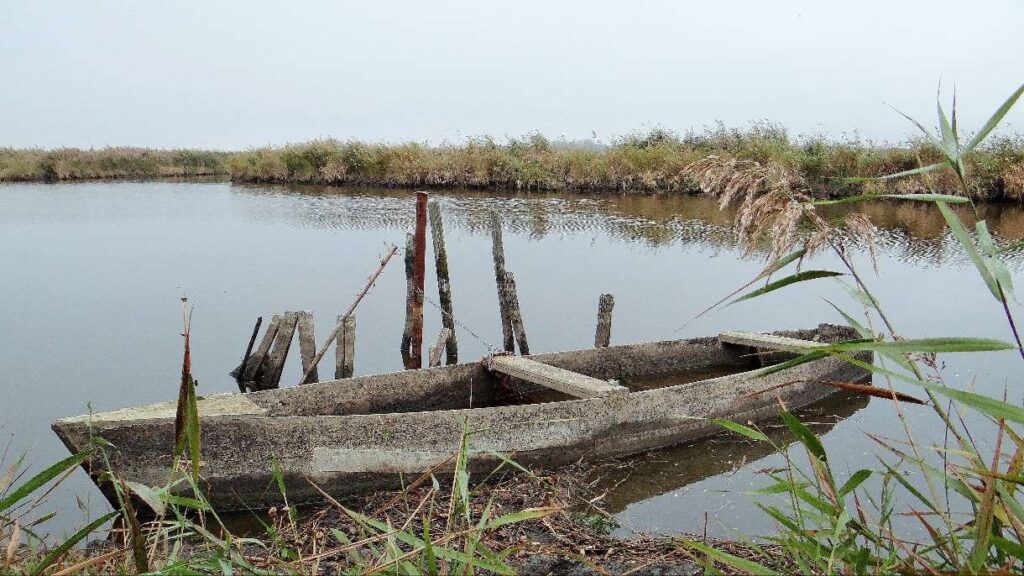
Located west of Saint-Nazaire, this place is not a typical travel destination but where a world that looks like a forgotten chapter of Europe begins. Passing through the marsh canals of Grande Brière early in the morning, at first, you see almost nothing. Mist settles over the water like an old curtain. Reeds rustle quietly. Somewhere, a bird sounds a warning. Then suddenly, a shallow black boat appears slipping through the mist—silently, almost like a ghost.
You naturally wonder: how much more of such scenery remains in Europe?
Grande Brière is one of the largest wetlands in France. But numbers are of little help. What matters is the feeling. That unique sensation of floating between water and land. The feeling between the present and the past. This area holds something primal, as if the modern age barely brushed past it.
For centuries, the inhabitants lived almost entirely off what the marsh provided. Fish, peat, wild birds, reeds. It was not an easy life — a constant bargain with wind, moisture, and patience. Peat was used for heating, reeds covered the roofs, and canals served as roads. Even today, many houses crouch under thick reed roofs, seemingly aiming to minimize exposure to the Atlantic winds.
Some villages seem as if they were accidentally left behind from another era.
Especially Saint-Joachim has this unique calm atmosphere. It is neither a picturesque museum village nor a polished outdoor attraction. It is a place where the past continues naturally without much fuss. Instead of garden gnomes in front of the houses, there are boats, and elderly men repair nets. Behind the windows hang curtains that seem to have been there since the time of grandmothers. This image might feel more romantic than the reality of the past. The Brière was tough. The dampness penetrated both bones and walls alike.
Nevertheless, it was right here that a unique culture took root.
The same goes for the cuisine.
For example, eel holds an almost mythical status here. “Anguille en persillade” — eel prepared with parsley and garlic — remains one of the local specialties to this day. It is a simple but intense dish, rich and flavorful. It is not suited for those who carefully sample their food little by little. Eel runs somewhat through the history of the Brière. Fishermen often caught eels at night in the narrow canals for hours, even in bad weather. When successful, they brought back more than just food. A good catch meant safety.
Today, small restaurants offer old recipes along with a glass of white wine from the Loire Valley. The experience feels somewhat like a culinary time travel and also like a kind of resistance against the uniformity of modern cooking.
But the real secret lies deeper.
Below this swamp lie the relics of an ancient forest. Peat extractors often find black oak trunks preserved for thousands of years thanks to oxygen-poor soil. These dark giant trees seem like almost unreal artifacts of a lost world. Standing beside them, you can feel the dimension of time. Not the busy time of a smartphone, but geological time — slow, heavy, and relentless.
Archaeologists have discovered tools, traces of settlement, and evidence of very early human use in this area. Brières, therefore, also narrates the history of climate change. Where water now sparkles and reeds dominate, there was once a forest. The swamp has become Europe’s natural memory storage.
It is only natural that scientists observe this place more closely. Wetlands store large amounts of carbon, regulate water resources, and protect biodiversity. Once considered useless or dangerous places, today wetlands have suddenly become ecological treasures. Sometimes it takes humans hundreds of years to recognize what is right before their eyes.
The wildlife of the Grande Brière reinforces this impression even more. Herons walk through shallow waters like bored nobles, kingfishers circle around the reeds, and cormorants spread their wings on tree trunks, looking like stern priests of some water religion. In spring, the marsh explodes entirely with sounds. Frogs croak, insects buzz, and birds shout. Sometimes this scenery evokes not southern France but the Amazon.
And within it lies beauty.
The Grande Brière refuses a quick glance. You do not just pass through here checking sights one by one. This landscape demands slowness, silence, and attention. Anyone who continuously looks for the next photo spot will probably miss the essence.
Perhaps that is why this area is comparatively less known. It does not fit the logic of the modern travel list. There are no big sights, no magnificent castles, no ‘Instagram spots’ where people line up and wait. Instead, there is only fog, water, wind, and time.
Is that enough?
Amazingly: yes.
Because Grande Brière awakens a sense of untamed landscapes — something that is becoming increasingly rare in Europe. Places that keep their mystery. Everywhere else is explained, signposted, and commercially exploited, but here secrets still remain.
Perhaps that is the greatest luxury of this place.
Written by M. Legrand