
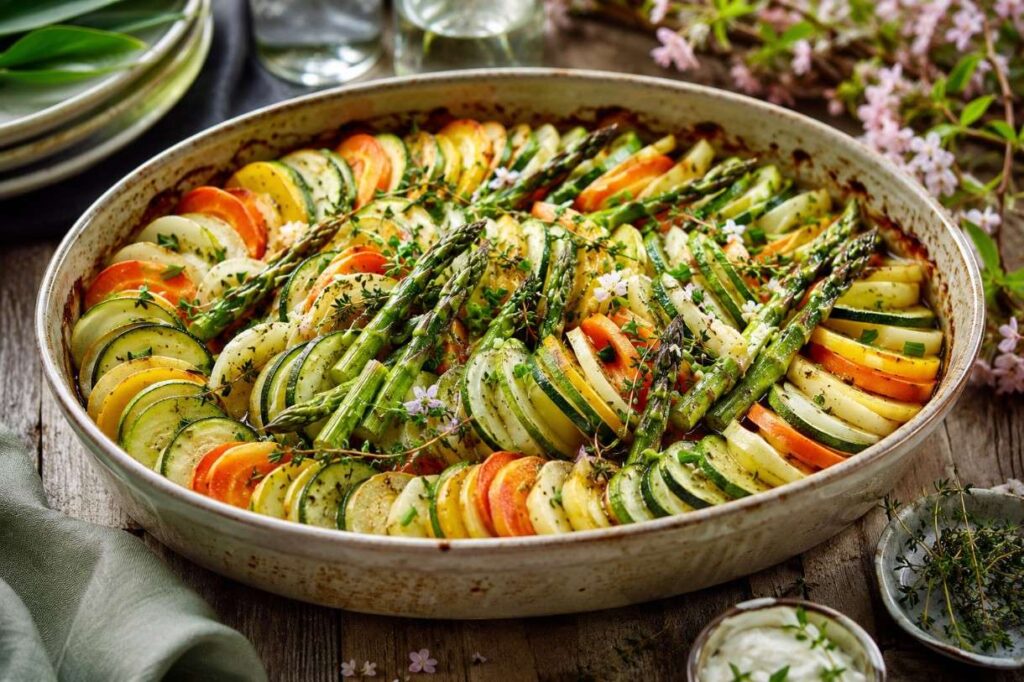
Spring in French cuisine is more than just a season – it is a promise of freshness, lightness, and new creativity. Few dishes embody this spirit as elegantly as a revisited spring vegetable Tian. Originally, the Tian comes from Provence, where vegetables are slowly cooked in simple earthenware dishes in the oven. In the modern interpretation, it becomes a refined, colorful dish that combines the tenderness of spring vegetables with delicate flavors and contemporary lightness.
The idea behind the spring Tian
A classic Tian features summer vegetables like eggplants and tomatoes. The spring version, however, focuses on young, tender ingredients: green asparagus, zucchini, young carrots, spring onions, and perhaps a hint of fennel. The “revisited” aspect is reflected not only in the choice of ingredients but also in the presentation and flavors. Lighter oils, fresh herbs, and a conscious avoidance of heavy sauces allow the vegetables to speak for themselves.
The dish is surprisingly versatile: it can serve as an elegant starter, shine as a vegetarian main course, or accompany fish or poultry.
Recipe: Revisited Spring Vegetable Tian
Ingredients (for 4 people)
- 1 bunch of green asparagus
- 2 small zucchinis
- 2 young carrots
- 1 bulb of fennel
- 3 spring onions
- 2 waxy potatoes
- 2 cloves of garlic
- 4 tbsp olive oil
- 1 tsp lemon zest
- 1 tsp lemon juice
- Fresh herbs (thyme, tarragon, parsley)
- Salt and freshly ground pepper
- Optional: 50 g goat cream cheese or ricotta
Preparation
- Prepare the vegetables
Wash the vegetables thoroughly. Peel the lower third of the asparagus and cut into pieces. Thinly slice zucchini, carrots, and potatoes. Halve the fennel and also cut finely. Slice spring onions into rings. - Make aromatic oil
Mix olive oil with finely chopped garlic, lemon zest, lemon juice, salt, and pepper. Chop some of the herbs finely and stir them in. - Layer and arrange
Lightly grease a shallow baking dish. Alternately layer the vegetables in fine rows or spirally. Arrange slightly overlapping to create a harmonious structure. - Season and bake
Drizzle the lemon herb oil evenly over the vegetables. Cook in a preheated oven at 180 °C (356 °F) for about 35–40 minutes until the vegetables are tender but still have structure. - Refine
Just before serving, sprinkle with fresh herbs. Optionally place small dollops of goat cream cheese or ricotta, which will melt slightly from the residual heat.
The taste of spring on the plate
What makes this dish so special is the interplay of textures and flavors. The asparagus provides a slight bitterness, the carrots a natural sweetness, while fennel contributes a delicate anise note. The lemon lifts everything and adds freshness without overpowering.
The modern interpretation deliberately avoids heaviness. Instead, it creates a dish that feels light yet has depth – exactly what one hopes for in a spring dish.
Tips for perfection
A Tian thrives on attention to detail. Cut the vegetables as evenly as possible so everything cooks at the same time. Use high-quality olive oil as it plays a central role in flavor. And very importantly: do not overload the dish – the clarity of the ingredients is the real star here.
If you want to refine the dish further, you can finish it with roasted pine nuts or a touch of lemon zest just before serving.
Variations and inspiration
Modern cuisine allows for creativity. For example, you can:
- add green peas or fava beans
- interpret the Tian with a thin layer of puff pastry as a base
- serve it with a poached egg
- or accompany it with a light herb yogurt
Thus, from a traditional dish, you get a lively, versatile element of your spring kitchen.