
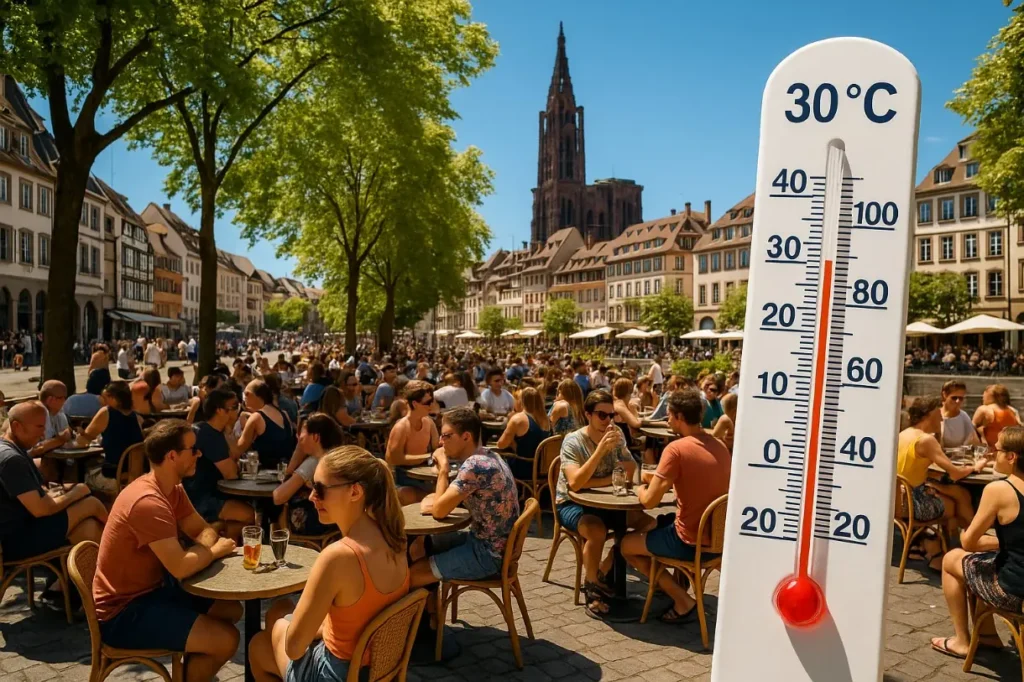
France is experiencing a rather typical mid-summer weather situation at the end of May. A powerful “heat dome” is currently extending over a large part of the country, causing temperatures well above 30 degrees in many regions. The areas particularly affected are the West, the Paris region, as well as certain parts of the Southwest and the Rhone valley.
Meteorologists are talking about an exceptional situation. The heat dome acts like a huge lid in the sky: a stable anticyclone keeps the hot air that previously blew from North Africa through Spain towards France trapped. The heat literally accumulates above the country. At night, temperatures barely drop — which makes this type of situation so exhausting for the human body.
In some regions, temperatures reach 35 or even 36 degrees. Such levels are very rare at this time of the year. Many French people are already using fans, lowering their shutters, and keeping water bottles cool in the refrigerator. In street cafés in Bordeaux or Lyon, customers desperately seek the few shaded spots. “It feels more like July,” is frequently heard these days.
Particularly remarkable: since the introduction of the heatwave alert system in France in 2004, such an early alert has never been triggered. Météo-France has already placed numerous departments under increased vigilance, including parts of Brittany, the greater Paris region, as well as areas along the Atlantic coast.
Health authorities are calling for caution. The elderly, children, and those who work outdoors are particularly exposed to risks. The yellow alert level already indicates a real health risk. Doctors recommend avoiding physical exertion during the hottest hours, drinking enough water, and keeping homes as cool as possible. This may seem obvious — yet these simple rules are often forgotten in daily life.
At the same time, the debate on climate change is resurfacing. Climatologists have observed for several years that early and intense heatwaves are becoming more frequent in Europe. What was once an exception is gradually becoming the new norm. France is among the European countries that have suffered from extreme summers several times in recent years.
The memory of the devastating heatwave of 2003 remains deeply ingrained in people’s minds. That year, thousands of people died due to extreme temperatures. Since then, the state has become much more responsive to early warning signs. Schools, hospitals, and nursing homes are now especially monitored as soon as temperatures remain high for several consecutive days.
Officially, it is not yet a national heatwave crisis across the country. But many French people already sense that the summer of 2026 could have started much earlier. And very intensely.
By C. Hatty