
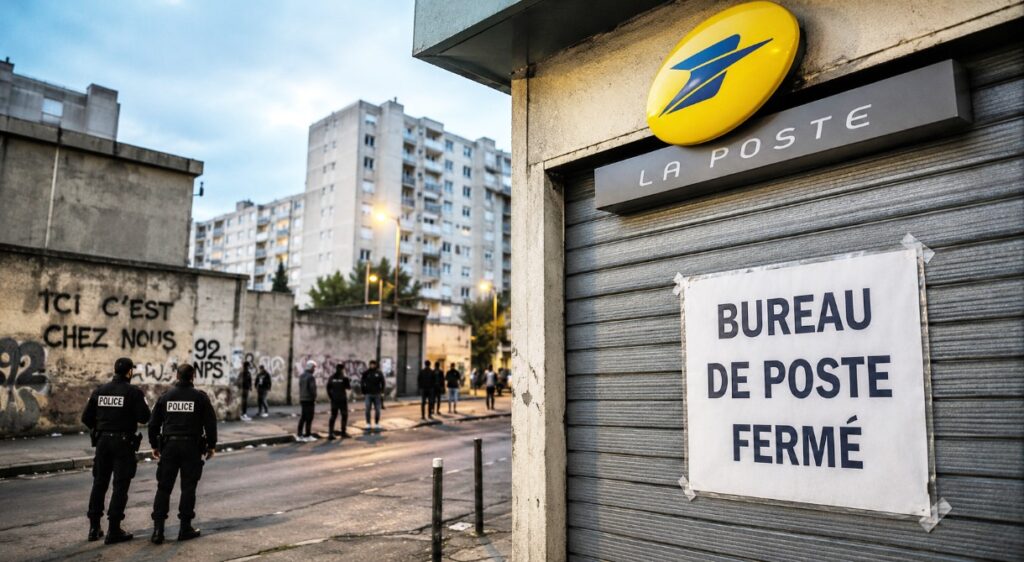
In Nîmes, anger is currently blazing among many residents towards a seemingly unremarkable building, the closed post office. However, behind those closed doors lies a meaning beyond the mere end of an administrative service. For many people in the district, this closure signifies the further retreat of the state and simultaneously symbolizes the rise of forces dominating everyday life: drug organizations, violence, and intimidation.
Especially in districts with many socially disadvantaged people, such as Pissevache and Valdegour, years of fear, frustration, and fatigue have intertwined. Many residents proudly say that their neighborhoods are gradually being handed over to drug trafficking networks. What once seemed like exaggerated headlines has now become almost part of daily life.
The post office was regarded by many residents as the last neutral place.
Elderly people received pension-related documents there, families completed remittances, and those without stable internet access were assisted with documents and letters from official authorities. Above all, the building was a visible symbol of state presence, order, and everyday life.
When places like these disappear, it creates not just a gap in services but a void.
And it is precisely in this void that criminal networks move in. Residents report dealers conducting transactions at the entrances of houses, young people being used as lookouts, and no one waking up anymore to the gunfire at night. Some parents have their children take detours to get to school. Shops close earlier. The streets are filled with a quiet tension as if it could be palpable.
“In the past, everyone here knew each other,” a shop owner says. “Now people turn a blind eye.” Those words linger in the mind.
The situation in Nîmes is now a symbol of a trend spreading not only to large cities like Marseille but also to many medium-sized French cities. Drug trafficking is expanding into more medium-sized cities, and the organizations are professional, violent, and economically profitable. Investigators now say that they have structures functioning like companies — with clear hierarchies, territorial control, and formidable intimidation power.
The state usually responds with police interventions, house searches, and temporary safety measures. In Nîmes, recently there have been increased security measures and curfews for minors in particularly serious areas. However, many residents honestly say that this is not nearly enough.
Safety does not simply arise from police cars patrolling.
Safety is born where schools function, doctors remain, shops are open, and public facilities are visible. In many places, this is missing. When libraries close, local groups disappear, and even post offices are gone, neighborhoods lose social bonds.
Then, others take over the control.
Not official, but certainly present.
The closed post office in Nîmes has gone beyond being just a local news matter. It symbolizes the question of how far the state can retreat, and how much withdrawal is allowed before the trust of local residents is lost. And regaining this trust is much more difficult than simply reopening the doors.