
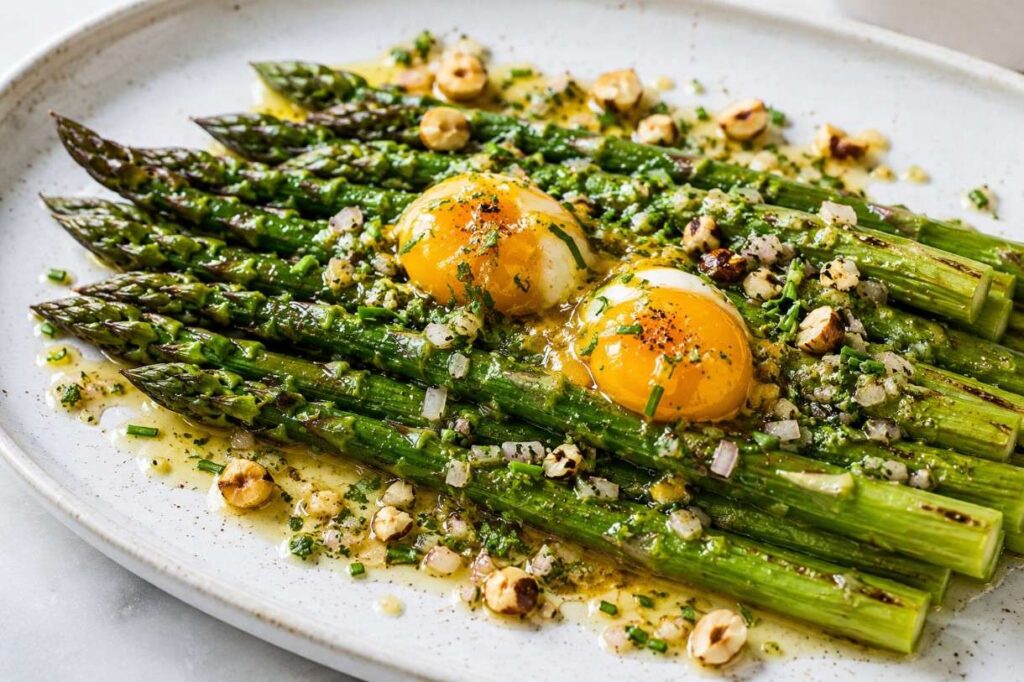
How a Classic French Asparagus Dish Makes a Comeback in Modern Bistro Cuisine
Few dishes capture the transition from spring to summer in France as elegantly as Asperges à la Vinaigrette. At first glance, it seems almost simple: cooked asparagus, a mustard sauce, perhaps some egg and fresh herbs. Yet it is precisely this reduction that makes the dish a perfect mirror of French cuisine – seasonal, precise, and uncompromisingly product-focused.
Today, the classic is experiencing a remarkable revival. Modern French bistros no longer serve it as a stiff appetizer from past decades, but as a refined composition of texture, temperature, and acidity. Green asparagus is lightly seared, egg yolks whipped creamy, hazelnuts add crunch, fermented lemon brings depth, and high-quality olive oil replaces heavy components. The result is a dish that feels both tradition-conscious and contemporary.
The History Behind the Dish
Asparagus has held an almost aristocratic status in France for centuries. Especially in the Loire Valley, Alsace, and southwest France, white asparagus was long considered a luxury product of the early season. Already in the 19th century, Parisian restaurants served asparagus with simple vinaigrettes to avoid overshadowing its delicate flavors.
The classic version usually consisted of:
- white asparagus,
- hard-boiled egg,
- shallots,
- Dijon mustard,
- vinegar,
- neutral oil,
- parsley.
The dish was never meant to be spectacular. It lived from freshness, temperature control, and balance. Exactly for this reason, it is excellent for modern interpretations.
Why Asperges à la Vinaigrette Is Relevant Again Today
Contemporary French cuisine is increasingly moving away from heavy sauces and lavish meat dishes. Instead, vegetables, acidity, fermentation, and high-quality basic ingredients are in the spotlight. Asparagus fits perfectly into this development.
Green asparagus is gaining importance because it:
- can be cooked faster,
- has a more intense flavor,
- allows for roasted aromas,
- retains more texture,
- harmonizes better with modern ingredients.
In many contemporary restaurants, the dish is served rather lukewarm today. This opens the aromas more, while the vinaigrette does not solidify.
Modern Interpretation: Green Asparagus with Tarragon Vinaigrette, Confit Egg Yolk, and Roasted Hazelnuts
This recipe is inspired by modern French bistro cuisine. It combines classic techniques with current flavors and focuses on contrasts: warm and cold, soft and crunchy, sweet and sour.
For 4 People
Ingredients
For the Asparagus
- 800 g green asparagus
- 1 tbsp olive oil
- Fleur de Sel
- black pepper
For the Tarragon Vinaigrette
- 2 shallots, very finely diced
- 1 tsp Dijon mustard
- 1 tsp coarse mustard
- 2 tbsp white wine vinegar
- 1 tbsp sherry vinegar
- 6 tbsp high-quality olive oil
- 1 tsp honey
- 1 tbsp finely chopped tarragon
- 1 tbsp chives
- some lemon zest
- salt and white pepper
For the Confit Egg Yolk
- 4 egg yolks
- approx. 300 ml neutral oil
For Plating
- 40 g roasted hazelnuts
- some herb leaves
- optional: pickled lemon peel or radishes
Preparation
1. Confit the Egg Yolks
Heat the oil to about 62–65 °C. Gently slide in the egg yolks and cook for about 35–40 minutes. They should be creamy-firm on the outside and soft inside.
This technique replaces the classic hard-boiled egg with a much more luxurious texture.
2. Build the Vinaigrette
Mix shallots with vinegar, mustard, and honey. Let sit for two to three minutes. Then slowly incorporate the olive oil.
Finally, add tarragon, chives, and lemon zest. The sauce should taste fresh, herbal, and slightly sharp.
The small amount of sherry vinegar provides extra depth and recalls modern French natural wine cuisine.
3. Prepare the Asparagus
Remove the woody ends. Peel thick stalks lightly if needed.
Heat a heavy pan until very hot. Roast the asparagus with a little olive oil over high heat until lightly browned. Then season with salt and finish cooking briefly.
The asparagus should:
- still have some bite,
- remain juicy inside,
- develop light roasted flavors on the outside.
4. Plating
Arrange the warm asparagus on a large platter. Generously pour the vinaigrette over it.
Carefully place the confit egg yolks and slightly open them so they run over the asparagus.
Finish with roasted hazelnuts, herbs, and some lemon zest.
Why This Recipe Works
The dish thrives on several modern principles:
Temperature Contrast
Lukewarm asparagus and creamy egg yolk create more aromatic depth than cold versions.
Acidity as a Structuring Element
The vinaigrette not only acts as a sauce but structures the entire dish. The mix of white wine and sherry vinegar provides precision.
Texture
Crispy hazelnuts contrast with the softness of egg yolk and asparagus.
Herbs as the Main Actor
Tarragon adds the typical French anise note that harmonizes wonderfully with asparagus.
Wine Pairing
Especially suitable with modern Asperges à la Vinaigrette are:
- Sauvignon Blanc from the Loire,
- Chablis,
- dry Chenin Blanc,
- light Jura white wine,
- mineral Silvaner from Alsace.
Asparagus is traditionally considered a difficult wine partner. Freshness rather than oak aging is therefore decisive.
Variations by Modern French Chefs
Contemporary versions often include:
- smoked egg yolk,
- hazelnut oil,
- fermented lemon,
- burrata,
- trout caviar,
- miso in the vinaigrette,
- brown butter,
- wild herbs.
Especially in Paris, the dish is increasingly shifting toward vegetable tasting menus and fine-dining bistro cuisine.
The True Core of the Dish
Despite all modern techniques, Asperges à la Vinaigrette remains at its core an extremely French dish: few ingredients, carefully treated, with maximum respect for season and product.
The true art lies not in complexity, but in precision:
- the perfect cooking point,
- the balance of acidity,
- the quality of the oil,
- the freshness of the herbs.
That is precisely why this dish feels more modern than ever today.