
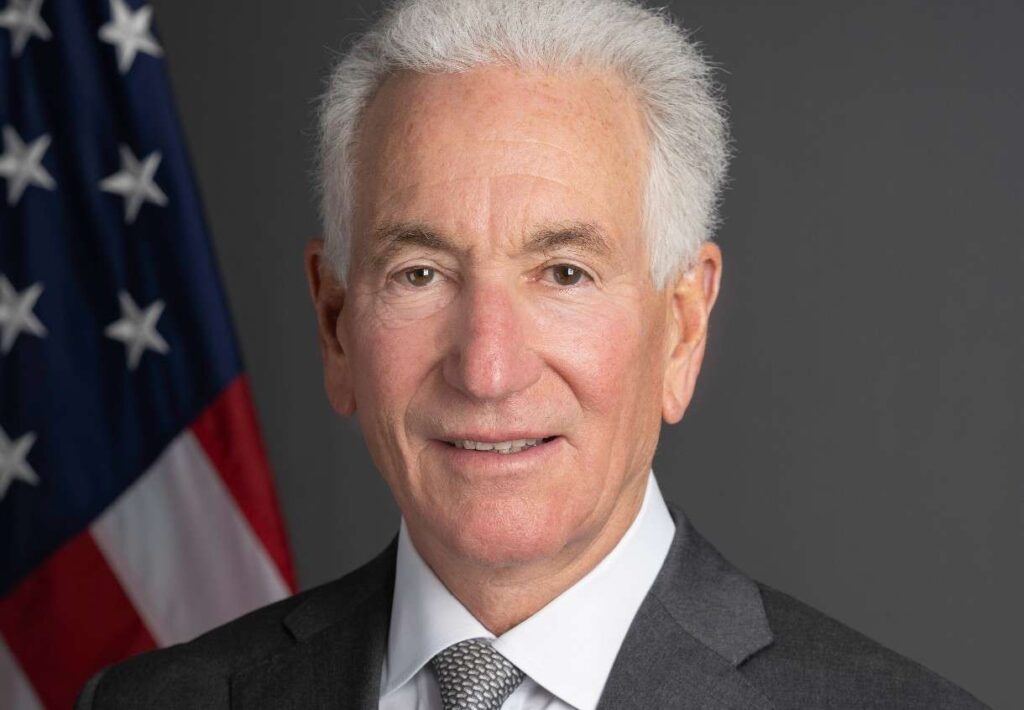
The nomination of Charles Kushner as American ambassador to Paris could have passed as a footnote to a personnel decision in Washington. Instead, within a few months it turned into a diplomatic stress test between two traditionally allied states. The New Jersey real estate entrepreneur, closely connected by family to Donald Trump’s inner circle and with a criminal record, has since been at the center of a debate about the style, mandate and limits of modern diplomacy.
From real estate magnate to political spotlight
Charles Kushner, born in 1954 in Elizabeth, New Jersey, built a significant real estate business with Kushner Companies, active primarily in the New York metropolitan area. The family, of Jewish origin with roots in Belarus, has been deeply involved in philanthropy for decades, particularly in the fields of education and the Jewish-American community.
For a long time, his career followed the classic model of a discreet real estate developer. That changed radically in 2005. In a highly publicized criminal trial, Kushner pleaded guilty to 18 counts, including illegal campaign contributions, tax evasion and witness tampering. Particularly explosive was the allegation that he had deliberately sought to compromise a family member who was cooperating with the authorities. The court imposed a two-year prison sentence, of which he served about 14 months in a federal prison.
He was politically rehabilitated in 2020 thanks to a pardon granted by then-President Donald Trump. This step took place during a period of intense political polarization in the United States and was seen by critics as another example of the intertwining of personal loyalties and state decision-making power.
An appointment with strong symbolic value
In 2025, during his second term, Trump nominated Kushner as United States ambassador to France and Monaco. The United States Senate confirmed him by a narrow majority – a vote that reflected the partisan divide. Kushner had no formal diplomatic experience. His main political qualification was familial in nature: he is the father of Jared Kushner, Trump’s son-in-law and White House adviser.
The decision regarding the appointment fits into an American tradition in which ambassadorial posts are often awarded to political supporters or major donors. France, however, is not an insignificant secondary posting, but rather a key destination for transatlantic diplomacy – a NATO partner, an EU heavyweight, and a permanent member of the UN Security Council. Accordingly, expectations in terms of diplomatic sensitivity and institutional experience are high.
The first scandal: open letter to Emmanuel Macron
Tensions first emerged openly when Kushner, in the summer of 2025, published a public letter accusing the French government of acting insufficiently against antisemitism. Antisemitic incidents have been a serious political and social problem in France for years, regularly addressed by reports and state measures. However, according to many observers, the public tone of a serving ambassador toward the host country exceeded the bounds of diplomatic custom.
In Paris, the gesture was interpreted as interference in internal affairs. The French Foreign Ministry – traditionally known as the Quai d’Orsay – summoned the ambassador. However, Kushner did not appear in person, instead being represented by his chargé d’affaires. In diplomatic circles, such an absence is considered a deliberate signal of distance or contempt.
For President Emmanuel Macron, the episode came at a delicate moment: France was internally in a period of heightened tensions, including in the context of social polarization and debates over extremism.
Second crisis: accusations of interference
The situation escalated again after the violent death of a far-right activist in Lyon. On social media, the United States Department of State and the American embassy in Paris circulated statements suggesting an increase in “violent left-wing radicalism” in France. The French government reacted sensitively. It saw this as an unacceptable comment on ongoing domestic political debates.
French Foreign Minister Jean-Noël Barrot summoned Kushner again. Once again, the ambassador did not appear in person, citing private commitments. Paris then took an unusual measure: Kushner’s direct access to members of the French government was temporarily restricted. Such a step is extremely rare between close allies and signals considerable displeasure.
Only later did Kushner seek a telephone conversation with the foreign minister, assuring him that there was no intention to interfere in France’s internal affairs. However, the episode left lasting irritation.
Diplomacy in the style of the Trump era?
The events raise fundamental questions. First: what role does professional training play in the diplomatic service? Traditional career diplomats usually undergo decades of training and practice before taking on a post such as Paris. They are trained in protocol, discreet negotiation, and political sensitivity.
Secondly: to what extent does Kushner’s behavior reflect a deliberately chosen political strategy? Observers see parallels with the communication culture of the Trump administration: a direct approach, public confrontation, and the use of social media as a political tool. This form of “public diplomacy” relies on visibility rather than discreet channels.
Thirdly, the institutional question of the politicization of diplomatic appointments arises. The appointment of close associates or political supporters is legal and historically established in the United States. However, in a tense geopolitical context—with Russian aggression against Ukraine, strategic rivalry with China, and debates over European strategic autonomy—transatlantic coordination becomes more important. Any further irritation could make strategic coordination more difficult.
The transatlantic dimension
France and the United States are linked by a long history of mutual support—from American independence to the founding of NATO. At the same time, the relationship has traditionally been marked by periods of latent tension: from the Iraq War of 2003 to trade disputes and debates over European defense capability.
In this context, an ambassador’s conduct does not appear isolated. It sends signals about respect, priorities, and political culture. France reacts sensitively to perceived interference in its internal affairs – a reflex historically rooted in the emphasis on national sovereignty.
Kushner’s handling of the post therefore has implications that are not only personal but structural. It touches on the question of how solid the transatlantic partnership can remain in times of political polarization – both in the United States and in Europe.
Charles Kushner thus embodies a new form of political appointment: economically successful, politically loyal, but diplomatically inexperienced. His interventions may stem from conviction, particularly on issues of antisemitism or political violence. However, it is the way they are articulated that determines their effect. Between Washington and Paris, trust is a strategic asset. Whether Kushner will further strengthen this trust or put it under even greater strain depends less on his convictions than on his ability to respect the unwritten rules of diplomacy.