
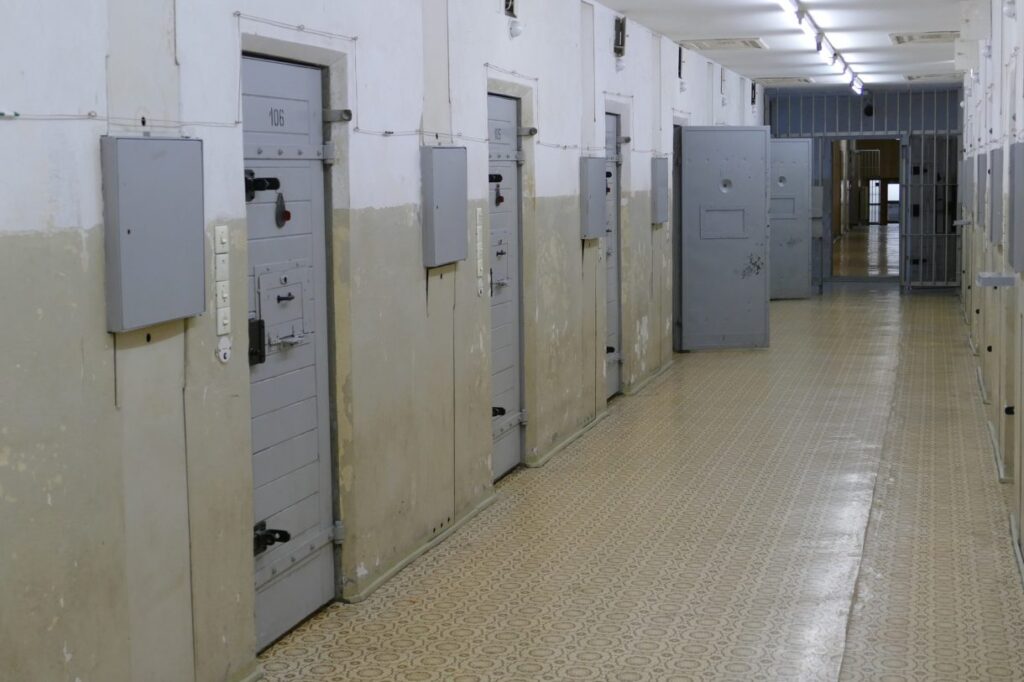
The death of a French prison inmate is turning into a case with significant political and legal implications. What initially appeared to be a tragic individual incident has now raised fundamental questions about the state’s responsibility in penal enforcement. At the core of the case are the family’s allegations that prison authorities watched the inmate’s physical and mental health deteriorate for weeks without taking appropriate intervention.
The family calls it a “slow collapse under the state’s watch.” This phrase struck a sensitive nerve in France, where many prisons have long been heavily criticized. The incident involves not only the responsibility of individual officials or doctors but also the capability of the entire French penal enforcement system to function properly.
The central issue of state responsibility
Legally, France is in a delicate position. Under French law, the state bears comprehensive responsibility for persons in detention. Those deprived of liberty are entirely under state control. This not only creates an obligation to ensure detention conditions but also includes the responsibility for medical and psychological care.
The deceased’s family accuses the authorities of breaching this duty. According to them, the man’s physical condition visibly deteriorated over a long period, with drastic weight loss, increasing isolation from the outside world, and clear health warning signs. However, medical care was insufficient.
In French administrative law there is the concept of “carence fautive” (faulty omission), which refers to the state’s liability for failing to fulfill its duties. Historically, French authorities have been prosecuted over deaths or suicides in prisons due to inadequate care. The key question is whether there were obvious warning signs and whether the administration took appropriate measures.
It is precisely this that makes the case politically highly sensitive. If the court finds that the authorities ignored an obvious collapse of health, it will have profound consequences for France’s penal enforcement system.
France’s enduring prison crisis
The incident did not occur by chance amid growing domestic criticism of detention conditions. For many years, France has faced structural overcapacity problems in its prison system. Many prisons are considered overcrowded, severely understaffed, and lacking adequate medical facilities.
Official data show that the number of detainees in French prisons often far exceeds the actual capacity. In some facilities, prisoners must share cells originally designed for single occupancy with two or even three people. This overcrowding affects not only the infrastructure but also hinders care for prisoners at risk mentally or physically.
Particularly worrying are the frequent suicides and deaths in prisons. Human rights organizations have warned for years that many prisoners’ psychological crises are discovered too late. France remains one of the countries in Europe with a relatively high rate of suicides in penal enforcement.
Experts believe this is not just an issue of individual facilities but a systemic problem approaching its limits. Overburdened supervisory staff, a shortage of psychiatrists, and long waits for medical examinations lead to vulnerable prisoners being easily overlooked.
The conflict between security logic and human dignity
The case also reveals a fundamental contradiction of the modern penal system. Prisons primarily have a security function, but the state also has an obligation to guarantee prisoners’ dignity and physical integrity.
In political debate, these two principles often clash. Calls for stricter detention conditions or security measures are frequently met with warnings from legal and human rights organizations, which emphasize that detention should not lead to dehumanization.
The French public often has a conflicted attitude. On one hand, people strongly demand the maintenance of public safety and strict law enforcement; on the other hand, public unease grows when the state appears to neglect basic rule-of-law principles.
Therefore, a prisoner’s death has particular symbolic significance, reminding us that the rule of law is especially tested in the lives of those deprived of the ability to protect themselves.
The Role of European Justice
There is also a European context. France has been criticized by the European Court of Human Rights several times for prison conditions. The Strasbourg court has pointed to issues such as overcrowding, poor sanitation, and inadequate medical services.
The European judicial system regards the right to life and humane detention conditions as fundamental obligations of member states. Therefore, the government has a proactive duty of protection: it cannot wait until prisoners die or become critically ill to act; it must identify risks early and prevent them.
If the current case confirms that clear warnings were ignored, France may face renewed international pressure. Human rights organizations may use it to highlight long-standing structural defects.
Political Pressure on the Government
The case is also politically sensitive domestically. Discussions about the state of penal enforcement are increasingly overlapping with broader social issues: how much should the state invest in public institutions? What priorities should be assigned to offender reintegration? How can the rule of law be upheld while ensuring security?
In particular, left-wing parties and human rights groups have long called for comprehensive reform of the penal enforcement system. Conservatives more often argue that the real problem is rising crime rates and the overall burden on the judicial system.
This death may further intensify the debate, highlighting how systemic flaws can quickly lead to concrete human consequences.
For the deceased’s family, at this stage they are more concerned with public recognition of the state’s responsibility than with financial compensation. They demand that the death not be seen as a mere tragedy, but as a symptom of a system that has long ignored warning signs.
Therefore, this case goes beyond a personal tragedy and has become an important test of the rule of law in France. How a state treats its prisoners is always a touchstone of whether it truly respects human dignity and the principles of the rule of law.
Sources: Défenseur des droits, Observatoire international des prisons (2025), humanrights.ch (2025), European Court of Human Rights, French administrative law on “carence fautive”
Author: P. Tiko