
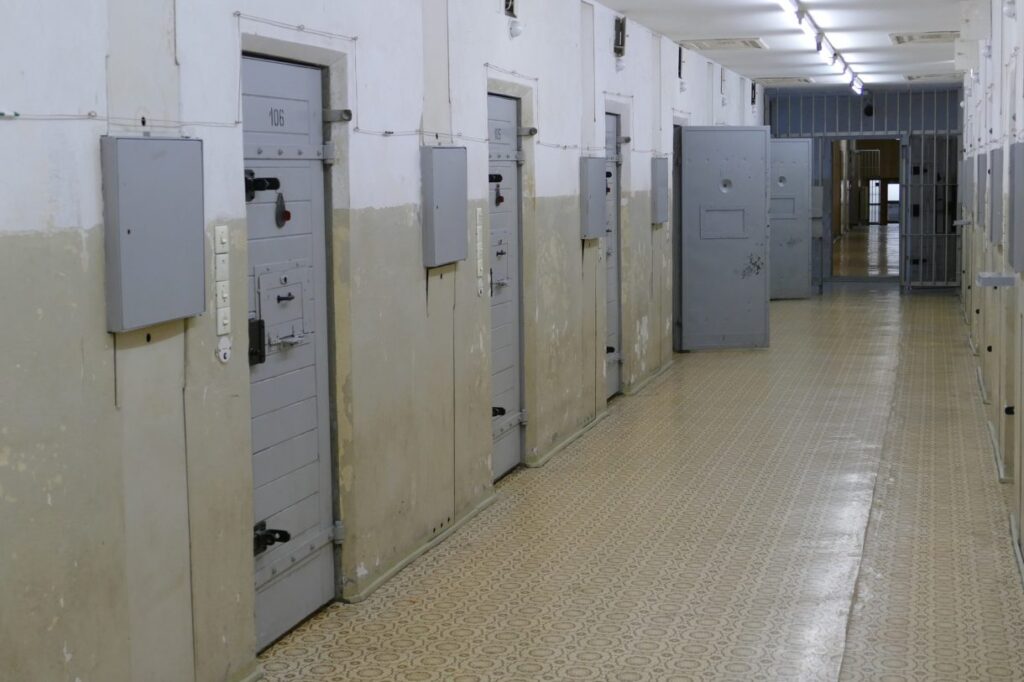
The death of a prisoner in a French penitentiary becomes a matter of considerable political and legal significance. What initially seemed to be an isolated tragic event now raises fundamental questions about the state’s responsibility in the execution of sentences. At the center is the family’s accusation that the prison administration observed the physical and psychological deterioration of the inmate for weeks without intervening appropriately.
Relatives speak of a “slow collapse under the gaze of the state.” This formulation touches a sensitive point in France, where conditions in many prisons have been the subject of severe criticism for years. The case therefore concerns not only the individual responsibility of certain agents or doctors but also the proper functioning of the entire French prison system.
The central question of state responsibility
From a legal standpoint, France is in a delicate situation. Under French law, the state bears full responsibility for detained persons. Anyone deprived of liberty is entirely under state control. This implies not only the obligation to ensure detention conditions but also medical and psychological care.
The deceased’s family accuses the authorities of failing to fulfill this obligation. According to their statements, the man’s condition had visibly deteriorated over a long period. He had lost a lot of weight, increasingly isolated himself, and showed alarming signs of health problems. Yet, no adequate medical treatment was provided.
In French administrative law, there is the concept of “faulty failure” for this type of situation — a wrongful omission by the State. In the past, French authorities have already been condemned following deaths or suicides in prison due to lack of care. The crucial issue often lies in recognizing the warning signs and the appropriate response by the administration.
This aspect makes the current case politically sensitive. If a court finds that the authorities ignored an obvious health collapse, it could have major consequences for the French penitentiary system.
The Chronic Prison Crisis in France
The case arises not by chance in a context of growing criticism about detention conditions in the country. France has been struggling for years against a structural overload of its prison system. Many facilities are considered overcrowded, understaffed, and insufficiently equipped medically.
According to official figures, the occupancy rate of French prisons regularly exceeds their actual capacity by a wide margin. In some facilities, inmates must share cells designed for one person with two or three. This overcrowding not only puts a strain on the infrastructure but also complicates the care of inmates who are psychologically or physically vulnerable.
The high proportion of suicides and deaths in custody remains particularly alarming. Human rights organizations have been emphasizing for years that the mental health crises of many inmates are detected too late. France still ranks among the European countries with the highest suicide rates in prison.
Experts do not see this as an isolated problem of certain institutions but rather as the consequence of a system that is progressively reaching its limits. Overburdened guards, a lack of psychologists, and long waiting times for medical examinations create conditions where vulnerable inmates can easily be neglected.
Between a Logic of Security and Human Dignity
This case also reveals a fundamental contradiction of modern penal systems. Prisons primarily fulfill a security function. At the same time, the state remains obligated to protect the dignity and bodily integrity of detainees.
In political debates, these two principles often come into conflict. Calls for harsher detention conditions or increased security measures are regularly met with warnings from lawyers and human rights organizations, who remind that detention must not lead to dehumanization.
The French public often reacts ambivalently in such cases. On the one hand, there is a strong need for public security and strict prosecution of offenses. On the other hand, discomfort grows when there is a sense that the state is losing sight of certain fundamental standards of the rule of law.
The death of a detainee thus takes on a particular symbolism. It reminds us that the rule of law is put to the test precisely where people no longer have the ability to protect themselves.
The Role of European Jurisprudence
The European context must also be taken into account. France has already been criticized several times by the European Court of Human Rights because of the conditions in its penal institutions. Strasbourg has notably denounced overcrowding, insufficient hygiene, and limited access to medical care.
European case law considers the right to life and to dignified detention conditions as a fundamental obligation of the member states. This implies an active duty of protection: authorities cannot wait for a detainee to die or become seriously ill before acting. They must identify risks quickly and intervene preventively.
If it were confirmed in this case that obvious warning signs were ignored, France could once again face international pressure. Human rights organizations should use this case to highlight the structural deficiencies known for years.
Political pressure on the government
For the French government, the case is also delicate on the domestic front. The debate over the state of sentence execution increasingly overlaps with broader societal questions: how much money does the state invest in public institutions? What priority does it give to the reintegration of offenders? And how can security be ensured without compromising the principles of the rule of law?
Left-wing parties and human rights groups have long demanded profound reforms of the penitentiary system. Conservative forces, on the other hand, often argue that the real problems lie in the rise of crime and the general overload of the judicial system.
The recent death could intensify this debate. It highlights how institutional shortcomings can quickly have concrete human consequences.
For the family of the deceased, the issue today is less about financial compensation than about public acknowledgment of the State’s responsibility. They demand that the death of their loved one not be treated as a regrettable isolated incident, but as a symptom of a system that has ignored warning signs for far too long.
Beyond the individual fate, the case thus becomes a test for the French rule of law. Because the way a State treats its detainees remains an essential indicator of its real commitment to the principles of human dignity and the rule of law.
Sources: Defender of Rights (France), International Prison Observatory (2025), humanrights.ch (2025), European Court of Human Rights, French administrative law on “faulty failure”
Author: P. Tiko