
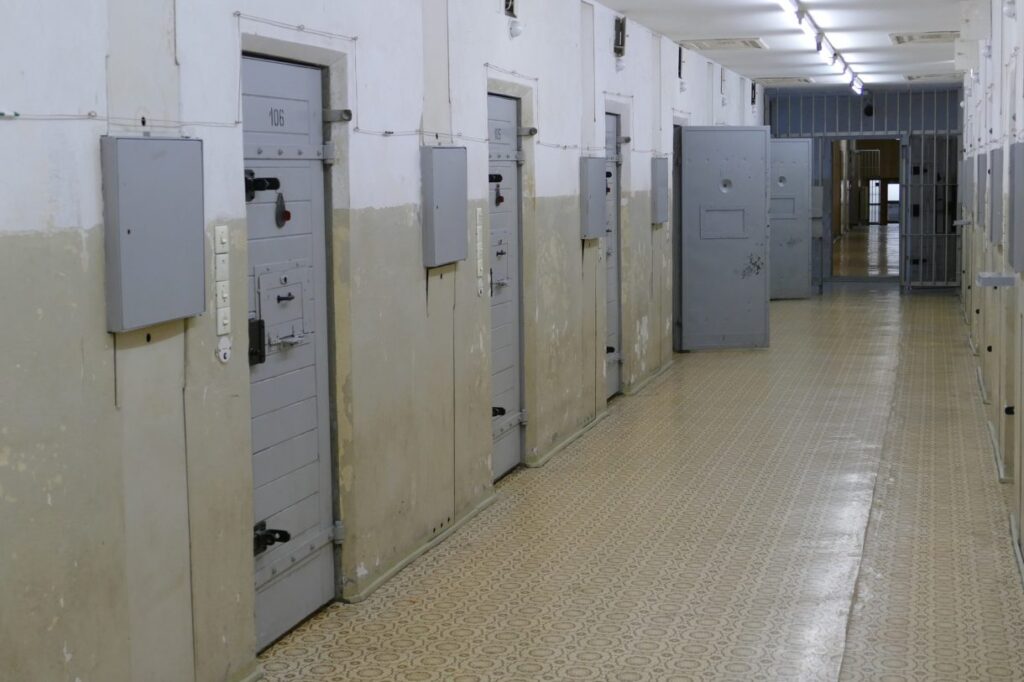
The death of a prisoner in a French prison has developed into an event of significant political and judicial importance. What initially seemed like a tragic isolated incident now raises fundamental questions about the state’s responsibility in prison enforcement. The focus is on the family’s claims, pointing out that the prison authorities witnessed the detainee’s physical and mental deterioration over several weeks without taking appropriate intervention.
The bereaved family describes this as a “slow collapse before the eyes of the state.” This wording touches on a sensitive nerve concerning situations that have long been problematic in many French prisons. This incident highlights issues not only related to the responsibility of individual staff or doctors but also pertaining to the overall functionality of the French prison enforcement system.
Central Issue of State Responsibility
Legally, France is placed in a delicate position. According to French law, the state bears comprehensive responsibility for people in custody. Those deprived of freedom are entirely under the state’s control. Therefore, the state is obligated not only to ensure the custody environment but also to provide medical and psychological care.
The family of the deceased accuses the authorities of precisely neglecting this duty. According to the family, the detainee’s condition had clearly deteriorated over a long period, with significant weight loss, increasing isolation, and obvious health warning signs, yet adequate medical care was not provided.
French administrative law includes the concept of “carence fautive” (faulty omission by the state) in such cases. In the past, French authorities have been found guilty due to lack of care in cases involving deaths or suicides in prison. What is important is whether the warning signs were recognized and whether the administration responded appropriately.
This point is what makes this case particularly politically sensitive. If the court determines that the authorities ignored obvious health deterioration, it could have widespread implications for the French prison enforcement system.
France’s Chronic Prison Crisis
This case does not coincide by chance with a period of rising criticism of prison conditions. France has long suffered from structural overcrowding in its prison system. Many facilities are overcrowded, understaffed, and the medical system is said to be inadequate.
According to official figures, the occupancy rate of French prisons regularly far exceeds their actual capacity. In some facilities, two or even three people are housed in single cells. This overcrowding not only puts a strain on infrastructure but also makes it difficult to care for inmates who are mentally or physically at risk.
Of particular concern is the high rate of suicides and deaths in prisons. Human rights organizations have pointed out for many years that the mental crises of many inmates are recognized too late. France is one of the countries in Europe with particularly high suicide rates in the prison system.
Experts do not see this as a problem confined to individual facilities but as a consequence of a system that is reaching its limits. Overworked prison officers, a shortage of psychological professionals, and long waiting times for medical examinations create an environment in which vulnerable inmates are easily overlooked.
Between the Logic of Security and Human Dignity
This incident also reveals a fundamental contradiction present in the modern criminal justice system. Prisons primarily serve the role of ensuring security, while at the same time, the state is responsible for protecting the dignity and physical integrity of prisoners.
In political debates, these two principles often come into conflict. In response to calls for stricter incarceration conditions and security measures, lawyers and human rights organizations issue warnings that imprisonment must not dehumanize individuals.
Public opinion in France often holds complex feelings toward such incidents. On one hand, there is a strong demand for public safety and strict law enforcement, while on the other hand, concerns are growing that the state might be losing sight of the fundamental standards of a rule-of-law state.
The death of a prisoner carries a special symbolism as a touchstone for how a rule-of-law state deals with people who have no means of self-defense.
The Role of Case Law in Europe
The European context is also important. France has repeatedly been criticized by the European Court of Human Rights regarding prison conditions. Strasbourg has pointed out issues such as overcrowding, poor sanitation, and inadequate medical care.
European case law regards the right to life and a humane detention environment as fundamental obligations of member states. From this arise positive protection duties, requiring authorities to act preventively by detecting risks early rather than responding only after inmates have died or become seriously ill.
If it is confirmed that obvious warning signs were ignored in this incident, France could once again face international pressure. Human rights organizations will likely use this case to highlight long-recognized structural defects.
Political Pressure on the Government
This incident is also a sensitive issue in domestic politics for the French government. Debates over the conditions of prison enforcement intersect with broader social issues such as how much funding the state allocates to public institutions, the priority given to the rehabilitation of offenders, and how to uphold the principles of the rule of law while ensuring security.
In particular, left-wing parties and human rights groups have long called for prison reform. On the other hand, conservatives often argue that the root problems lie in the increase in crime and the overall overload of the judicial system.
This death case could further intensify these debates, as it clearly demonstrates how quickly systemic deficiencies can lead to concrete human harm.
For the family of the deceased, public recognition of the state’s responsibility currently takes precedence over monetary compensation. They demand that the death of their loved one be treated not simply as a regrettable incident, but as a symptom of a system that ignored warning signs for a prolonged period.
For this reason, this case goes beyond the fate of an individual and raises questions about the nature of the rule of law in France. How a state deals with prisoners has always been regarded as a measure of how seriously that state takes human dignity and the principles of the rule of law.
Source: Défenseur des droits (France), Observatoire international des prisons (2025), humanrights.ch (2025), European Court of Human Rights, French administrative law’s “carence fautive”
Author: P. Tiko