
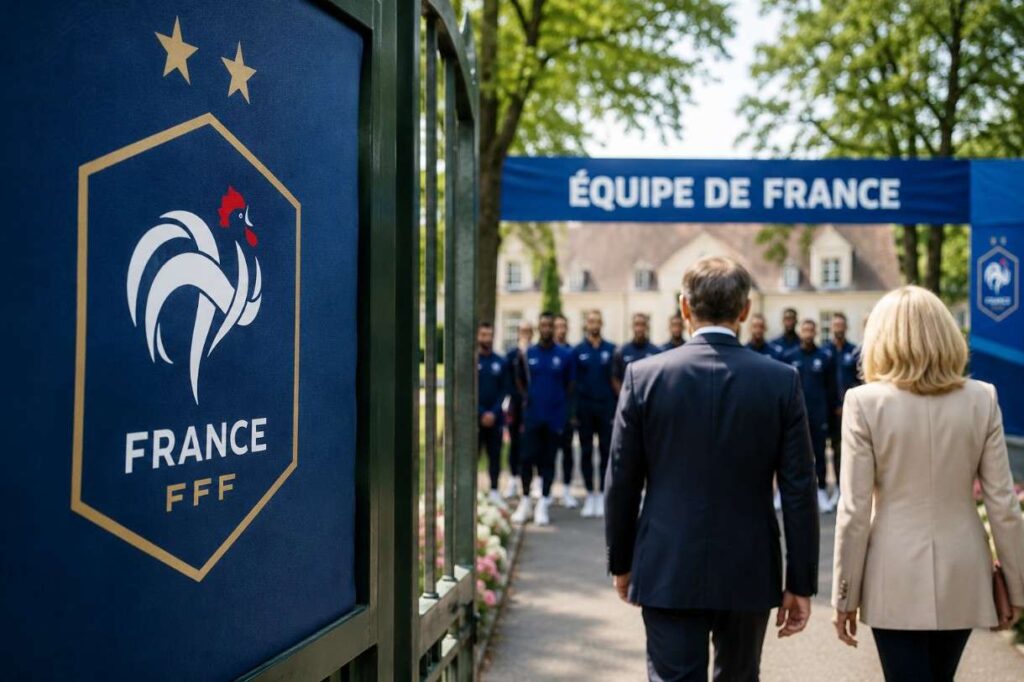
Emmanuel Macron is scheduled to visit the French national team at Clairefontaine on June 2nd. This will happen just days before the French team departs for the United States for the 2026 FIFA World Cup. The president is expected to be accompanied by his wife Brigitte Macron. For the French public, this event goes beyond a mere ceremonial duty. The head of state visiting the French team, the Bleus, ahead of a major tournament has now become one of the political and sporting rituals of the Republic.
Located southwest of Paris, Clairefontaine is the national training center for the French football team and has been regarded for decades as a symbolic place of French sporting identity. It was where the Zinedine Zidane generation prepared for their 1998 World Cup victory, and it has since been the birthplace of many collective scenes of passion that define the relationship between France and the national team to this day. When presidents meet the team here, it signifies a moment that goes beyond simple football to include projections onto the nation, social cohesion, and the shared passion hoped for during often divisive political situations.
For Macron, meeting with the players led by coach Didier Deschamps is another means of communication. Since taking office as president, he has repeatedly shown himself as a supporter of Les Bleus. This became especially clear after the 2022 Qatar World Cup final and the Nations League victory. Football provides the Élysée Palace with a rare stage where political tensions can temporarily recede. During times of deepening social and economic unrest, attempts by political leaders to rely on the unifying power of sports become more noticeable.
Sportingly, the French national team is facing a special tournament. France is once again considered a favorite to win, and can firmly cement its place among the world’s top football powers with a third World Cup victory. At the same time, the 2026 World Cup is expected to be coach Didier Deschamps’ last major tournament as the national team manager. As a 1998 World Cup champion and 2018 winning coach, he has led the team for over a decade and is regarded as one of the most successful coaches in French football history.
Blois departs for North America with high expectations. The first group stage match is scheduled for June 16 against Senegal. Interest in the tournament is already growing domestically. France, together with the national team, continues a tradition that goes beyond mere sports ambition. Hoping for a shared national narrative to emerge every four years, players who symbolize diversity, capability, and the pride of the Republic lead that story for many French people.