
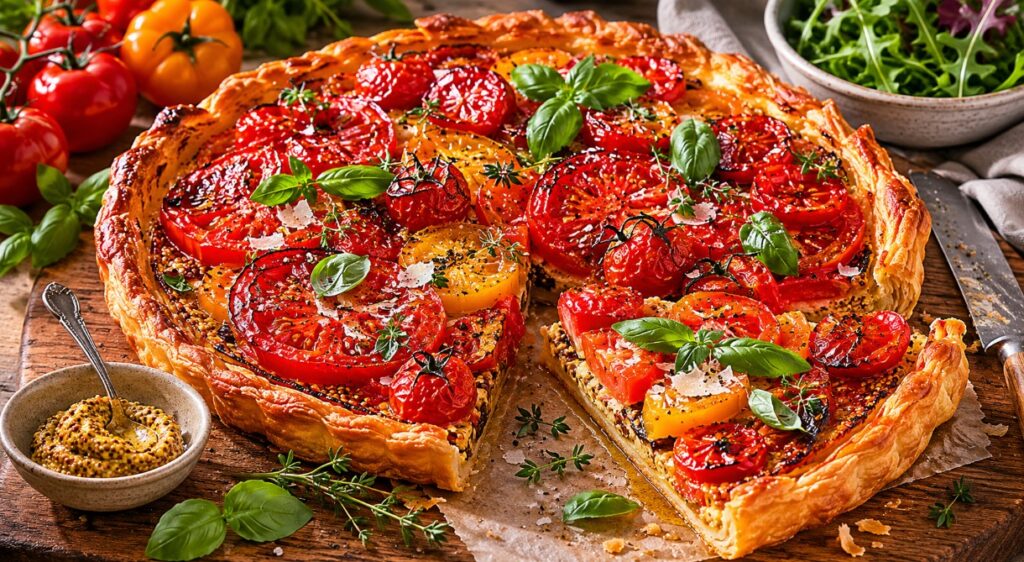
There are dishes that do much more than simply satisfy hunger. They transport seasons, markets, the aroma of warm streets, and the feeling of a long afternoon on a terrace in the south of France. The Tomato and Mustard Tart belongs exactly to this category. It is simple and elegant at the same time, rustic and precise, deeply French – and surprisingly modern.
While classic French cuisine is often associated with butter, heavy sauces, and preparations that take hours, this tart shows another side of France: quick market cooking. It is based on few ingredients, high product quality, and a play of acidity, sweetness, spiciness, and texture.
Right at the beginning of June its great season starts. The first truly aromatic tomatoes appear in markets, the herbs are in full strength, and the desire for lighter dishes slowly displaces the heavy winter cuisine. In Paris it can be found in modern bistros as a tart for lunch with salad, in Provence with melted anchovies and olive oil, in Lyon sometimes almost baked crispy like a pizza.
Today the Tomato and Mustard Tart is experiencing a small revival. Young chefs reinterpret it: with roasted garlic, fermented mustard, burrata, caramelized shallots, or even with miso and herb oil. But the core always remains the same: tomatoes and mustard form a surprisingly perfect combination.
Why tomato and mustard harmonize so well
At first glance the combination seems unusual. But culinarily it makes a lot of sense.
The tomatoes provide:
- Sweetness
- Acidity
- Umami
- Fruitiness
The mustard provides:
- Spiciness
- Slight bitterness
- Depth
- Acidic structure
Together they create a tension field that brings the tart to life. Dijon mustard works especially well because it has a precise spiciness without dominating. In addition, the mustard layer prevents the dough from becoming soggy and, when baked, it combines with the tomato juice that is released to form an almost creamy sauce.
The modern version also makes use of different types of tomato. The small date tomatoes offer concentrated sweetness, the large beef tomatoes juiciness and structure. This creates a much greater complexity than in classic recipes.
Modern Tomato and Mustard Tart
For 4–6 people
Ingredients
For the dough
- 250 g flour
- 125 g cold butter
- 1 egg yolk
- 2–3 tablespoons ice-cold water
- 1 pinch of salt
Alternatively:
- high-quality puff pastry or spelt butter dough
For the filling
- 4 large, aromatic beef tomatoes
- 250 g colored cherry tomatoes
- 3 tablespoons Dijon mustard
- 1 tablespoon coarse-grain mustard
- 2 shallots
- 1 clove of garlic
- 80 g Gruyère or Comté
- 30 g Parmesan
- some sprigs of thyme
- a handful of basil
- olive oil
- sea salt
- black pepper
- optional: burrata or fresh goat cheese for serving
The key preparation of the tomatoes
The biggest mistake in tomato tarts is excess water. Modern French kitchens solve this problem not with more dough, but with concentration.
Slice the tomatoes, lightly salt them, and let them rest for 20 minutes on kitchen paper. This makes them lose excess liquid but retain their aroma. Cherry tomatoes are halved and also drained slightly.
This step changes the tart completely:
- more intense flavor
- crispy base
- better texture
- concentrated sweetness
Preparation
1. The dough
Quickly rub flour, salt, and cold butter together. Add the yolk and ice-cold water and knead briefly. Refrigerate the dough for at least 45 minutes.
Then roll out thinly and place in a tart pan. Prick the base several times and refrigerate again.
2. Blind baking
Preheat the oven to 190 ºC with top and bottom heat.
Cover the base with baking paper and legumes, blind bake for about 15 minutes. Then remove the paper and bake for 5 more minutes.
This pre-baking is essential for modern tarts: the base becomes crispy and crumbly instead of soft and compact.
3. Aromatic base
Finely chop the shallots and slowly caramelize in olive oil until translucent. At the end, add the finely grated garlic.
Spread the pre-baked base with Dijon mustard. Then distribute the shallots and grated cheese on top.
Now the true architecture of the tart emerges:
- Mustard as seasoning
- Shallots as sweetness
- Cheese as binder
- Tomatoes as the main aroma
4. Arrange the tomatoes
Arrange the tomatoes densely but without overlapping. Different sizes and colors not only look better but also create different flavor points.
Finish with:
- thyme
- black pepper
- a little sea salt
- olive oil
.
5. Bake
Bake the tart for about 30–35 minutes until:
- the tomatoes are slightly roasted
- the edges turn dark golden
- the cheese under the tomatoes has caramelized
In the last 5 minutes, you can raise the temperature a bit to create additional toasting aromas.
The modern finishing touch
The difference between a good and an exceptional tart happens right after baking.
Just before serving:
- fresh basil
- a few drops of very good olive oil
- a little lemon zest
- freshly ground pepper
Optional:
- Burrata
- Fresh goat cheese
- Herb oil
- Toasted pine nuts
Especially the combination of the hot tart and the cold burrata creates a modern bistro character.
Why this dish is so relevant again today
The Tomato and Mustard Tart fits perfectly into today’s European food culture:
- seasonal
- vegetarian
- uncomplicated
- product-focused
- social
It works:
- as a light dinner
- as lunch
- for guests
- as a picnic
- hot or cold
And it shows an important trend in modern French cuisine: less technique, more product quality.
Today it’s not about hiding ingredients or covering them with heavy sauces. Instead, the focus is on individual products. Good tomato is enough if treated well.
Variations of Modern French Cuisines
Provençal Version
With anchovies, black olives, and lots of thyme.
Parisian Bistro Version
With Comté, caramelized shallots, and extra Dijon mustard.
Haute Cuisine Version
With candied tomatoes, mustard cream, and herb oil.
Rustic Country Version
With thick shortcrust pastry, goat cheese, and honey.
Contemporary Fusion Version
With white miso in the mustard and toasted sesame.
The Perfect Accompaniment
Go very well with:
- green salad with herbs
- fennel salad
- marinated beans
- cold rosé from Provence
- mineral Sauvignon Blanc
- dry cider
Even a simple herb salad with Dijon vinaigrette perfectly complements the tart because it picks up the aromas of the mustard and adds freshness.
Conclusion
The Tomato and Mustard Tart is a perfect example of why French cuisine remains influential worldwide. It shows that haute cuisine doesn’t have to be complicated. The key is balance, seasonality, and product quality.
Especially in its modern interpretation, it connects classical French technique with contemporary lightness. It is quick enough for everyday, elegant for guests, and aromatic enough to make the tomato the true star of a menu.
And that’s where its strength lies: it tastes like summer without seeming forced.