
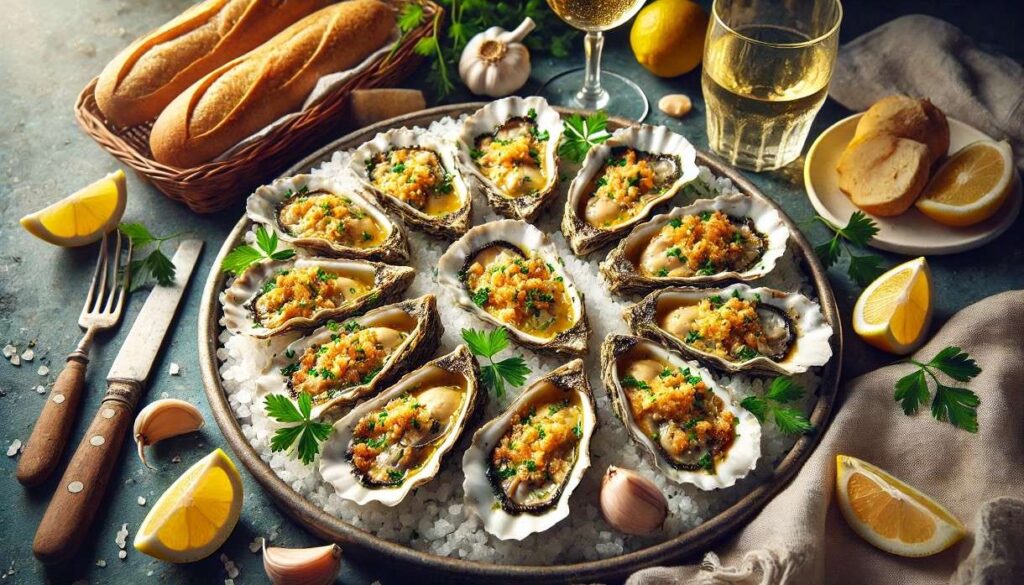
Oysters à la Girondine are a culinary highlight from the French region of Gironde, especially along the famous Bassin d’Arcachon. The region is known for its first-class oyster farming, and this dish reflects the heritage and sophistication of the local cuisine. The preparation of these oysters is a homage to the natural resources of Gironde, combined with the flavors typical of the regional cuisine.
History and Origin
The oyster farming in the Bassin d’Arcachon has a long tradition dating back to the 19th century. The ideal environmental conditions of the bay – with a perfect mix of salty Atlantic water and fresh water from rivers – ensure the growth of oysters considered particularly tasty and nutritious. Oyster farming experienced a boom starting in the mid-19th century when Emperor Napoleon III issued regulations for the protection and promotion of oyster beds. Gironde oysters are today recognized as one of the best in the world.
The dish “Oysters à la Girondine” originated from the necessity to refine the taste of these fresh oysters by combining them with regional ingredients without losing the pure flavor of the oyster. Traditional French preparations often emphasize highlighting the natural aromas of ingredients instead of masking them. Baking the oysters with butter, white wine, and aromatic herbs is a simple yet elegant preparation method that brings out the full flavor of the oysters.
Regional Significance
The Gironde region has a deep connection to the sea and seafood cuisine. Oysters are not only an economic but also a cultural treasure of the region. Annual festivals and markets, such as the “Fête de l’Huître” in Arcachon, celebrate oyster culture and bring people together to enjoy the local delicacy in various forms. Oysters à la Girondine are one of the most popular dishes, as the aromatic and easy-to-prepare baked variation appeals to both gourmets and amateur cooks.
Recipe: Oysters à la Girondine
Ingredients for 4 people:
- 24 fresh oysters (preferably from the Bassin d’Arcachon)
- 100 g butter (softened)
- 2 garlic cloves (finely chopped)
- 1 small shallot (finely chopped)
- 1 tbsp parsley (chopped)
- 100 ml dry white wine (preferably from the Bordeaux region)
- Salt and pepper to taste
- 1 lemon (for serving)
- Some coarse sea salt (optional, for plating)
Preparation:
- Prepare oysters:
The oysters should be fresh and opened shortly before preparation. To open them, hold the oysters firmly in a kitchen towel and use an oyster knife to carefully open the shells. Leave the meat in the bottom shell and remove the top shell. Be sure to keep the oyster liquor in the shell. - Make herb butter:
Mix the soft butter in a small bowl with the chopped garlic, shallot, and parsley. Season with salt and pepper. - Grill oysters:
Put a small dollop of herb butter on each oyster. Then drizzle the oysters with a tablespoon of white wine. Place the oysters on a baking sheet, preferably on a layer of coarse sea salt to keep them stable and prevent tipping over. - Gratin:
Preheat the oven to 220°C (grill function). Gratinate the oysters in the upper third of the oven for 5-7 minutes until the butter is melted and the surface turns lightly golden brown. - Serve:
Serve the oysters hot with lemon wedges. Optionally, you can arrange them on a layer of coarse sea salt for an attractive presentation.
Serving suggestions:
Oysters à la Girondine go excellently with a dry white wine from the Bordeaux region, such as an Entre-Deux-Mers or a Sauvignon Blanc. Serve with fresh baguette to soak up the delicious butter.
Variations:
For an additional layer of flavor, you can refine the butter mixture with a hint of lemon zest or a splash of cognac. Some variations of the recipe also include grated Parmesan or breadcrumbs for a crispier texture.
Conclusion
Oysters à la Girondine are a true celebration of the region’s flavors. The dish combines the freshness of the sea with the delicate flavors of butter, garlic, and white wine, making it an elegant appetizer or a light main course. Thanks to the simple preparation, it can be easily made even by less experienced cooks – and the result is always impressive. Those who appreciate the culinary traditions of Gironde will find a wonderful expression of regional cuisine in this dish.