
The real tragedy, then, is not that science was wrong. It was right, frighteningly often. The tragic part is that we preferred to believe those who promised simple answers rather than those who spoke uncomfortable truths.
Today, we are no longer debating whether the climate is changing. We are debating how costly, dangerous and painful the consequences will be. That is the difference between prediction and reality.
Perhaps we should not wait to read the next scientific report until smoke is already darkening the sky and the next record temperature is being marketed as a “once-in-a-century event” – for the fifth time in just a few years.
They told us.
We just did not want to hear it.
And that may be the bitterest truth of all.
Daniel Ivers
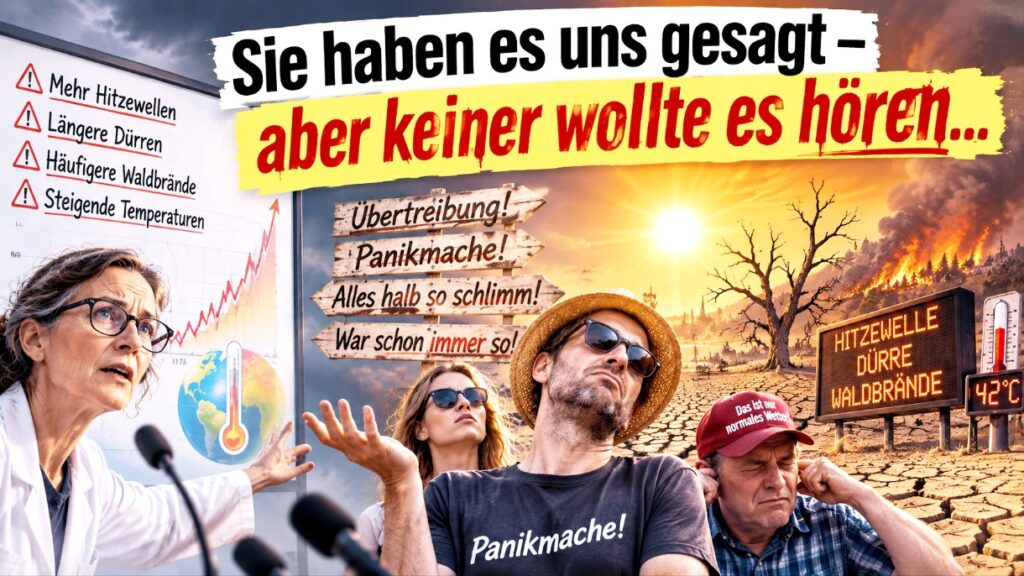
“Exaggeration,” they said. “Scaremongering,” some cried. “The weather has always changed,” others insisted – preferably from their air-conditioned living rooms while the asphalt outside was melting.
Climate researchers spent decades calculating, measuring, publishing and warning. Not with a crystal ball, but with science. Their message was uncomfortable, but unmistakable: heatwaves will become more frequent. Droughts longer. Wildfires more destructive. That is precisely what we are experiencing today. The only surprising thing is how many people still pretend to be surprised.
One could almost laugh if the situation were not so grim. Forests are burning, rivers are running low, fields are drying up – and somewhere, someone is still explaining that none of this has anything to do with climate change. Of course. The fire extinguisher probably has nothing to do with the fire either.
Particularly remarkable is the human ability to take warnings seriously only once the consequences have reached their own doorstep. As long as disasters were happening far away, there was time for mockery and endless debates. Now the bill is coming due – and suddenly people wonder why nobody said anything.
But they did say it.
Again and again.
Not once.
Not ten times.
For decades.
Daniel Ivers
Daniel Ivers
The real tragedy, then, is not that science was wrong. It was right, frighteningly often. The tragic part is that we preferred to believe those who promised simple answers rather than those who spoke uncomfortable truths.
Today, we are no longer debating whether the climate is changing. We are debating how costly, dangerous and painful the consequences will be. That is the difference between prediction and reality.
Perhaps we should not wait to read the next scientific report until smoke is already darkening the sky and the next record temperature is being marketed as a “once-in-a-century event” – for the fifth time in just a few years.
They told us.
We just did not want to hear it.
And that may be the bitterest truth of all.