
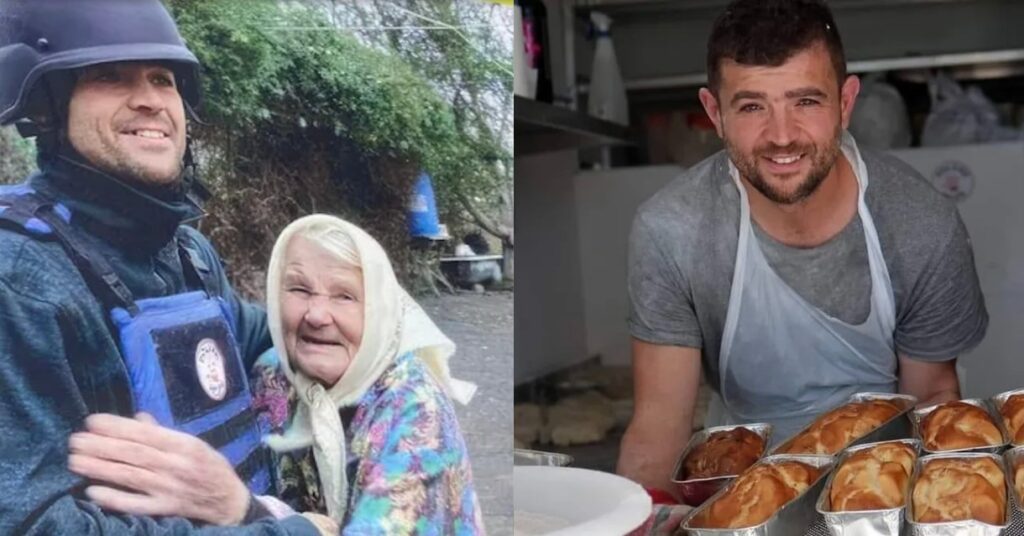
The scent of fresh bread in the destroyed cities of the Donbass feels almost like a memory from another world. Between shattered facades, burned-out cars and streets full of impact craters, a small bakery near the front line opens its doors every morning. While drones sometimes circle above the rooftops and air raid sirens shape daily life, a French baker continues to knead dough there — day after day.
He had come to Ukraine years before the war. When Russia launched its large-scale invasion in February 2022, he too initially fled. The missile attacks on Ukrainian cities, the images of destroyed apartment buildings and the fear of a rapid collapse of the country prompted many foreigners to leave. But the Frenchman returned. Not out of a taste for adventure. Not because of grand political slogans. But because he was convinced that it is the simple things that matter most when everything around you is falling apart.
The French baker is called Loïc Nervi. He comes from the Var department in southern France and describes himself as a “boulanger sans frontières.” Since the start of the Russian war of aggression, he has regularly traveled to Ukrainian war zones with a mobile field bakery, distributing bread to the population there.
“Bread means normality,” Loïc repeatedly says to people who ask him about his resolve.
And indeed: in places near Kramatorsk or Slowjansk, bakeries have taken on almost a symbolic role. Schools often operate only online, many shops open for a few hours, some villages struggle with water and power shortages. Yet queues form in front of the few open bakeries each morning. Elderly people, families, soldiers passing through — all wait for a piece of everyday life.
The work often resembles improvised theater under constant stress. Power outages regularly interrupt operations. Flour arrives late. Yeast is missing for weeks. The staff sometimes sleep in the cellar because the air raid sirens barely end at night. When explosions come closer, they turn off the ovens and run to the shelter. Crazy, one could say. Or simply human.
The war even changes recipes. Butter is considered a luxury in many places. Some breads are made with substitute ingredients or mixed flours. The main thing is that the shelves do not remain empty.
The Russian attacks on Ukraine’s power grid hit small businesses particularly hard. Many bakeries now operate only with generators. Fuel devours huge sums. International aid organizations therefore support some places with mobile ovens, flour or spare parts. French, Polish and German volunteers organize deliveries even into dangerous regions near the front.
The French baker now distributes his breads himself in hard-to-reach villages. The roads are considered risky; some sections are under drone surveillance. Yet many older residents refuse to leave their homes. For them, a van delivering bread means far more than food. It signals: You are not forgotten.
This is precisely where the real power of such stories lies. In wars, the world usually thinks of tanks, front lines and arms deliveries. But the life of a society is often decided in very different places — in schools, hospitals or indeed in a small bakery.
Ukraine is now experiencing a fourth year of emergency. Especially in the east of the country, the exhaustion feels palpable. People talk less about victories than about holding on. Getting through one more winter. Repairing one more roof. Opening the shop one more time.
The French baker belongs to this quiet form of resistance. His bread does not change the military situation. But it prevents everyday life from disappearing completely.
And sometimes that is exactly enough.