
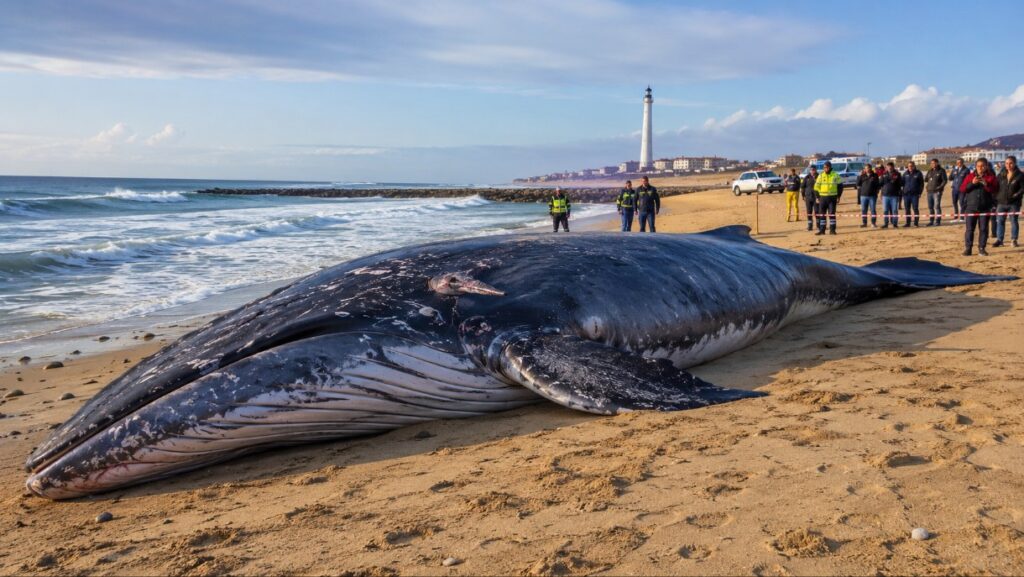
The discovery caused consternation on the French Atlantic coast: a dead whale was found on a beach in Capbreton. Some passers-by discovered the gigantic marine mammal on the shore and immediately alerted the authorities. Rescuers and marine animal specialists arrived shortly after to secure the situation and begin the initial investigations.
Strandings of large whales are events that, even in coastal areas, occur only rarely. Consequently, public interest was very high. Numerous onlookers gathered on the beach to see the animal. At the same time, experts tried to cordon off the area to peacefully collect the first data.
It is not yet clear why the whale died. In such cases, experts regularly face a complex puzzle. Possible causes include diseases, disorientation or injuries due to collisions with ships, as well as lack of food or changes in environmental conditions. Only a thorough analysis of the carcass will provide clues about the cause of the animal’s death.
Capbreton holds a special place in marine research. Off the coast lies the so-called Gouf de Capbreton, an impressive underwater canyon that extends deep into the Bay of Biscay. This unique natural phenomenon creates living conditions that attract numerous marine inhabitants. Dolphins, pilot whales, and sometimes even humpback whales can be observed in the region. The area has been considered a true gem for nature lovers for years.
When whales or other marine mammals are stranded, important work begins for scientists. In France, these cases are documented and analyzed by specialized networks. The collected data helps to better understand the evolution of marine ecosystems. It is often discovered that the animals died at sea and were then carried ashore by currents and weather conditions.
The current finding once again reminds us how fascinating and at the same time vulnerable the animal world of the oceans is. The encounter with a whale evokes amazement, even if it occurs under tragic circumstances. For many people in the region, the stranded animal remains an intense symbol of the deep bond between humans and the sea and of the responsibility to protect the sensitive habitats of the Atlantic.