
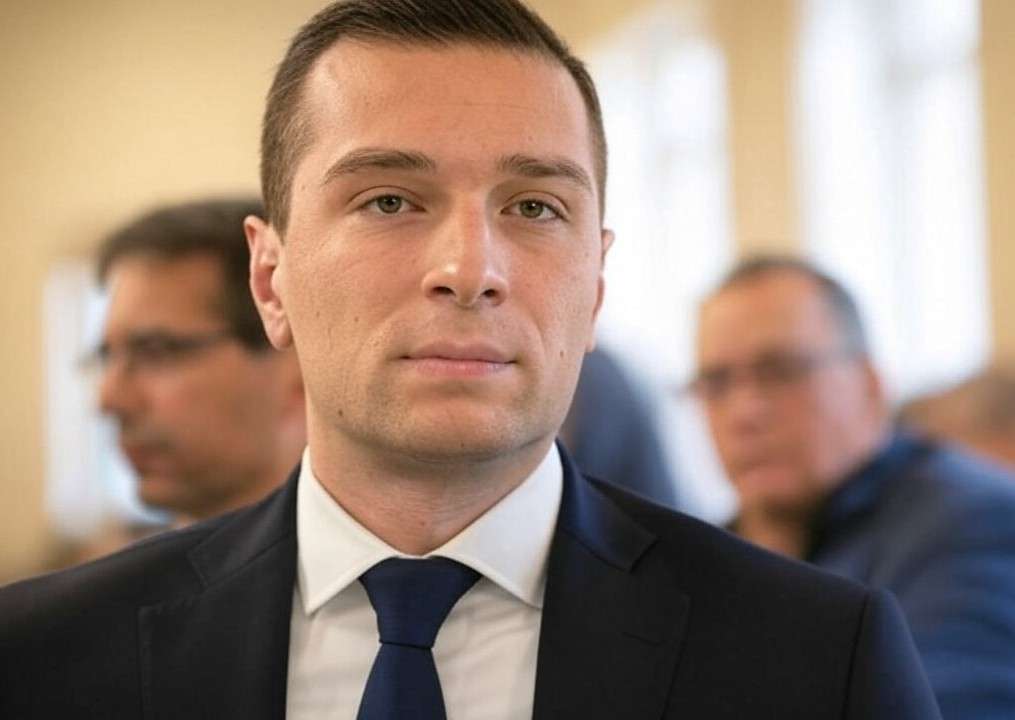
Through a criminal complaint about rapper Solié, Jordan Bardella, leader of Rassemblement National (RN), has sparked a new debate in France about the limits of artistic freedom. The controversial music video is for a song titled “Un Facho K.O.,” which, in Bardella’s view, contains an explicit violent fantasy aimed at him and right-wing politicians.
The disputed video repeatedly shows a man wearing a mask modeled on Bardella’s face being beaten. It also features well-known figures of the French right and far right, such as Marine Le Pen and Éric Zemmour, shown in shackles or publicly humiliated. These images are accompanied by aggressive lyrics targeting political opponents.
Bardella strongly condemned the video and announced legal action on May 27, 2026. He stated on social networks that political violence must end and must never be trivialized. In his view, both the song’s lyrics and the video’s expressive style exceed the permissible bounds of political criticism.
This case touches on an issue that has been debated in France for a long time: where artistic provocation ends and criminally punishable incitement to violence begins. In particular, the rap genre often expresses political and social conflicts in deliberately exaggerated and confrontational ways. Artists argue on the basis of freedom of expression and artistic freedom, while critics counter that certain depictions can justify or promote violence.
The French judiciary has intervened in similar disputes on several occasions in the past. When song lyrics or music videos were perceived as insulting, defamatory, or threatening, rappers and political figures have faced court. However, rulings have varied and have mostly depended on the specific composition of the work and the recognizable artistic context.
No judicial decision has been made in this case yet. A complaint is only the start of a possible procedure. The core issue is whether the competent court will judge the expression to be satirical or an artistic exaggeration, or whether it will see it as a criminally significant threat or incitement to violence.
Regardless of the outcome of the proceedings, this controversy illustrates how deeply political polarization and forms of cultural expression are intertwined. The current dispute will serve as another occasion to question the limits of free expression beyond the individuals involved.
Andreas M. Brucker