
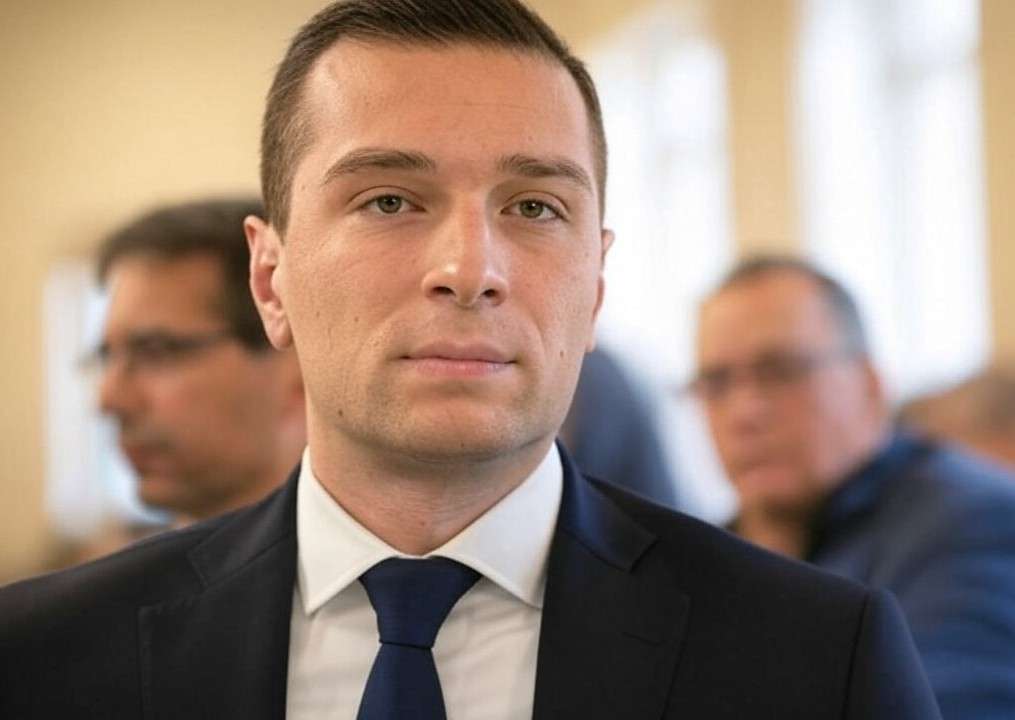
With a complaint against the rapper Soli, the president of the National Rally (RN), Jordan Bardella, has sparked a new debate on the limits of artistic freedom in France. The starting point is the music video for the song “Un Facho K.O.,” which according to Bardella, depicts explicit fantasies of violence against him and other far-right politicians.
The controversial video shows a man wearing a mask resembling Bardella’s face, being hit repeatedly. Other well-known figures from the French right and far-right, including Marine Le Pen and Éric Zemmour, also appear in scenes where they are tied up or publicly humiliated. These images are accompanied by aggressive lyrics targeting political opponents.
Bardella reacted with harsh criticism and announced legal measures on May 27, 2026. On social media, he stated that political violence must stop and cannot be trivialized. According to him, both the lyrics and the imagery of the video exceed the admissible limits of political criticism.
This case touches on a long-debated question in France: where does artistic provocation end and criminally punishable incitement to violence begin? Especially in the rap genre, political and societal conflicts are often presented in a deliberately exaggerated and confrontational manner. Artists regularly invoke freedom of expression and artistic freedom, while critics argue that certain depictions can legitimize or encourage violence.
The French judiciary has already dealt with similar disputes several times. Rappers and political actors have often been brought to court when their lyrics or music videos were perceived as offensive, defamatory, or threatening. However, the rulings have varied depending on the realization of the works and their identifiable artistic context.
In the current case, the legal evaluation is yet to come. The announced complaint only marks the possible beginning of a procedure. It will be decisive whether the competent courts consider the depictions as satire or artistic exaggeration, or if they conclude that the content constitutes a criminally punishable threat or incitement to violence.
Regardless of the outcome of the procedure, the controversy shows how closely political polarization and forms of cultural expression are now linked. The debate should therefore go far beyond the people involved and raise questions once again about the limits of freedom of expression.
Andreas M. Brucker