
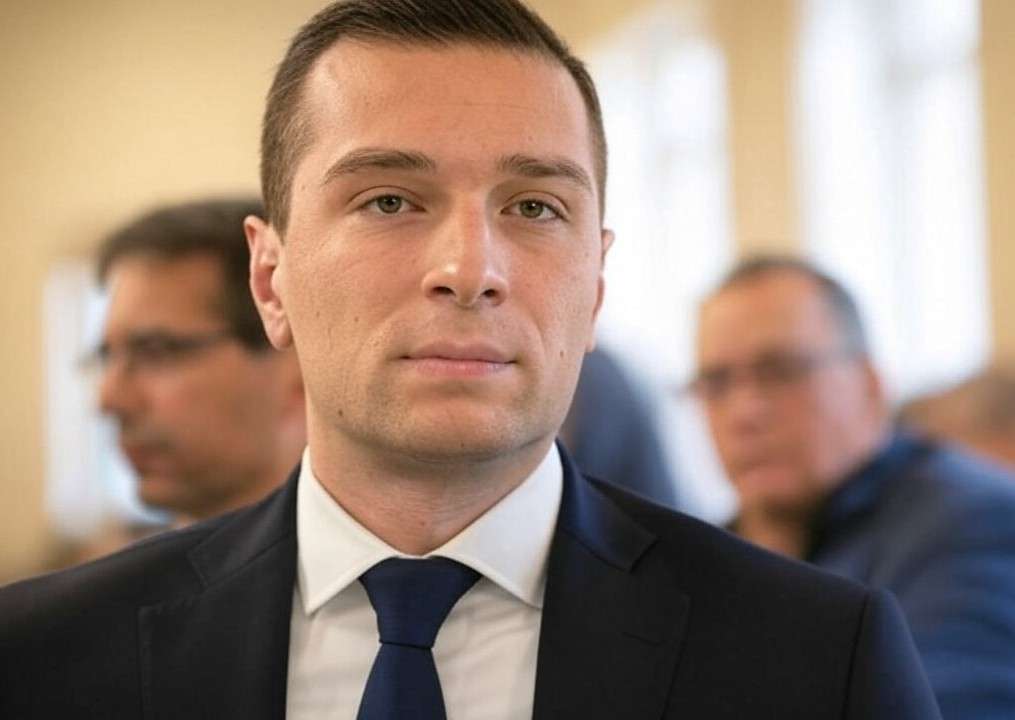
Jordan Bardella, chairman of the French National Rally (RN), has filed criminal charges against rapper Soli, sparking a new round of debate in France about the limits of artistic freedom. The controversy centers on the music video for the song Un Facho K.O., which Bardella believes contains explicit violent fantasies targeting himself and other right-wing politicians.
In the disputed video, a man wearing a mask resembling Bardella is repeatedly beaten. Other well-known figures from the French right and far right, including Marine Le Pen and Éric Zemmour, also appear in scenes where they are bound or publicly humiliated. The visuals are accompanied by radical lyrics aimed at political opponents.
Bardella strongly criticized this and announced on May 27, 2026, that he would take legal action. He stated on social media that political violence must stop and cannot be trivialized. In his view, both the song’s lyrics and the video footage have crossed the line of permissible political criticism.
This case touches on a long-standing contentious issue in France: where is the boundary of artistic provocation, and when does it begin to constitute criminal incitement to violence? Especially in the field of rap music, political and social conflicts are often presented in intentionally exaggerated and confrontational ways. Artists frequently invoke freedom of speech and artistic freedom, while critics argue that some expressions may legitimize or encourage violence.
French judicial authorities have handled similar controversies many times before. Rappers and politicians have repeatedly faced court proceedings on charges of insult, defamation, or threats due to their lyrics or music videos. However, verdicts have varied, usually depending on the specific content of the work and its obvious artistic context.
The judicial assessment of this case is not yet complete. The announced lawsuit is only the beginning of a potential process. The key question is whether the relevant courts will classify these expressions as satirical or artistic exaggeration, or consider the content to constitute criminally relevant threats or incitement to violence.
Regardless of the outcome of the legal proceedings, this controversy illustrates the increasingly close intertwining of political polarization and cultural expression. The related debate is expected to go far beyond the individuals involved, reigniting important discussions about the limits of freedom of speech.
Andreas M. Brückler