
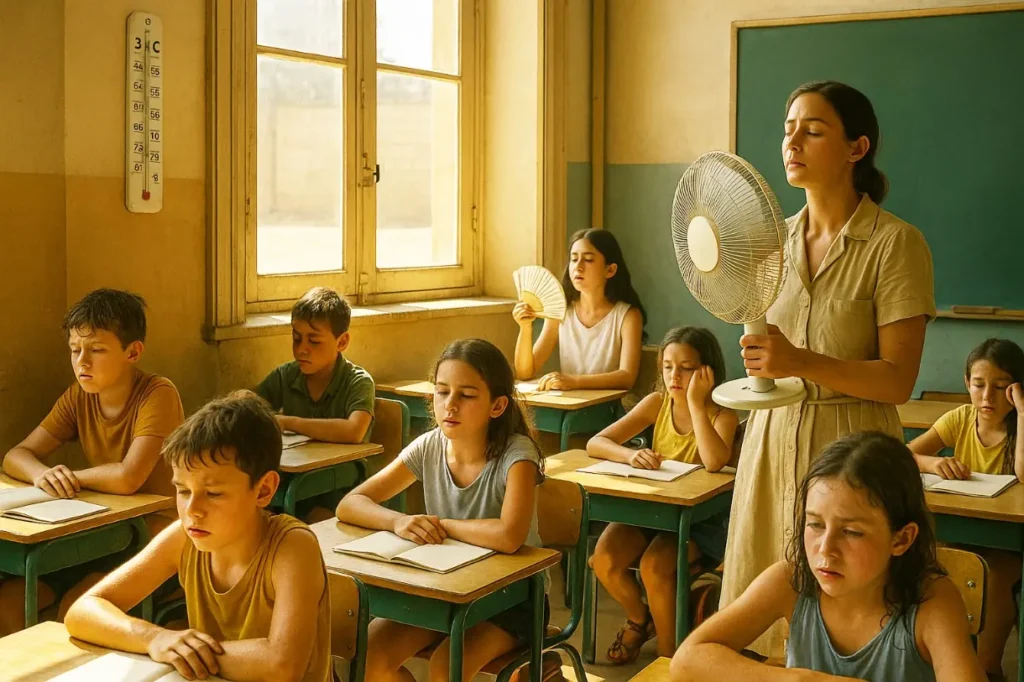
The unusually early heatwave in France is not only straining the lives of millions but also escalating into a political conflict. With many parts of the country reaching maximum temperatures of 39 degrees Celsius and numerous departments under severe heatwave warnings, there is harsh criticism directed at the crisis management of the government led by Prime Minister Sébastien Lecornu.
In particular, Marine Tondelier, leader of the Green Party “Les Écologistes,” has stated that she is “shocked by the government’s lack of preparedness” for this situation. According to her view, the state was slow to respond to a situation forecasted by meteorologists days in advance, and despite citizens currently facing the effects of extreme temperatures, the government is supposedly working on measures for future heatwaves.
Controversy over the Timing of Government Response
The focal point of criticism is the crisis meeting convened by multiple ministries to prepare a comprehensive action plan by the end of summer. The agenda is expected to cover topics such as water supply, health protection, forest fire prevention, and improving the resilience of public infrastructure.
However, from the opposition’s perspective, this approach is insufficient. Critics point out that while long-term planning is necessary, not enough emphasis is placed on urgent protective measures. In particular, people working in schools or outdoors, the elderly, and those with health problems are already exposed to significant risks.
This political debate highlights a fundamental tension. While the government must develop long-term adaptation strategies, the public demands concrete and immediate measures in crisis situations.
Demand for the introduction of a “climate leave”
Marine Tondelier is using the timing of this heatwave to once again raise the idea of introducing a “climate leave,” which has been debated before, as a political issue. Modeled after similar regulations in other European countries, it is proposed that workers be able to take up to 5 additional days of leave per year when extreme weather events occur, without worrying about a reduction in salary.
The Green Party argues that the traditional work model has reached its limits amid increasing extreme weather. They highlight that workers in physically demanding jobs or those working in buildings without adequate air conditioning are particularly vulnerable to the effects of heatwaves.
Supporters see this as a necessary measure to adapt to the impacts of climate change, but critics have expressed concerns that it will impose additional burdens on companies and the labor market. This debate is expected to continue in the long term, not just in response to the current heatwave.
Growing Doubts About Climate Adaptation
Political criticism is accompanied by a broad discussion about France’s capacity to adapt to climate change. Scientists and environmental groups have pointed out for years that many public facilities are still not adequately equipped to cope with extreme temperatures.
Schools in particular are known for having buildings with insufficient insulation and air conditioning. In densely populated urban areas, many homes store heat during heatwaves, effectively becoming heat reservoirs. Additionally, the lack of urban greenery and the absence of shading in public spaces are also issues of concern.
Experts emphasize that climate adaptation is no longer just an environmental issue but also pertains to public health, social justice, and the country’s economic performance. The costs of inadequate preparation could be far greater in the long term than preventive investments.
Government Emphasizes Existing Emergency Measures
The government strongly denies these criticisms. A representative from the Ministry of Health stated that France has extensive experience in responding to heat waves and that emergency plans have been activated. Monitoring of hospitals and care facilities has been intensified, and the public is regularly provided with information about protective measures.
The government considers that the existing system reflects lessons learned from past crises but also acknowledges that the increase in extreme weather events is bringing new challenges.
This heat wave is seen as an example that abnormal high temperatures are becoming increasingly normalized in Europe. This is increasing political pressure to not only respond quickly to crises but also to permanently adapt cities, infrastructure, and working environments to climate change.
More than 20 years after the devastating heat wave in 2003 that caused thousands of deaths in France and other European countries, questions about the nation’s resilience are resurfacing. The conflict between the government and the opposition indicates that climate adaptation is no longer just an environmental issue but an important test of national capability and political reliability.
Author: P. Tiko