
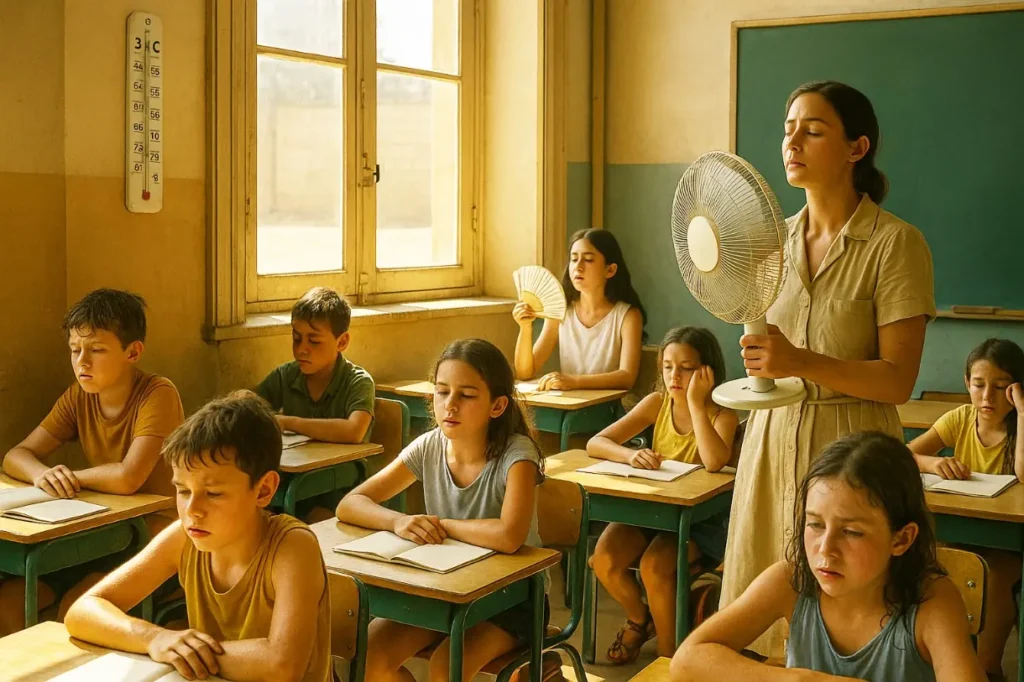
The heatwave, which started unusually early in France, is not only burdening the daily lives of millions of people but is also increasingly becoming a topic of political conflict. With most regions nationwide suffering temperatures up to 39 degrees Celsius and many departments under strengthened heat warnings, Prime Minister Sébastien Lecornu’s government is under pressure for poor crisis management.
In particular, Marine Tondelier, leader of the Green party Les Écologistes, described the government’s current level of climate readiness as “shocking.” She argues that the government reacted too late to the situation that meteorologists had been warning about for days. Although the government is now preparing measures to respond to future heatwaves, the public is already facing the impact of the current extreme temperatures.
Controversy Over Timing of Government Response
At the center of the criticism is the government’s convening of an inter-ministerial crisis meeting to prepare a comprehensive plan by the end of summer. This meeting is expected to cover topics such as water supply, health protection, wildfire prevention, and strengthening the resilience of public infrastructure.
However, the opposition views this approach as insufficient. Critics point out that while long-term planning is necessary, the immediate protective measures are not emphasized enough. In particular, they stress that schools, outdoor workers, the elderly, and those in poor health are currently exposed to significant risks.
This political debate reveals a fundamental tension. While the government must develop long-term adaptation strategies, citizens expect concrete and immediate action in the crisis.
Demand for Introduction of ‘Climate Leave’
Marine Tondelier brought the current heatwave back onto the political agenda and proposed the already discussed ‘climate leave’ system. Following examples of similar regulations in other European countries, employees should receive up to five additional days of annual leave without economic losses in the event of extreme weather conditions.
The Green party argues that as extreme weather events become more frequent, traditional work models face limits. They particularly emphasize that jobs involving physical labor or buildings without adequate air conditioning are vulnerable to the effects of heatwaves.
Supporters see this as an essential adaptation to the impacts of climate change, but opponents warn that it could place additional burdens on businesses and the labor market. This debate is expected to continue beyond the current heatwave.
Rising Doubts About Climate Adaptation
Political criticism is unfolding alongside a broader debate about France’s capacity to adapt to climate change. Scientists and environmental organizations have long pointed out that many public facilities are still inadequately prepared for extreme temperatures.
In particular, many school buildings lack sufficient insulation or air conditioning. Additionally, many residential buildings in densely populated cities act as ‘heat reservoirs’ during heatwaves. Urban greenery shortages and lack of shade in public spaces are also highlighted as issues.
Experts emphasize that climate adaptation is no longer just an environmental issue, but increasingly linked to public health, social justice, and national economic strength. The costs of unpreparedness can be much higher in the long term than investments in prevention.
Government Emphasizes Existing Emergency Response System
The government firmly denies the accusations. Health ministry officials state that France has now gained extensive experience in heatwave response and that emergency plans are being implemented to specially monitor hospitals and care facilities. They also add that the public is regularly informed about protective measures.
The government stresses that existing systems reflect lessons learned from past crises but also acknowledges that the increase in extreme weather events presents new challenges.
This heatwave is seen as another indication that heatwaves may become increasingly common across Europe. Consequently, political pressure is rising, demanding not only responses to acute crises but also permanent adjustments of cities, infrastructure, and working environments to climate change.
More than 20 years after the devastating heatwave in 2003 that killed thousands in France and other European countries, questions about the resilience of national structures are once again being raised. The debate between the government and the opposition shows that climate adaptation is no longer a simple environmental issue but a critical test of national administrative capacity and policy credibility.
Author: P. Tiko