
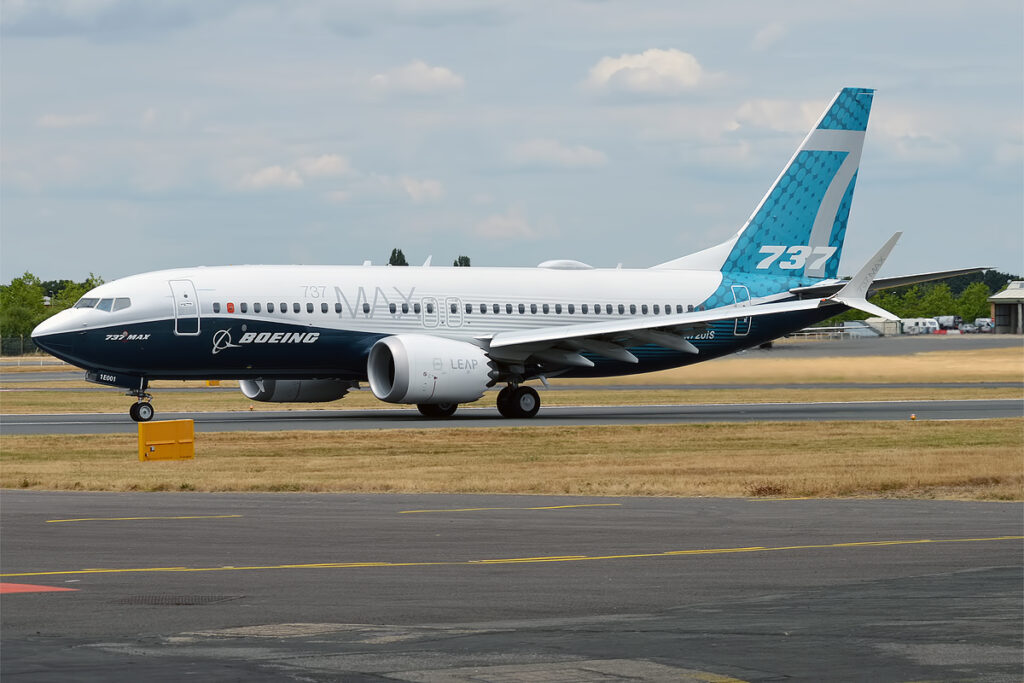
Seven years after the crash of Ethiopian Airlines flight ET302, the catastrophe still echoes through courtrooms, boardrooms and aviation regulators. Now a federal court in Chicago has ordered Boeing to pay 49.5 million dollars to the family of one of the 157 victims. The verdict is among the highest compensations ever awarded in a single aircraft crash case.
At the center is Samya Stumo, a young American from Sheffield, Massachusetts. She was on board the Boeing 737 MAX of Ethiopian Airlines on March 10, 2019, which crashed just minutes after takeoff from Addis Ababa. No one survived.
The case quickly became a symbol of a global crisis in the aviation industry.
Already a few months earlier, a plane of the same type had crashed in Indonesia – Lion Air flight JT610. There, too, everyone on board died. The parallels quickly alerted investigators. Both aircraft belonged to the then-new Boeing 737 MAX series, which had been touted as the technological future of short-haul travel.
At the center of the investigations was the MCAS system. This software was supposed to automatically compensate for certain aerodynamic characteristics of the aircraft. But it was precisely this system that issued faulty control commands in both cases. The planes repeatedly pushed their noses down – the pilots fought the system in vain.
A nightmare of sensor failures, software logic and lack of transparency.
The jury at the United States District Court for the Northern District of Illinois has now awarded the family of Samya Stumo a total of 49.5 million dollars in damages. The presiding judge was Jorge L. Alonso. According to the court, the allegation that Boeing had not sufficiently communicated the risks of the MCAS system to airlines and pilots weighed particularly heavily.
This very point has shadowed the company for years.
Michael Stumo, the father of the slain young woman, has become one of the best-known family representatives in the fight against Boeing. In the US he repeatedly appeared publicly, called for stricter safety rules and criticized the closeness between aircraft manufacturers and regulators. Over the years his voice acquired an almost symbolic character – factual, persistent, uncomfortable.
And the pressure on Boeing continues to grow.
Although the company already reached an agreement with the US Department of Justice in 2021 involving payments of more than 2.5 billion dollars, numerous civil lawsuits are still ongoing. Many families refuse out-of-court settlements. They do not only want money; they seek a clear legal acknowledgment of responsibility.
The consequences extend far beyond Boeing.
The crashes of the two 737 MAX aircraft shook confidence in an industry that had long been regarded as almost infallible. The worldwide grounding of the 737 MAX for nearly two years marked a historic turning point. Regulators such as the US FAA came under massive pressure. Critics accused them of coordinating certifications too closely with manufacturers.
Since then, much has changed. Pilot training for automated systems has become significantly more extensive. Certification procedures are now considered stricter. At the same time, concern is growing that modern aircraft are increasingly dependent on highly complex software – and that pilots in an emergency may have only seconds to recognize technical errors.
One could say: aviation lost a piece of its innocence back then.
For Boeing, it is no longer just about money. Every new trial also damages the trust of airlines, investors and passengers. After further technical incidents in recent years, the company is fighting for its credibility. In the industry everyone knows: trust is built slowly – and collapses damned quickly.
The victims’ relatives, meanwhile, remind us what this is really about. Behind every file, every expert report and every multi-million-dollar verdict are people whose lives ended abruptly. No ruling in the world can undo that loss.
But some decisions at least send a signal.
By C. Hatty