
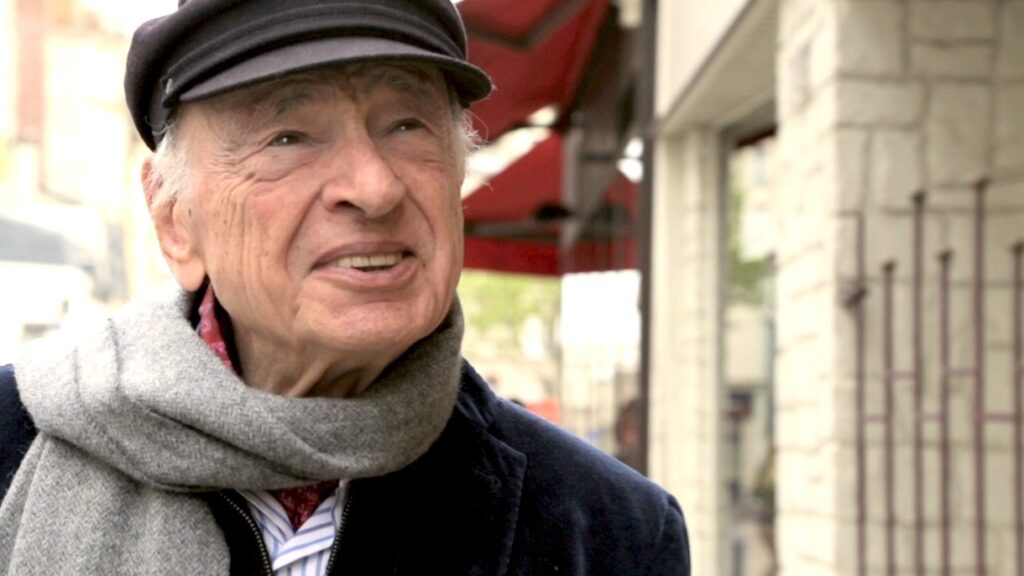
With the death of Edgar Morin, France loses not only a philosopher, sociologist, and intellectual of worldwide renown. It loses one of the last representatives of that generation of thinkers who not only observed the 20th century but lived it, endured it, and reflected on it. Morin, who passed away in Paris at the age of 104, leaves behind a body of work that goes far beyond academic boundaries. In an era of increasing specialization and ideological polarization, he persistently reminded us that reality is rarely simple and almost never one-dimensional.
Born in 1921 as Edgar Nahoum into a Sephardic Jewish family, Morin experienced firsthand the great upheavals of the past century. The experience of the German occupation and his commitment to the Résistance deeply marked his thinking, as did the hopes and disappointments of the post-war period. Like many intellectuals of his generation, he was initially attracted to communism. But disillusionment with Stalinism soon led him to a critical distance from all forms of political orthodoxy. This biographical experience became one of the fundamental themes of his later work: distrust of simple truths and closed worlds.
While many thinkers of his time tended toward increasingly marked specialization, Morin consciously moved in the opposite direction. He sought connections where others drew lines of separation. His scientific and philosophical project was supported by the conviction that the great questions of modernity could not be answered within single disciplines. Societies, cultures, biological systems, and political orders appeared to him as intertwined realities, whose dynamics could only be understood by considering their interactions.
This conviction found its most complete expression in his main work in six volumes, “La Méthode,” published between 1977 and 2004. In it, Morin developed his theory of “complex thought,” which earned him international recognition. The term was often misunderstood. Morin did not want to make the world appear more complicated than it is. On the contrary, he opposed the tendency of modern societies to reduce complex problems to isolated causes. For him, knowledge did not mean simplification, but the ability to make connections visible.
This perspective appears surprisingly relevant today. The challenges of the 21st century often confirm the diagnosis that Morin made decades ago. Climate change, migration, geopolitical conflicts, technological disruptions, and economic uncertainties can hardly be considered separately. Decisions in one area often generate consequences in many others. Precisely for this reason, in recent years Morin’s concept of “polycrisis” has gained prominence. It describes a situation in which several crises do not occur independently, but reinforce each other and generate new uncertainties.
The popularity of this term indicates a notable development. While many intellectuals disappear from public discourse as they age, Morin remained present well beyond his hundredth birthday. His essays, interviews, and statements continued to be listened to. He did not present himself as a prophet offering ready-made solutions. Rather, he defined himself as a diagnostician of an increasingly interconnected world. His strength lay less in political recipes than in the ability to make problems visible within their broader context.
Morin’s influence extended far beyond France. His writings were translated into dozens of languages and found readers in Europe, Latin America, and Asia. His thought had a lasting effect especially in debates on education and science. Many universities embraced his call for interdisciplinary approaches. At a time when scientific knowledge was becoming increasingly specialized, Morin remained a defender of intellectual openness.
At the same time, he embodied an increasingly rare figure in European intellectual life: the public intellectual. Unlike the academic specialist, he did not confine himself to his field. He engaged in social debates, commented on political developments, and conceived of thinking as a public task. In this way, he positioned himself in a tradition of French intellectuals that ranges from Émile Zola to Jean-Paul Sartre to Raymond Aron. But while many of these figures were strongly influenced by ideologies, Morin distinguished himself precisely by his skepticism toward ideological certainties.
Perhaps this is his most enduring legacy. In an age marked by political simplifications, algorithmic echo chambers, and increasing polarization, he tenaciously defended the virtue of doubt. For Morin, uncertainty was not a lack of knowledge, but a condition for serious thinking. Whoever wants to understand the world must be able to live with its contradictions.
With Edgar Morin, one of the last voices capable of observing the entire dramatic century—from world war, cold war, globalization to digital revolution—with direct experience disappears. His death not only marks the end of an extraordinary life but also reminds us that intellectual greatness often arises where people are willing to face the complexity of the world rather than replace it with simple certainties.
Author: Andreas M. Brucker