
Another case brings the French judiciary into contact with the military confrontations between Israel and Hisbollah. A French-Lebanese citizen has filed a criminal complaint in Paris against unknown persons for alleged war crimes and crimes against humanity. The occasion is an Israeli airstrike on the southern Lebanese port city of Tyros in which four members of his family were killed. The investigation could once again test the reach of the French judiciary in international crimes.
Attack shortly before a ceasefire took effect
The complaint was filed by the 42-year-old Franco-Lebanese Mohamad H. through his lawyer Emmanuel Daoud with the Paris court’s judicial police unit specialized in international crimes. According to the complaint, the airstrike occurred on the night of April 16 to 17, 2026 — just minutes before a announced ceasefire between Israel and Lebanon was to take effect.
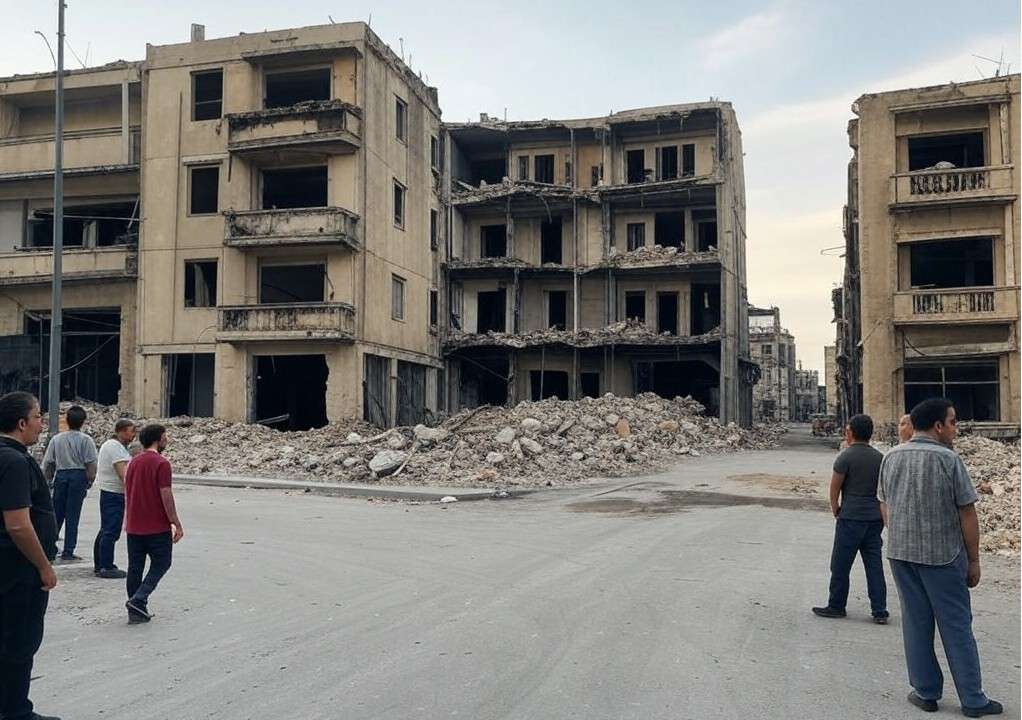
According to the plaintiff, the bombing hit a residential area in Tyros. Five residential buildings collapsed. His mother, his sister and two nephews were killed. His father was seriously injured and, according to the available information, remains in critical condition.
The complaint is explicitly filed against unknown persons. The initial goal of the procedure is to open criminal investigations to determine possible responsibilities. The filing of a criminal complaint does not by itself constitute a legal assessment of the allegations. Whether criminal offenses such as war crimes or crimes against humanity are actually met must first be examined in the context of an investigation.
Serious allegations under international criminal law
The complaint is based on the allegation that the bombed area was used exclusively for civilian purposes and that no effective warning was given to the population before the attack. If these assertions are confirmed, the plaintiff’s side argues that this could constitute a serious violation of international humanitarian law.
International humanitarian law obliges parties to a conflict to distinguish at all times between military and civilian targets. Attacks on civilians or civilian objects are generally prohibited. Military operations must also comply with the principles of proportionality and precaution in order to avoid civilian casualties as far as possible.
Whether these conditions were violated in the concrete case is still open. The French investigative authorities would first have to reconstruct the exact course of the attack, any possible military targets in the vicinity and the decision-making processes.
France and the principle of universal jurisdiction
That French courts are dealing with an incident that occurred in Lebanon is due to the principle of universal jurisdiction. This allows, under certain legal conditions, the prosecution of particularly serious international crimes even if they were committed outside France.
However, narrow legal conditions apply. The French authorities will first check whether all statutory requirements are met and whether an investigation can be opened. Especially in cases alleging war crimes, such reviews are typically complex and can take considerable time.
Part of a growing number of international cases
The current complaint is already the second suit of this kind filed in France within a few months in connection with Israeli military operations in Lebanon.
In April 2026, the French-Lebanese artist Ali Cherri had already filed a criminal complaint after his parents were killed in an airstrike on Beirut. That case is likewise examining potential violations of international criminal law.
The increasing number of such cases illustrates that national courts are increasingly dealing with international conflicts. Alongside procedures before international criminal tribunals, national justice systems are gaining importance as possible venues for prosecuting serious violations of international law.
Different assessments of the conflict
Since the start of its military operations in Lebanon, the Israeli government has repeatedly emphasized that the operations are aimed at military infrastructure and fighters of Hisbollah. According to Israel, the operations are conducted in accordance with international law and with regard for the obligation to protect the civilian population.
Human rights organizations and international observers, by contrast, have repeatedly criticized individual strikes that resulted in numerous civilian deaths or the destruction of civilian infrastructure. They are calling for independent investigations to clarify possible violations of international humanitarian law.
Whether the airstrike on Tyros was actually unlawful or can be justified militarily is not currently clarified. This question will now be the subject of possible investigations by the French judiciary.
The criminal complaint marks another step in the legal processing of the Middle East conflict at the national level. For the relatives of the victims, the main focus is on the hope for an independent investigation and clarification of responsibilities. Whether this ultimately leads to a formal criminal proceeding or to charges being brought depends on the results of any ensuing investigations. Regardless of the outcome, the case shows the growing importance national courts are gaining in adjudicating alleged violations of international law.
Author: P. Tiko