
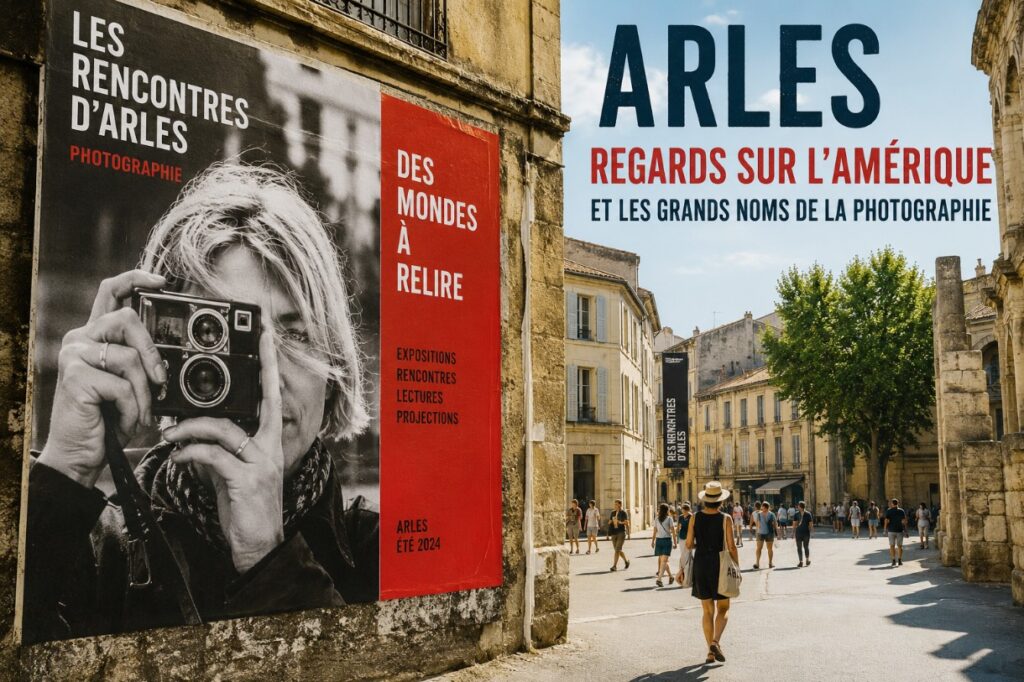
Every summer, the southern French city of Arles is transformed into a place where photography is far more than art on white walls. For decades, the Rencontres d’Arles have been among the world’s most important photography festivals, attracting photographers, curators, collectors and image enthusiasts from every continent. Historic churches, former industrial halls and winding alleyways become settings for encounters with images that tell stories, evoke memories and sometimes raise uncomfortable questions. That is precisely what makes this festival so compelling.
This year, the focus is particularly on America. But anyone expecting postcard motifs or the American dream will be mistaken. The exhibitions paint a multifaceted portrait of a country full of contrasts. Big city and small town, brilliance and shadow, hope and social tensions stand side by side. This diversity, in particular, opens up new perspectives on a country that has decisively shaped the history of photography.
One of the festival’s major names is William Klein. His photographs of New York are still regarded as milestones in street photography. While many photographers were still striving for technical perfection, Klein sought out life in all its restlessness. Blurred movement, unusual framing and immediate proximity to people gave his photographs a dynamism that has lost none of its power even decades later. His images feel spontaneous and raw – and that is exactly where their fascination lies.
But Arles is not limited to looking back. Alongside the icons of photography, contemporary artists are given ample space for their work. They tell stories of identity, migration, social change and the many facets of modern America. This creates compelling dialogues between past and present. How do societies change? Which stories disappear over time, and which remain visible? Such questions accompany many visitors through the exhibitions.
Special attention is also given to photographer Ming Smith. Since the 1970s, she has documented the lives of African American communities with a visual language that combines documentary precision and poetic atmosphere. Her photographs portray people not as anonymous figures in a statistic, but as individuals with dreams, memories and hopes. It is precisely in this that her work develops a quiet yet lasting impact.
Indeed, the festival thrives on this diversity. Documentary reports meet experimental installations, historical archives meet contemporary image series. Sometimes large-format photographs invite prolonged viewing; at other times, small, intimate works surprise with their emotional power. Those strolling through the exhibitions continually discover new perspectives. Is that not exactly the strength of good photography?
The extraordinary exhibition venues also contribute to the atmosphere. Old factory halls, monasteries and former warehouses form an appealing contrast to the modern themes of the works on display. The images enter into a dialogue with the historic walls – and suddenly, the past seems to meet the present. There is something special about that.
Arles has long ceased to be merely a showcase for established photographers. Young talents present their first major projects here and are given the opportunity to be discovered by international experts. For many, an international career begins right here. This keeps the festival vibrant and open to new ideas.
The focus on America, in particular, impressively demonstrates that photography does far more than produce beautiful images. It captures history, questions social developments and makes visible fates that might otherwise easily be overlooked. Major names such as William Klein and Ming Smith therefore stand not only for outstanding photography, but also for an alert view of the world.
Year after year, the Rencontres d’Arles prove that images can bring people into conversation with one another. They tell of freedom and inequality, of memory and change, of hope and doubt. Anyone walking through the exhibitions takes home not only impressive photographs, but also new thoughts. And in the end, is that not photography’s finest task?
An article by M. Legrand