
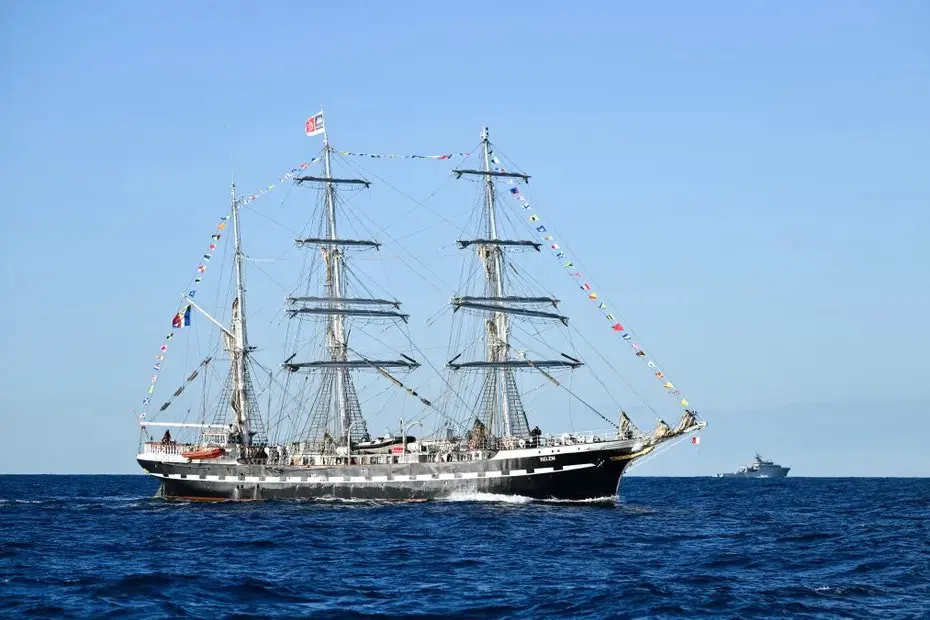
Some ships transport goods, others carry people. And then there are those rare ships that carry stories. Without a doubt, the Belem belongs to this category. When the famous three-masted ship docked in the port of Dunkirk in early June, it attracted not only maritime enthusiasts but also numerous families, tourists, and the curious. The occasion for the visit was a very special anniversary: the legendary sailing ship is celebrating its 130th birthday this year.
Those who strolled along the quays of the citadel quickly felt the special atmosphere. Amid seagull calls, salty sea air, and the bustling activity of the harbor district, the masts of the historic ship rose high into the sky. It almost seemed as if time had stood still for a moment.
The Belem is one of France’s most famous ships. It was launched in 1896 in Nantes and is today considered the last great French commercial sailing ship of the 19th century still sailing the seas. Its long history reads like an adventure novel. Originally, it transported cocoa, sugar, and other goods between Europe and South America. Later, the ship changed owners several times and even sailed temporarily under other flags.
Not many ships survive for such a long time. Storms, wars, and economic changes caused many historic sailing ships to disappear. The Belem narrowly escaped this fate. In the late 1970s, the ship was on the verge of complete decay. A rescue effort saved the three-master from sinking into oblivion. After extensive restoration work, it was given new life and became one of the most important symbols of French maritime heritage.
It was precisely this story that fascinated visitors in Dunkirk. During the free viewing days, the crew opened the decks to the public. Thousands took the opportunity to take a behind-the-scenes look at the venerable sailing ship. Those who stepped onto the wooden planks could easily imagine sailors walking those same decks over a century ago.
The rigging was particularly impressive. A true network of ropes, masts, and yards stretched across the entire ship. For many visitors, the inevitable question was: How did sailors back then manage to safely navigate such a ship across the oceans?
The answer lies in a mix of experience, courage, and hard work. Life aboard a merchant ship at the end of the 19th century held little romance. Long journeys, strenuous physical labor, and unpredictable weather shaped the daily routine of the crew. Because of this, the Belem today feels like a living window into a world long past.
The celebrations were held as part of the maritime festival “Dunkerque fête la mer.” The port city used the opportunity to showcase its close connection to the sea. Historic ships, naval units, and numerous events attracted visitors from across the region.
The famous Duchesse Anne was also at the heart of the festivities. Alongside other historic ships, she recalled the great sailing tradition of northern France. Events marking the 400th anniversary of the French Navy added further significance to the maritime weekend.
The Belem’s fame today extends far beyond France’s borders, not only because of its exceptional history. Millions of people around the world saw the ship on television last year when it carried the Olympic flame from Greece to Marseille. This symbolic mission once again brought the historic sailing ship into the international spotlight.
But perhaps the true strength of the Belem lies not in spectacular missions or anniversaries. Its special value is in making history tangible. While museums preserve memories behind glass, the Belem continues to sail the seas. It lives, moves, and tells its story in a unique way.
Dunkirk proved to be the perfect host. The city has a centuries-old maritime tradition and knows how to make its connection to the sea visible. The enthusiasm of visitors showed clearly that historic ships have lost none of their fascination even in the digital age. After all, who doesn’t like standing before a ship that was already sailing when the first automobiles were still a rarity?
After the celebrations, the three-master continues its journey. New ports await, as do new visitors. And although 130 years have passed, the Belem does not seem like a relic of bygone times. Rather, it feels like an old seafarer who still has exciting stories to tell and has no intention of retiring.
So its visit to Dunkirk is much more than just a simple port stop. It reminds us how closely France’s history is connected to the sea—and that some legends do not lose their shine even after 130 years.
An article by M. Legrand