
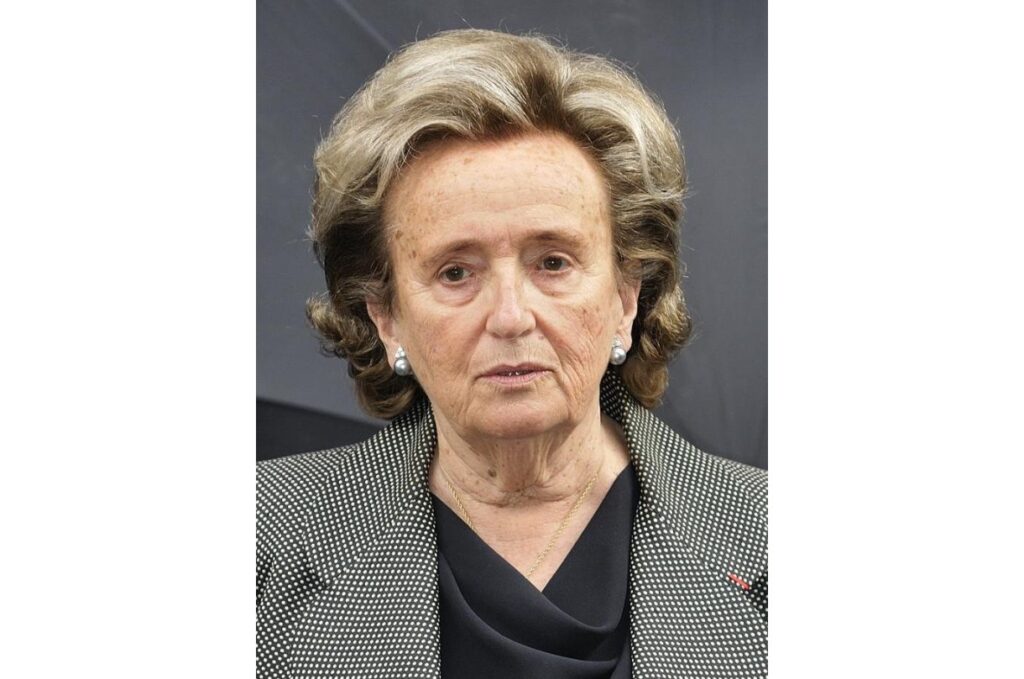
With the death of Bernadette Chirac, France loses a personality who shaped politics, charity, and public perception for decades. The widow of former President Jacques Chirac died on June 5 at the age of 93. The funeral services reflect the two worlds that defined her life: the national stage in Paris and the rural Corrèze, with which she was closely connected both politically and personally.
Farewell Between Capital and Province
According to the family, the mourning ceremonies will take place in two stages. First, a religious ceremony is scheduled for June 12 in Paris. Two days later, a public memorial event will follow in Corrèze, the southwestern French region inseparably linked to the political rise of the Chirac family.
The choice of this setting is more than an organizational decision. It underscores the special role that Corrèze played in the political life of the couple. Jacques Chirac began his path to the top of the state there, and Bernadette Chirac also built her own political foundation there.
More Than the Wife of a President
For a German-speaking audience, Bernadette Chirac mainly appears as the former First Lady of France. However, that classification falls short. Unlike many spouses of French presidents, she had an independent political career.
For several decades, she was active in local and regional politics. She held various mandates in Corrèze and maintained direct contact with the citizens. This local rooting gave her credibility that went far beyond representative duties.
Political observers often saw her as an important support for her husband’s career. At the same time, she developed her own profile characterized by persistence, down-to-earth nature, and a remarkable closeness to the population.
The Face of “Pièces Jaunes”
Bernadette Chirac became nationally known especially through her long-standing commitment to the “Pièces Jaunes” campaign. For nearly three decades, she was the public face of the fundraising campaign supporting children and young people in hospitals.
She achieved something that few political figures manage: combining political prominence with a consistently positive public image. Even critics of French politics often acknowledged her social commitment and her perseverance in charitable projects.
The planned memorial event in Corrèze will therefore likely be much more than a regional occasion. It will be a symbol of the close connection between a nationally known personality and the region that decisively shaped her political life. Similar to the death of Jacques Chirac in 2019, Corrèze will become the central place of farewell. For many residents, this marks the end of a chapter in French political history that was closely linked to the Chirac name for decades.
Author: P. Tiko