
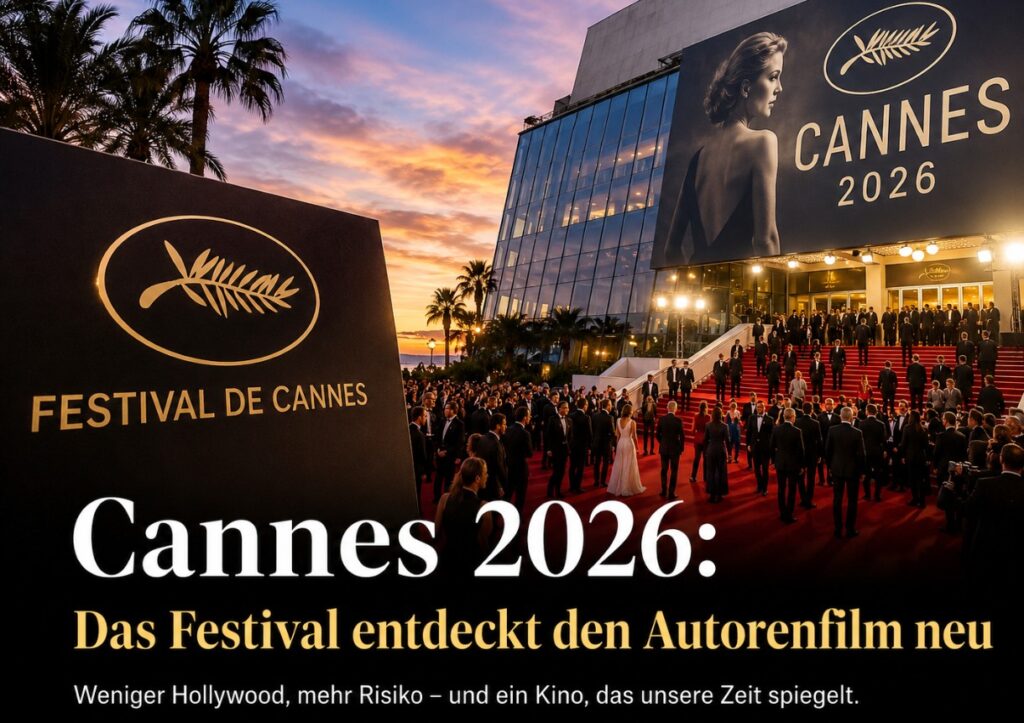
A different breeze is blowing this year on the Croisette. Fewer Hollywood flashes, less calculated glamour, and instead, darker themes, complex narratives and films that do not aim to please but to challenge. Already in the first days of the 2026 Cannes Film Festival an atmosphere noticeable to many regular attendees is emerging: cinema is once again seeking risk.
Histoires de la nuit by French director Léa Mysius is being discussed with particular intensity. The film adaptation of Laurent Mauvignier’s novel is already regarded as one of the strongest French productions in the competition. Those leaving the screening talk less about the plot than about the atmosphere. The film settles over the audience like a fog — oppressive, hypnotic, sometimes almost claustrophobic. Monica Bellucci and Benoît Magimel carry this story with an intensity that on the Croisette gives rise to long conversations well into the night.
Very different but no less present: Paper Tiger by James Gray. The American director, who was added to the competition at the last moment, brings back to Cannes a kind of cinema many already missed. It is not a superhero spectacle nor a franchise machine, but a quiet, melancholic film about loneliness, family and lost dreams. Some critics are already calling it a small challenge to the modern studio system. Well — sometimes a discreet film is enough to sound louder than any explosion on screen.
What stands out most is the festival’s international orientation. Names like Pedro Almodóvar, Asghar Farhadi, Ryusuke Hamaguchi and László Nemes dominate conversations in cafés along the Croisette. Many observers note a return to classic auteur cinema — that cinema in which directors not only deliver content but leave unmistakable signatures.
This edition also feels more political and melancholic than in previous years. War, identity crises, ecological fears and fantasies of technological control run like a dark thread through various films. A journalist has already defined Cannes as a “nervous festival.” Indeed, it seems world events are filtering directly onto the screen. Even glamorous premieres suddenly carry a more serious tone.
And Cannes is visibly changing outside the cinemas too. Alongside actors and directors, influencers, TikTok critics and content creators are now making their way onto the red carpets. For some it is a breath of fresh air and the festival opening up to younger generations. Others roll their eyes and speak of a constant digital staging. The debate about this has already become almost as inseparable from Cannes as the tuxedo and the evening gown.
There is no clear favorite for the Palme d’Or so far. But precisely that is what makes this edition so exciting. Instead of a dominant film, this time many radical and personal works mark the festival. Maybe it lacks the great glamour of past years, but Cannes 2026 seems to more strongly recall what made this festival famous in its early days: brave cinema for people who want to be surprised.
By C. Hatty