
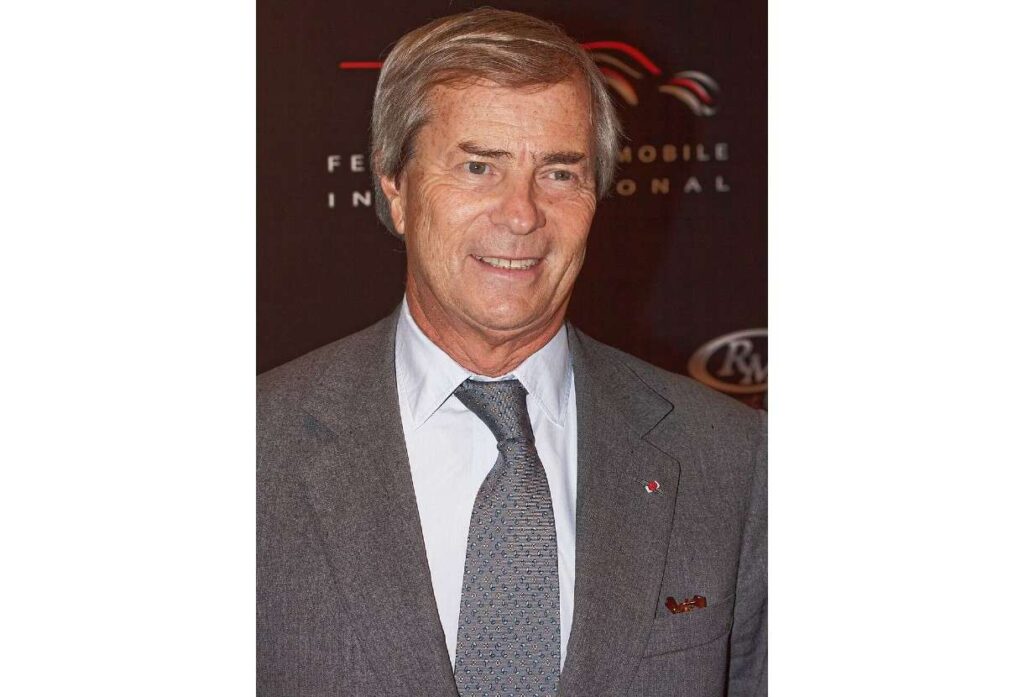
The conflict around Vincent Bolloré, Canal+, and the French film industry goes far beyond a typical cultural controversy. What began at the Cannes Festival as a political manifesto quickly became a symbolic conflict about power, influence, and ideological control in French cultural life. The fact that the National Rally is now precisely calling for de-escalation shows how deeply this debate has penetrated the political sphere.
The RN vice-president, Sébastien Chenu, issued a call to the film industry actors and Canal+ to “return to the negotiating table” in order to resolve the conflict “with dignity.” His intervention followed the heavily criticized statements by the Canal+ head, Maxime Saada, who announced that he would no longer collaborate with the signatories of an anti-Bolloré manifesto. This led to a new escalation of the conflict: a political expression suddenly turned into a debate about professional consequences and cultural power relations.
The question of power behind the conflict
The trigger for the crisis was an opinion piece published in Libération, signed by about 600 film professionals. The signatories warned against an increasing concentration of cultural and media power in the hands of Vincent Bolloré. It was not just about Canal+, but the entire network of the Breton billionaire, which now extends from publishing houses to television channels to production companies.
Bolloré has been one of the most influential figures in the French media landscape for years. Under his control, channels like CNews have become platforms strongly highlighting conservative to right-wing nationalist positions. Critics see it as a French version of the American Fox News model. Supporters, on the other hand, believe that Bolloré simply corrected an ideological imbalance long dominated by rather liberal left-wing circles.
The cinema sector, in particular, watches this development with concern. French cinema traditionally sees itself not only as an economic sector but also as a cultural institution with an almost republican function. The state has protected and supported this industry for decades through quotas, subsidies, and a complex financing system. Canal+ plays a key role here: the channel invests significant amounts each year in French productions and is thus one of the main financiers of national cinema.
The threat from Saada has therefore deeply affected this sector. If the main private financer of French cinema were to make political loyalty or ideological closeness an implicit criterion in the future, it would have major consequences for producers, directors, and actors.
Between freedom and dependence
The reactions to these statements reveal a deep structural tension within the French cultural industry. On one side, artists and intellectuals claim freedom of expression and political independence. On the other, the sector remains largely dependent on a few institutional funders.
This ambivalence is not new. In recent decades, regular debates have taken place about the influence of economic elites in the French media. But rarely has the conflict been as open as today. The fact that a media group publicly announces it will no longer work with certain signatories reminds many observers of informal forms of “blacklists,” especially historically known in the United States during the McCarthy era.
Left-wing parties therefore denounce an attack on cultural freedom. Within the left, Bolloré has long been perceived as a symbolic figure of a conservative cultural battle. His opponents accuse him of building a media ecosystem systematically promoting national-conservative and identity-themed topics.
On their side, conservative and RN officials argue that the film sector has long maintained political homogeneity and marginalized conservative voices. Seen this way, the article against Bolloré appears less as a defense of freedom than as an attempt by a cultural milieu to preserve its ideological hegemony.
The National Rally discovers cultural politics
The role of the National Rally is particularly remarkable. Until a few years ago, Marine Le Pen’s party was largely isolated in the French cultural world. Today, the RN is increasingly seeking to gain influence in intellectual and cultural spheres.
The conciliatory tone of Sébastien Chenu fits into this strategy. The party is trying to present itself no longer solely as a protest movement, but as a responsible governing force. On media and cultural policy issues, the RN now adopts a much more professional position than in the era of Jean-Marie Le Pen.
The conflict around Bolloré thus offers several advantages to the RN. On the one hand, it defends an entrepreneur perceived as a counterweight to the liberal left-wing media circles. On the other hand, it can position itself as a defender of economic stability and national cultural production. The fact that Chenu explicitly warned against a weakening of the entire film sector is evidence of this shift in strategic perspective.
At the same time, this affair reveals the ideological closeness between certain parts of the RN and Bolloré’s entourage. Channels like CNews have given significant visibility to right-wing and far-right politicians in recent years. Some political scientists now speak of a “media normalization” of the RN that has largely contributed to the political decrystallization of the party.
A foretaste of the 2027 presidential campaign
The intensity of this debate is also explained by the political context. France is slowly preparing for the 2027 presidential election. In this climate, any cultural or media controversy is immediately interpreted as an element of a broader ideological struggle for power.
The conflict around Bolloré touches on several key fault lines in French society: the concentration of economic power, the political polarization of the media, the influence of private actors on public debates, and the country’s cultural identity.
That these topics are erupting at the Cannes Festival carries strong symbolic significance. Cannes has always been not only a place of cinema but also a showcase of French soft power. However, the current controversy shows that even this traditional cultural space is now caught up in political polarization.
Added to this is economic uncertainty in the sector. French cinema is under pressure from streaming platforms, changes in viewing habits, and declining cinema attendance. This is especially why many professionals react strongly to any form of political interference. The fear of economic dependence mixes with the fear of ideological control.
The success of Sébastien Chenu’s call for a return to the negotiating table remains uncertain. The conflict now has a symbolic dimension that goes far beyond individual production decisions. France is currently undergoing a cultural showdown reflecting tensions in society as a whole: between economic concentration and public pluralism, between a conservative counter-movement and a traditionally left-liberal cultural sector, between national identity and liberal universalism.
The outcome of this confrontation will therefore likely have repercussions far beyond Cannes. It could partly determine the new configuration of relations between politics, media, and culture in France in the years to come.
P.T.