
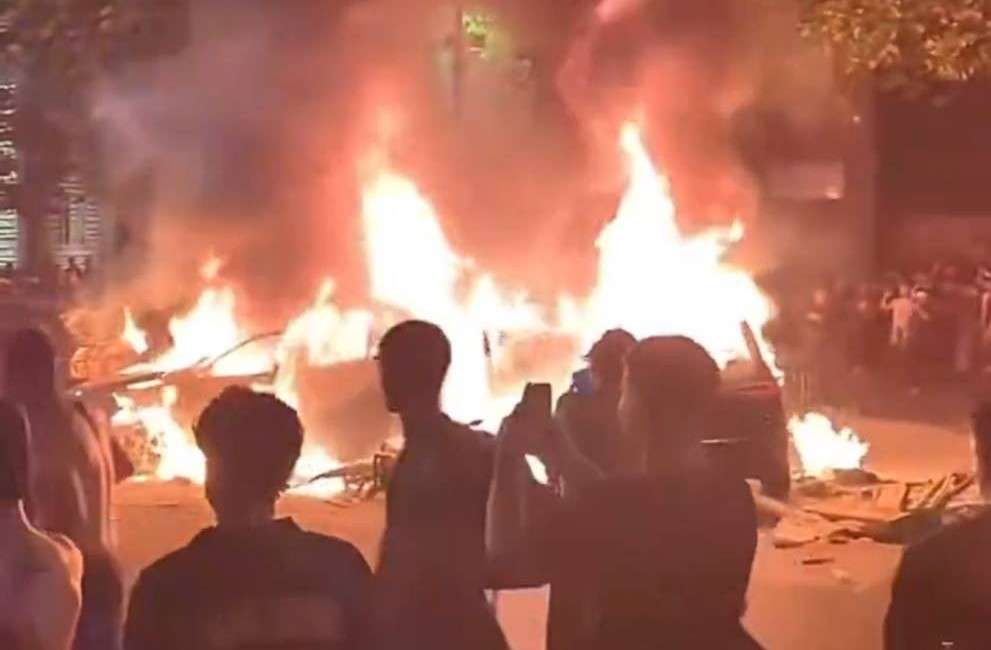
What an evening it could have been: May 31, 2025, was supposed to go down as one of the most glorious moments in the history of French football. Paris Saint-Germain won the first Champions League title in its club history with a sensational 5-0 victory over Inter Milan – a sporting milestone that made the fans’ hearts race.
But instead of an unforgettable celebration, the evening ended in tragedy.
Two dead, hundreds arrested – the dark side of the victory
While downtown Paris was still immersed in jubilation, the first shocking news reached the public. In Dax, a town in the department, a 17-year-old boy was stabbed to death at what was supposed to be a peaceful gathering. In Paris itself, a 20-year-old man died after being hit by a car while on a scooter in the 15th arrondissement.
Such news leaves one speechless.
But that was not all: nationwide, the police took action and arrested 559 people – 491 of them in Paris alone. 320 suspects were taken into custody, including 254 in the capital. The celebratory mood turned into chaos, violence, and destruction in many places.
Paris sinks in tear gas
The famous Champs-Élysées, usually a symbol of glamour and elegance, became a focal point of conflict. Jubilant crowds suddenly found themselves in aggressive riots. Windows were broken, cars were set on fire, shops were looted. The police were forced to use tear gas and water cannons against the riots.
And not just in Paris: In Grenoble, a car drove into a crowd and injured four people. In Coutances in Normandy, a police officer suffered life-threatening injuries from a firework – he is in an induced coma.
Who is to blame?
Interior Minister Bruno Retailleau spoke clearly. The blame lies not with football, but with a small group of “violent and antisocial individuals.” He announced strict legal consequences for them. He emphasized that the majority of fans were peaceful – but unfortunately, it only took a few to shake the entire nation.
The club itself also expressed sorrow. PSG released a statement of mourning, while Ousmane Dembélé warned via social media: “Celebrate with respect – violence does not belong in sports.”
An appeal that could hardly have been made any clearer.
Security apparatus on alert
Despite the events, the official celebrations continue. On Sunday, a victory parade followed on the Champs-Élysées, accompanied by a strong police presence. The highlight: a reception at the Élysée Palace with President Emmanuel Macron. France wants to celebrate – but under close supervision.
The authorities are leaving nothing to chance. Medical emergency services are also on heightened alert. One question immediately arises: Is our society still capable of experiencing collective joy without it turning into aggression?
A sporting victory, but a societal warning signal
PSG has achieved something historic – no question about it. But the echo of this triumph resonates not with applause, but with sirens wailing through the streets. Instead of popping champagne corks, bottles smashed on asphalt. Instead of cheers of joy, there were cries of fear.
This gap between the sporting event and public order exposes deeper problems: lack of prospects, social tensions, a certain alienation from the state. Football quickly becomes a vent – or unfortunately also a stage for riots.
Whether this is solved with more police, tougher penalties, or better prevention remains open. One thing is certain: such nights leave scars – in society, in the families of the victims, and in the collective memory of a country that actually wanted to lose itself in euphoria.
Football remains a game. But life is real.