
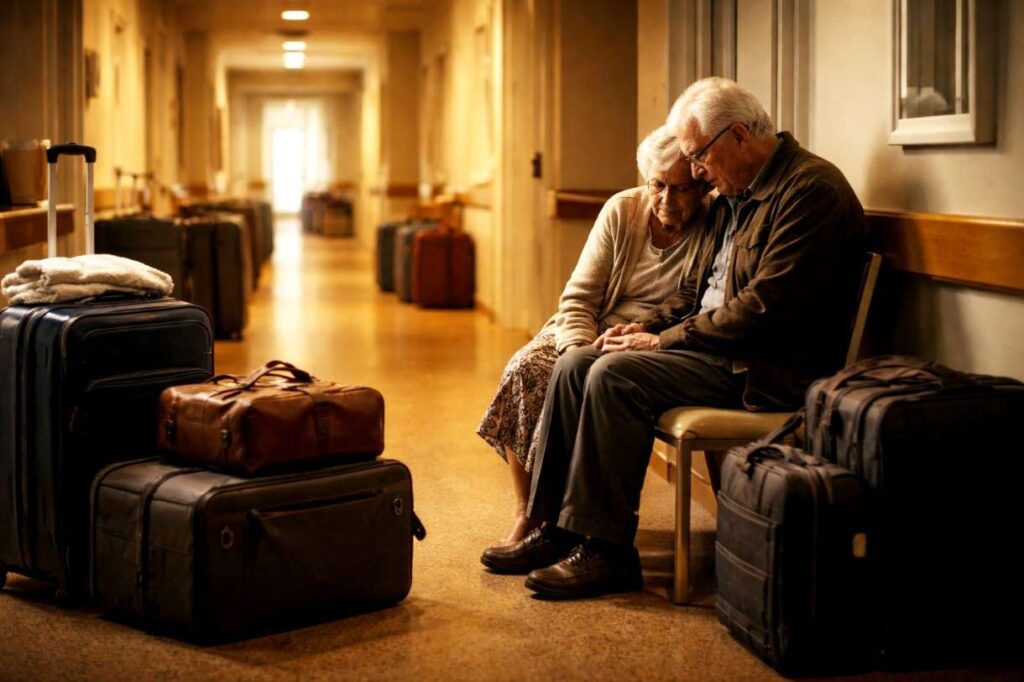
It is a sentence that lands like a punch in the gut: A lifetime of work – and now thrown out of assisted living. In Vitré.
You have to let it roll slowly over your tongue to understand what is actually happening here. These are people who have invested decades of their lives in this society. Got up early, worked overtime, raised children, paid taxes, weathered crises. No glamour, no applause – just did it. Day after day.
And now?
Now they stand there. With packed suitcases. Uncertain. Partly helpless. And above all: left alone.
This is not an accident. This is a moral failure.
Because anyone who thinks this is “only” about an insolvency misunderstands the dimension. It’s about trust. About dignity. About the quiet promise that a state, a society will not abandon its elders. And that very promise has been broken here – coldly, bureaucratically, almost casually.
You can sugarcoat it. Talk about market mechanisms. About economic pressures. About “unfortunate circumstances.” But honestly – what kind of system is it where a home becomes disposable?
A home!
Not a hotel. Not a rental car. Not a streaming subscription you can just cancel.
This is about the final stage of life. About people who deliberately moved to a place because they sought security there. Because they thought: Now it’s good. Now I can let go. Now someone takes care of things.
And then the exact opposite happens.
The door slams shut – and behind it there is nothing left.
Anyone who has spoken with older people who lose their independence bit by bit knows how great the fear of exactly such a moment is. Not being needed anymore. Being dependent. And then also – in the literal sense of the word – being thrown out.
That is more than a logistical problem. That is a slap in the face.
Of course neighbors now step in. Former caregivers help. The municipality organizes what it can organize. That is touching, impressive – and at the same time a damning verdict. Because it shows: when push comes to shove, it is not the system that saves, but the goodwill of individuals.
But you cannot build an aging model on goodwill.
The bitter truth is: we have allowed care to become a business model. That return-on-investment expectations move in where reliability should actually prevail. And yes, that may seem economically logical. But humanly it is a disaster.
Because old people are not customers like any others. They cannot simply switch providers. They cannot react flexibly. They rely on — on stability, on trust, on structures that hold.
And it is precisely these structures that have failed here.
Perhaps the most unpleasant thing about this story is that it concerns all of us. Today it’s “the others.” The very elderly, the people in need of care. But tomorrow? Who guarantees that we won’t one day stand at that very door ourselves – with a suitcase in hand and the question in our minds: Where to now?
This is the moment when it becomes quiet.
Because everyone feels that something has fallen out of balance here.
Working all your life – and then being treated like this, that doesn’t fit together. It must not fit together. And if it does happen, then something fundamental is wrong.
Not as an isolated case. But in the system.