
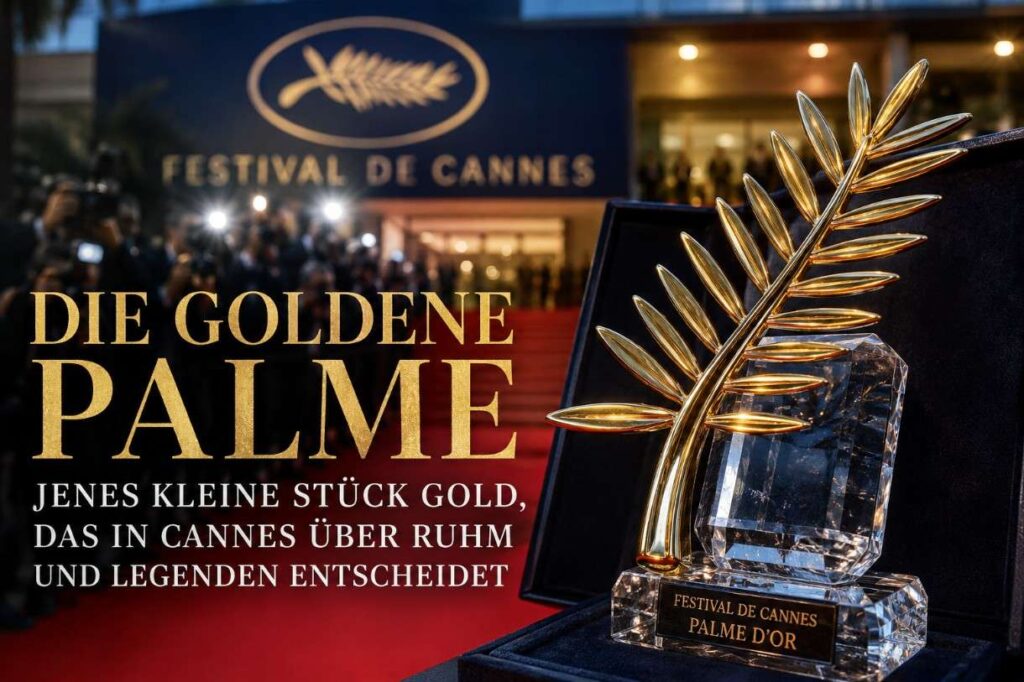
This year, a different atmosphere hung over the Croisette. Less champagne tinkling, less calculated glamour, less of that old Cannes magic where stars step out of black limousines and photographers fire like machine guns. Instead, the 79th film festival often seemed like a deep reflection on a world that has come undone.
And in the middle of it all: Cristian Mungiu.
The Romanian director received the Palme d’Or for his film Fjord — for the second time after his triumphant victory in 2007 with 4 Months, 3 Weeks and 2 Days. A moment that not only made film history but also notably suited this strange festival well. Because Mungiu’s cinema never concerns itself with simple truths. His characters stumble through moral grey areas, societal tensions and ideological minefields. Precisely where Europe seems to stand at the moment.
Fjord tells the story of a Romanian-Norwegian family, strictly religious, isolated, internally tense. When Norwegian child protective services intervene, a conflict begins that goes far beyond family matters. Who is actually protecting whom here? And where does care end, and where does cultural patronizing begin?
Mungiu brings these issues with that quiet precision that is his hallmark. No big outbursts. No moral hammer. Instead, glances, silence, small gestures — like cracks in the ice of a fjord, which first seem harmless but suddenly shift entire landscapes.
The audience in Cannes reacted almost reverently. During the screening, you felt that rare festival silence, where no one coughs, no one whispers, no one looks at their phone. Cinema as a collective concentration experience. Are there still many places for that today?
The entire awards ceremony seemed like a reflection of the present. Numerous films dealt with war, identity, migration, or political violence. Almost every second competition entry seemed imbued with a deep social nervousness. Cinema is currently not looking away. It is drilling into it.
This became particularly clear with the Russian director Andrey Zvyagintsev. When he accepted the Grand Prix for Minotaur, he made an open appeal to Vladimir Putin and demanded an end to the war against Ukraine. For a moment, the hall no longer seemed like a festival palace, but a political forum. Some applauded hesitantly, others immediately. Some stood up.
Cannes suddenly reminded one of those decades when film festivals were still seen as spiritual battlegrounds — a bit chaotic, a bit megalomaniacal, but full of attitude.
The other awards also fit this picture. Valeska Grisebach received the Jury Prize for The Dreamed Adventure. Her film about migration and crime at Europe’s outer borders tells about people who truly belong nowhere. The directing awards were shared by Paweł Pawlikowski and the Spanish duo Los Javis. Even with the acting awards, the jury chose community instead of the classic star cult.
You almost got the impression that Cannes wanted to consciously relativize the principle of the individual genius. Away from the myth of the almighty director, towards the ensemble, towards collective storytelling. Perhaps also a sign of the times.
Of course, there were still the iconic moments: Barbra Streisand on the red carpet, Peter Jackson with a slightly unkempt beard, flashbulbs along the Croisette. But even these scenes carried a melancholic undertone this time. As if the festival sensed that the world outside the cinema hall had long since become louder than any red carpet.
And that is precisely why Mungiu’s victory seems so logical.
Because Fjord does not provide simple answers. The film stubbornly refuses to present clear culprits and victims. Instead, it depicts modern democracies as fragile constructs full of contradictions. Tolerance tips into arrogance. Protection turns into control. Freedom clashes with moral expectations.
That sounds theoretical. But with Mungiu, it feels frighteningly concrete.
One scene lingers especially: A Norwegian official sits silently at the family’s kitchen table while freezing rain strikes the windowpanes outside. No one shouts. No one escalates. And yet in that silence there is more threat than in many action films. Well, such moments can only be brought forth by great auteur cinema.
Maybe that is precisely what explains the success of Fjord. The film is not only about Norway or Romania. It tells about a Europe that no longer fully understands itself. About societies that permanently talk about values and often forget how complicated people really are.
This year, Cannes showed less escapism than longing — longing for support, for empathy, for a language beyond ideological trenches.
Can cinema actually fulfill that role?
Maybe not alone. But for a few hours in the dark theater, it manages something that political discussion often does not: It forces people to really look at others.
An article by M. Legrand