
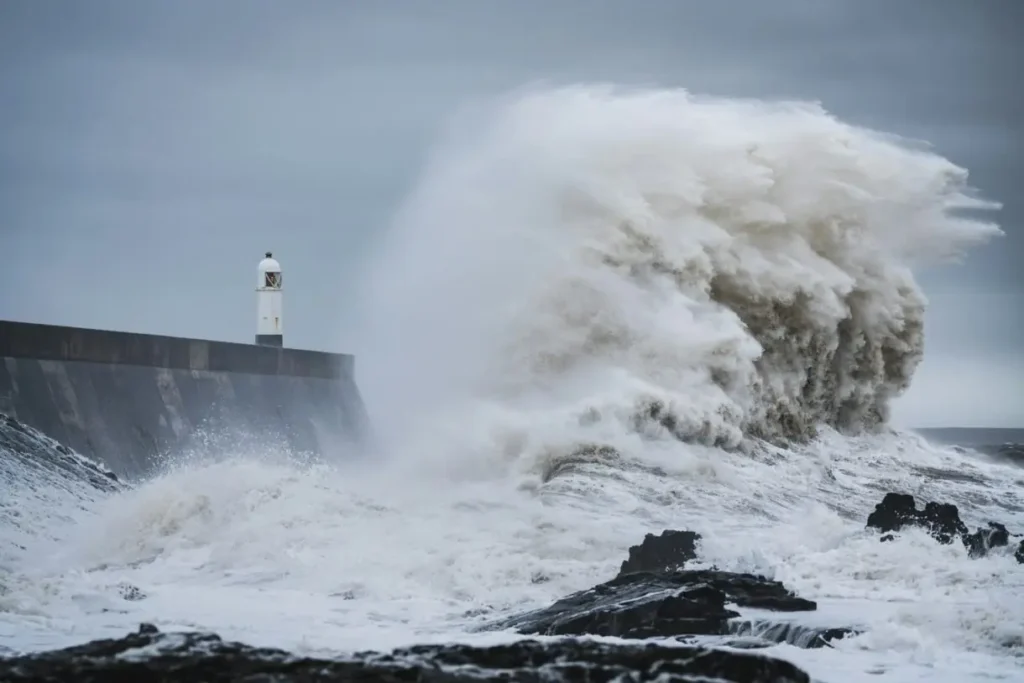
The sea off the coast of Brittany is unaware of half-measures. It takes fishermen out to sea, tempts walkers to the hills, and every year pulls thousands of sports enthusiasts into its cold waters. But sometimes the Atlantic reveals in just seconds the face that has been feared in this region for generations.
On Thursday morning, a Longe-Côte tour at Les Blancs-Sablons beach in Le Conquet ended fatally. Two people died and five were injured, two of them seriously. The group was together in the water when suddenly strong swells and huge waves swept several participants away. Rescue teams were dispatched on a large scale — about 40 firefighters and two helicopters. However, for one man and one woman, all rescue efforts came too late.
This news shook a region where the sea is almost family. In Finistère, the wind, tides, and waves are lived with as if they were road traffic or weather forecasts for people elsewhere. Children learn early on that the Atlantic is not just a postcard scene. It gives both beauty and danger at the same time.
It is precisely for this reason that the tragedy in Le Conquet is even more suffocating.
Longe-Côte is originally known as a peaceful leisure activity. Participants usually walk in water up to their waist or chest height along the coastline, often wearing special neoprene suits as a group. This sport originated in northern France and is especially popular among older people. It is good for health without stressing the joints and social — many participants praise the combination of exercise and experiencing nature. Chatting a little, walking through the water, breathing fresh air. It sounds harmless.
But the Brittany coast operates by its own rules.
Plage des Blancs-Sablons is open to the northwest and has been famous among surfers for years. Where there are ideal conditions for surfing, hidden dangers lurk for unskilled groups. There, swell forms quickly, currents change almost imperceptibly, and individual breakers exert enormous power. Anyone who has experienced it never forgets the sound — that dull rolling noise just before the wave swallows everything.
According to initial information, participants were between 60 and 80 years old. They appear to have been surprised by the power of the sea. Especially for older people, just a few seconds in cold, moving water are enough to lose their sense of direction and balance. When the group scatters, confusion immediately arises.
In Brittany, such accidents repeat themselves. Fishermen, hikers, vacationers — the sea does not distinguish between locals and visitors. And that is exactly what makes this landscape so ruthless. Even in calm weather, the Atlantic always remains a presence that demands respect.
Many coastal residents therefore speak of the sea almost as if it were a person. Not romanticizing it, but with a kind of sober reverence. “Today it looks calm,” a phrase often heard in small ports — and that very phrase often already contains a warning.
The tragedy of Le Conquet reminds us that danger does not only begin when there is a storm warning. Sometimes a single series of waves, the wrong timing, or underestimated currents are enough. The sea does not need a storm to be deadly.
That is exactly what makes these incidents even more shocking.