
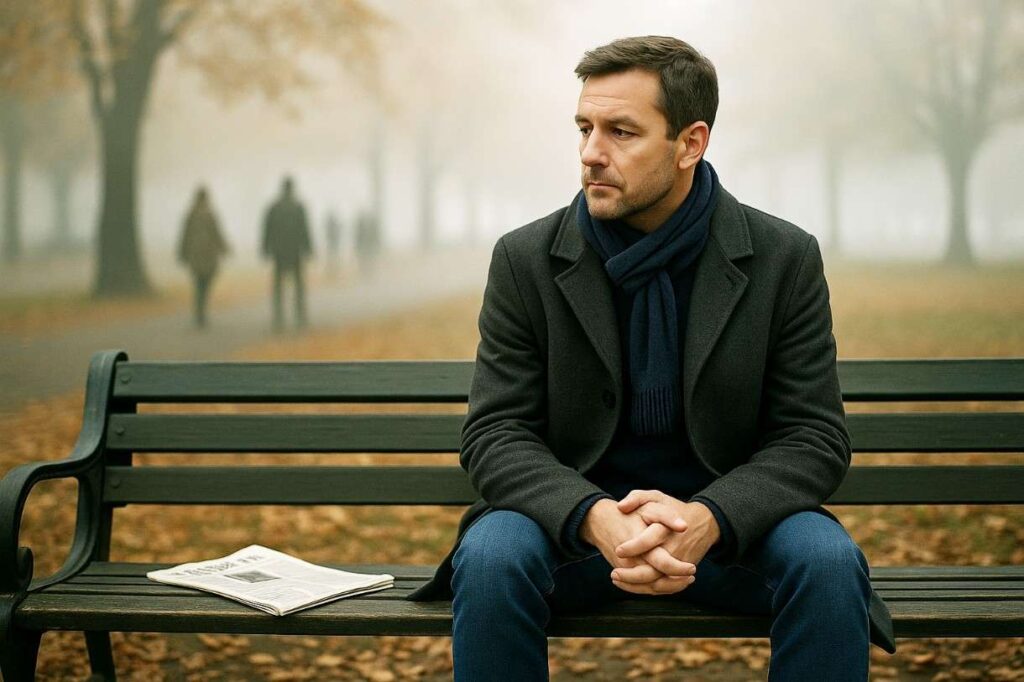
He comes quietly, almost secretly. No fireworks, no hashtag bombardment, no PR campaigns from big brands: November 3rd is World Men’s Day. A day that – hard to believe – actually exists. But while International Women’s Day on March 8th is long since firmly anchored in societal awareness, the male counterpart remains a phantom on the calendar. Hardly anyone knows it exists. Even fewer know what it actually stands for.
Originally, World Men’s Day was established in the year 2000 by the Andrology Department of the University of Vienna – initiated with the support of the WHO. The goal was not to celebrate men, but to make them think. It is about health, prevention, responsibility for oneself. A day to draw attention to the fact that men, on average, die five years earlier than women, suffer more often from cardiovascular diseases, and visit the doctor significantly less often. A sober, medical approach – no occasion for flowers or gifts.
Society’s view of men has changed. Between the extremes of “toxic masculinity” and the struggle for new role models, men themselves have become a topic of debate. World Men’s Day could therefore be a day of reflection today – beyond macho clichés and victim myths. But it is not.
Why is that?
Perhaps because men’s issues often carry a double stigma: Those who address them are quickly seen as backward-looking or sensitive. In a time when equality is finally being taken seriously, reflecting on male needs almost seems suspicious. Yet this is not about competition, but about balance.
Because men’s health is more than the annual prostate screening. It is also psychological, social, emotional. The numbers tell a clear story: Three out of four suicides in France and Germany are committed by men. In counseling centers, professionals report men who never learned to talk about worries – because showing weakness is “not manly.” This attitude, deeply rooted in generations of role expectations, comes at a price.
World Men’s Day would be the opportunity to talk about this publicly. But instead, silence prevails. November 3rd remains a quiet footnote day. Perhaps because it is difficult to define masculinity positively without falling into old patterns. Perhaps because men themselves hesitate to talk about their own problems. Or perhaps because, as a society, we simply have not yet found a way to reframe the male self-image.
And yet it is urgently needed.
Because the old ideal – strong, invulnerable, providing – no longer holds. Young men are seeking orientation between performance pressure, self-optimization, and the fear of “not being enough.” They are fathers, partners, sons – and people who wonder what masculinity even means today.
A World Men’s Day that gives space to these questions would not be an anachronism, but an expression of social maturity. It could build bridges between genders instead of deepening divides. Between body and soul, between aspiration and reality.
Maybe it doesn’t even require big speeches. Just honest conversations. About care instead of functioning. About attention instead of cynicism. About health – in the broadest sense.
Because equality only works if both genders look to the future healthy, open, and self-confident. World Men’s Day could be a symbol of that – if it were finally taken seriously.
Until then, it remains a day that quietly passes by. Almost invisible.
But maybe that is exactly the moment to pay attention.
Author: Andreas M. Brucker