
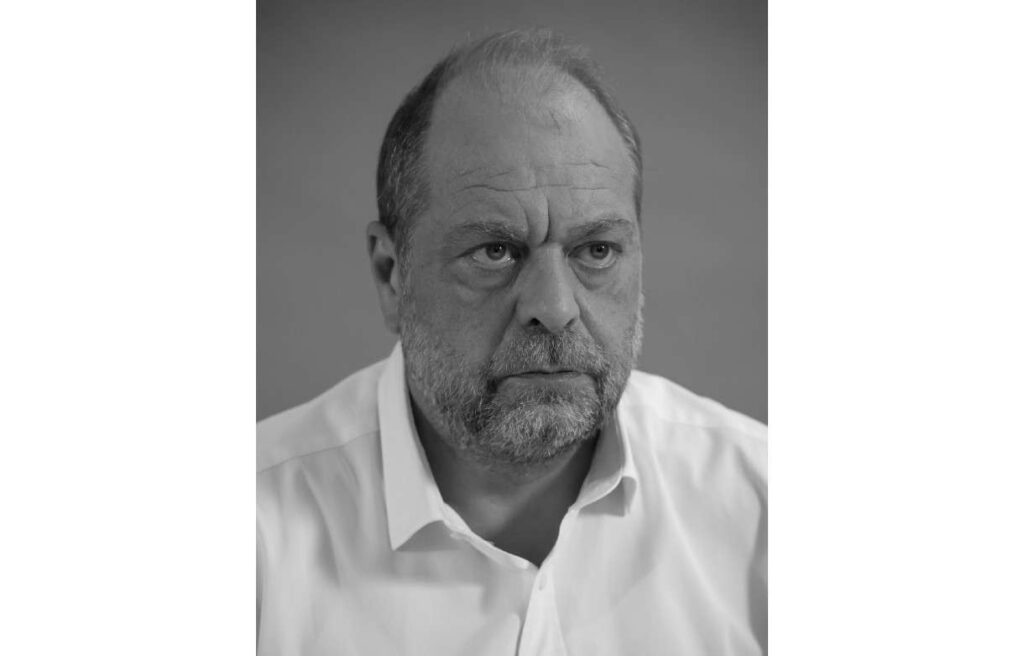
Éric Dupond-Moretti – a name that causes a stir in France like hardly any other. Whether as a powerful criminal defense lawyer, as Minister of Justice, or as a flamboyant figure on stage – the man knows how to move the public. However, in April 2026, he himself stands at the center of a trial that could have more than just personal consequences.
It concerns the accusation of defamation. The plaintiff is none other than Judge Édouard Levrault. The bone of contention: statements that Dupond-Moretti made both in his stage program “J’ai dit oui !” and in his book of the same name. In it, he accuses Levrault of having violated the confidentiality of an ongoing investigation – in favor of one of his clients, mind you.
Sounds like a classic case of “A says something, B feels attacked.” But this dispute has a long history.
Old wounds reopen
Already in 2020, shortly after his appointment as Minister of Justice, Dupond-Moretti initiated an administrative investigation against Levrault. At that time, Levrault was an investigating judge in Monaco and had made a name for himself – let’s say kindly – with unorthodox methods. Dupond-Moretti called him a “cowboy.” That did not go down well. Two years later, the Supreme Judicial Council decided that Levrault had behaved correctly. With that, the story could actually have ended.
But as it usually goes when personal vanity and public office collide: the dispute simmered on. Now, years later, it ends up before the criminal court.
30,000 euros and an example?
Levrault demands compensation of 30,000 euros – plus a judicial publication of the verdict. The justification? The statements are “severely defamatory,” factually unfounded, and clearly aimed at damaging his reputation.
An accusation that Dupond-Moretti’s lawyer, Maitre Jacqueline Laffont, emphatically rejects. She speaks of “persecution,” of a legal “minor war” that is now to be fought with all severity – in court, with arguments, not with emotions.
But can such a trial be de-emotionalized at all? This is not just about hurt vanity – it is about more.
Freedom of opinion or attack on the judiciary?
The lawsuit inevitably casts a spotlight on the limits of freedom of opinion. What may a former minister say when he now appears again as a private person? And: where does criticism end – and where does defamation begin?
A sensitive topic, especially in a country like France, where the separation of powers is strictly upheld. When a former representative of the executive publicly attacks members of the judiciary, suspicion arises that old scores are being settled here.
On the other hand: Isn’t it precisely this freedom that gives a democracy its vitality? The possibility to criticize institutions – even (or especially) when one once belonged to them?
The Stage as a Courtroom
The special aspect of this case is also that the disputed statements were not made in a classic political context. It was a stage program – a mix of biography, cabaret, and judicial criticism. Is such a setting automatically protected by artistic freedom? Or should a stage monologue not become a guise for accusations that have legal consequences outside the theater?
One inevitably asks: Where is the fine line between stage art and judicial scandal?
A Trial with Significance
Whatever is decided in April 2026 – the verdict will cause ripples. It concerns not only Dupond-Moretti and Levrault. It touches the foundations of the relationship between politics, justice, and the public.
In a time when trust in state institutions is increasingly under scrutiny, this trial is more than just a legal aftermath. It is a mirror. And it shows how easily personal differences can cloud the image of entire institutions.
Perhaps in the end only one thing helps: a clear, cool view – free from old enemy images and new provocations. But probably that is too much to ask for in the arena of vanities.
By C. Hatty