
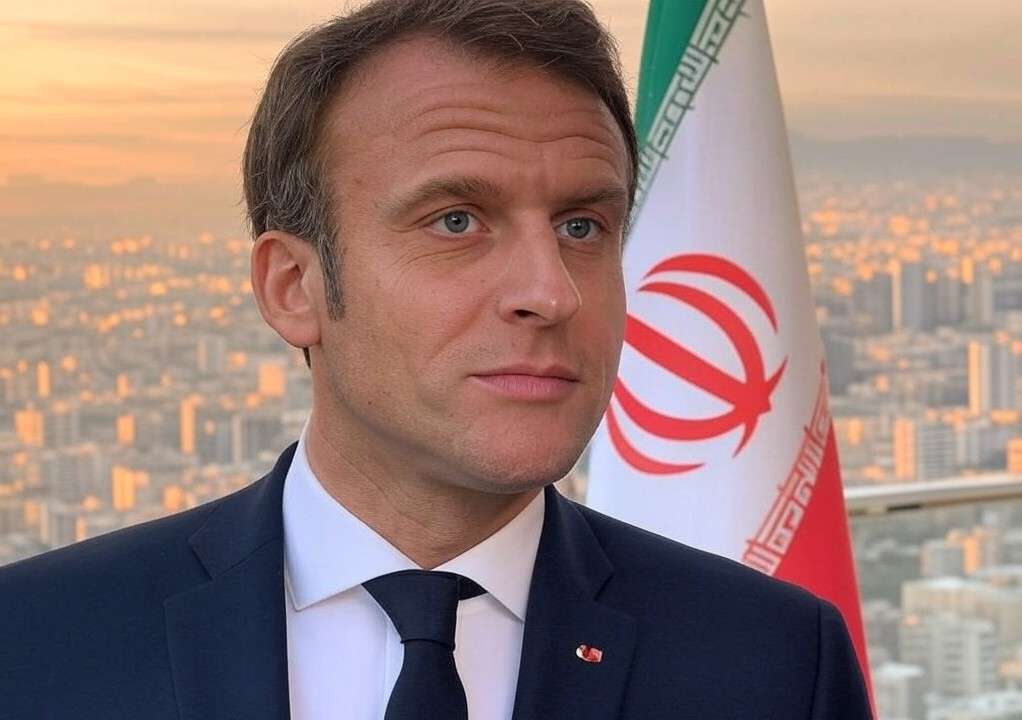
Tensions in the Middle East have reached a new, dangerous level. Following reports of rocket and drone attacks on targets in the United Arab Emirates, French President Emmanuel Macron reacted unusually sharply. He spoke of “unacceptable attacks” and condemned Iran’s actions in clear terms. The statement goes beyond diplomatic routine – it signals a growing concern in Europe that the already fragile status quo in the region could finally collapse.
An escalation with global explosive potential
The alleged attacks reportedly targeted a strategically important oil port as well as tankers in the sensitive sea area of the Strait of Hormuz. This strait is one of the central hubs of global energy supply: according to estimates by the International Energy Agency, about 20 percent of the world’s traded oil passes through this passage daily during peacetime.
The United Arab Emirates are among the most important energy exporters in the region. Attacks on their infrastructure or trading vessels therefore affect not just a single state but impact the stability of global markets. If it is confirmed that Iran deliberately used military means, this would be a significant escalation – with immediate consequences for energy prices and international trade flows.
The reaction from Paris is to be understood as a signal to the markets in this context. Europe is watching the development with growing nervousness, not least due to its ongoing dependence on energy imports.
France between Diplomacy and Deterrence
Macron’s choice of words is no accident. The term “unacceptable” is among the stronger expressions in diplomatic vocabulary but remains below an explicit threat. France is pursuing a classic dual strategy: clear condemnation of military escalation while keeping diplomatic channels open.
This stance corresponds to France’s traditional role in the Middle East. Paris sees itself as a mediator between power blocs, as an actor that maintains dialogue channels both with the Gulf states and with Tehran. France had already played a central role in negotiations in the context of the Joint Comprehensive Plan of Action.
But this position is becoming increasingly difficult. The region is shaped by a multitude of parallel conflicts: from the war in Yemen to tensions between Israel and Iranian-backed groups to maritime incidents in the Gulf. France’s influence is present but limited—especially in view of the military dominance of the United States in the region.
The USA at the Center
Parallel to the French response, the United States has intervened militarily. According to reports from Washington, several missiles and drones were intercepted. In addition, units of the Islamic Revolutionary Guard Corps in the Persian Gulf are said to have been targeted.
The USA thus once again present themselves as guarantors of free navigation – a claim that has been part of their security strategy in the Middle East for decades. Already during the so-called “Tanker War” in the 1980s, American warships escorted commercial vessels through the Strait of Hormuz.
But this is exactly where the potential for escalation lies. Any renewed direct military confrontation between the United States and Iran carries the risk of uncontrollable dynamics. What currently appears to be a limited military response could quickly escalate into a wider conflict.
Europe’s concern about a new energy shock
For Europe, the situation is highly relevant not only from a security policy perspective but also economically. The dependence on stable energy supplies remains significant despite advances in renewable energies. According to data from the European Commission, the EU still imports a large part of its energy needs.
A bottleneck in the Strait of Hormuz has immediate effects on oil and gas prices. Even minor disruptions can trigger significant price fluctuations – with the well-known consequences for inflation, industrial production, and social stability.
The experiences of recent years, especially in the wake of the Ukraine war and the associated energy crisis, continue to have an impact. Another price shock will jeopardize the economic recovery in Europe and increase political pressure on governments. In this context, Macron’s reaction can also be understood as a domestic political signal: France is demonstrating capability for action and foreign policy vigilance.
Geopolitical Entanglements and Strategic Uncertainties
The current escalation is part of a larger geopolitical pattern. Iran has pursued a strategy of asymmetric power exertion for years, relying on indirect confrontation and regional influence. This includes support for allied militias as well as targeted harassments against economically sensitive targets.
The international community thus faces a classic security policy challenge: How can escalation be prevented without signaling weakness? And how can diplomatic channels be kept open when military deterrence simultaneously appears necessary?
If further attacks or military countermeasures occur, the dynamics could quickly take on a life of their own. France’s clear but controlled response is an expression of a European approach aimed at stabilization – but whether this approach will hold largely depends on decisions made in Washington and Tehran.