The illegal wildlife trade no longer carries a dusty smuggler image. Ivory, rhino horns, or pangolin scales – for many, this sounds like distant markets somewhere in Africa or Asia. But the trade has changed its face. Today, it sits right in the middle of European living rooms. Fluffy, exotic, and perfectly staged for social networks.
A fennec fox with huge ears on TikTok. A serval on a leash in a designer apartment. A little monkey in a children’s sweater on Snapchat. Millions of users click “like,” share videos, and write comments like “So cute!” or “I need one too.” This is exactly where the problem begins.
Because behind these cute images often lies a brutal reality. Many animals come from illegal captures or dubious breeding operations. Young animals lose their mothers, end up in dark transport boxes, and travel across Europe with forged papers. Some do not survive the journey. What later appears polished and glossy on smartphones often has a long path of suffering behind it.
In 2025, Interpol noted a drastic increase in seized wild animals. Nearly 30,000 live animals were caught by investigators in a worldwide large-scale operation. Among them were turtles, birds, reptiles, primates, and large cat species. Authorities have observed the same trend for years: the demand for exotic pets is rapidly growing.
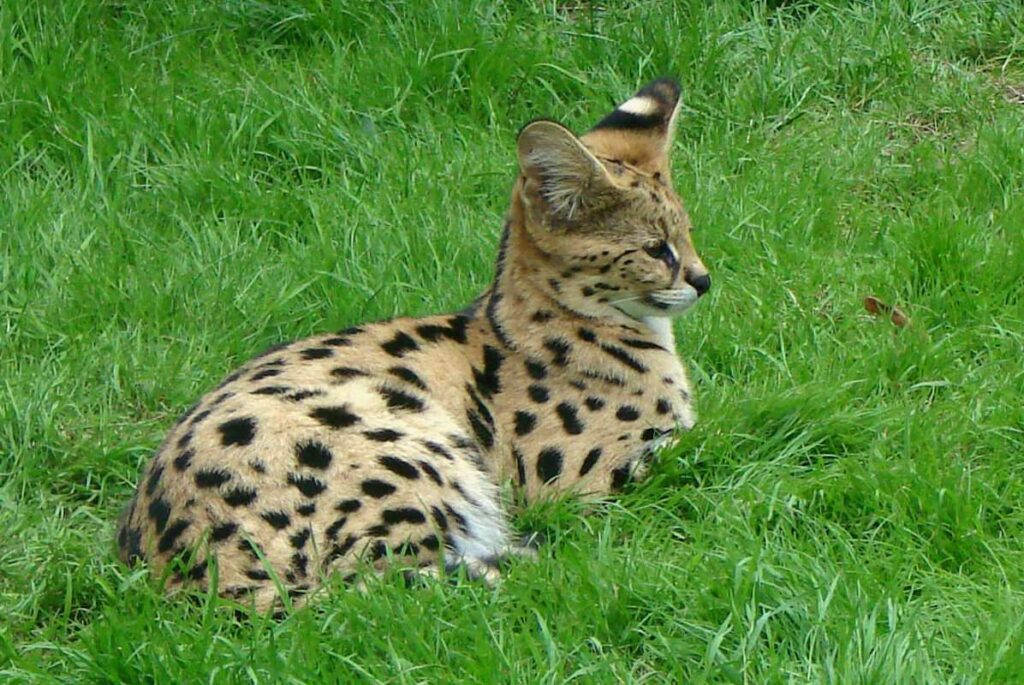
The serval, in particular, has become a symbol of this dangerous trend in France. The African wildcat appears elegant and mysterious – larger than a domestic cat, with long legs and spotted fur. This is exactly what makes it appealing. But a serval remains a predator. It marks its territory, destroys furniture, reacts aggressively, and belongs neither in an urban apartment nor in an influencer video.
And then? Then often comes the rude awakening. Many buyers realize too late that they have not acquired an extraordinary pet but an unpredictable wild animal. Rescue centers regularly report abandoned exotic animals. Some animals languish in small cages; others simply end up on the street. A bit like a broken luxury trend – but with living beings.
Social networks play a central role in this. Traders skillfully disguise their offers. Instead of “sale,” there is “adoption” or “baby available.” The illegal trade hides behind harmless terms and cute videos. Platforms now function like digital shop windows – fast, anonymous, and difficult to control.
The real engine of the business, however, remains demand. As long as exotic animals are seen as status symbols, smugglers find buyers. A fennec fox in the living room is supposed to convey exclusivity, a serval in the garden is meant to impress. Behind this lies the same logic as with luxury watches or sports cars – only here a living ecosystem is turned into a commodity.
Police and customs are tightening controls, but the market moves faster than many laws. Encrypted messengers, parcel shipping, and different regulations within Europe greatly facilitate smuggling. The cat-and-mouse game runs around the clock.
The truth is actually out in the open: A fennec fox is not a cuddly toy from the desert. A serval is not a designer pet. Wild animals belong neither in Instagram stories nor on living room sofas. Their place is where they have lived for millennia – in the wild.