 Subscription required
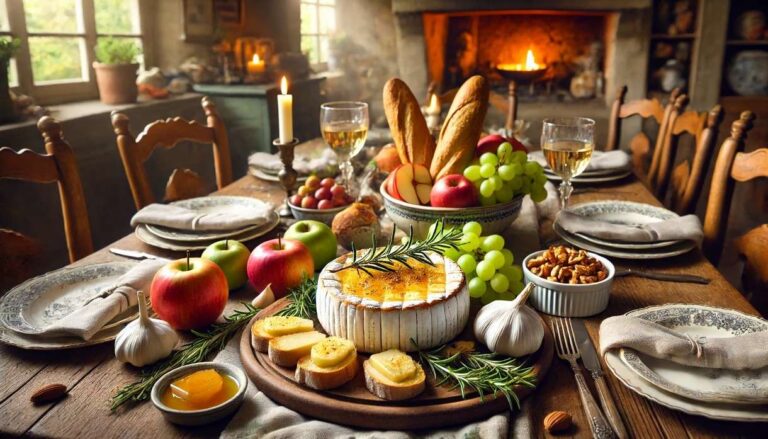
Camembert au Four: A Classic from Évreux and Normandy The small town of Évreux may not be the first place that comes to mind when thinking of culinary classics, but it has a claim to one of France’s most beloved cheeses: Camembert. The baked camembert, or "Camembert au four," is a simple yet elegant dish that showcases the creamy heart of this Normandy cheese and has become a staple on many menus from village bistros to Parisian brasseries. Origin stories of Camembert are as rich as the cheese itself. While Marie Harel of the Pays d’Auge is often credited with inventing the original Camembert in 1791, Évreux developed a strong association with the cheese through local dairies and markets. The town’s proximity to the lush pastures of Normandy helped foster a regional identity tied to cow’s milk cheeses. Over time, small producers in and around Évreux refined their techniques, contributing to the variety and reputation of Camembert available today. Camembert au four is a dish born of convenience and conviviality. A whole wheel of Camembert is scored, sometimes studded with garlic and rosemary, and baked until molten. Served with crusty bread, charcuterie, cornichons and a robust red wine, it turns a modest cheese into a centerpiece for sharing. Its appeal lies in the contrast between the golden, sometimes aromatic rind and the lusciously runny interior that oozes as soon as the rind is breached. Culinary purists will insist on quality: a genuine Normandy Camembert made from raw milk carries a depth of flavor that industrial counterparts rarely match. Seasonality matters too; the pasture-fed cows of spring and summer produce milk that yields a more complex cheese. Yet modern variations proliferate—some bakers wrap the wheel in puff pastry, others add truffles, apples or local ciders to the baking pan—each adaptation reflecting local tastes and creativity. The popularity of Camembert au four also reflects broader trends in dining: a preference for sharing plates, rustic presentation, and the search for comforting yet social meals. It bridges generations—grandparents recall simple family suppers, while younger diners post glossy images of molten Camembert to social media, keeping the tradition alive in new forms. There are debates about authenticity. Labeling laws and AOC (Appellation d’Origine Contrôlée) protections have long shaped how Camembert is produced and marketed. While the AOC Camembert de Normandie is made from raw milk under strict rules, much of the Camembert consumed globally is made from pasteurized milk and produced outside Normandy. For many diners, however, the baked experience matters more than the label: what counts is the texture, the aroma, and the shared pleasure around the table. Évreux’s ties to Camembert are a reminder of how local food cultures can influence national identity. Normandy cheeses are not just products; they are carriers of landscape, tradition and community. Whether served in a modest bistro in Évreux or at a dinner party in another country, Camembert au four remains a testament to simplicity done well—a wheel of cheese, a hot oven, and the pleasure of breaking bread together.
This area is part of France Premium. Choose a cuisine subscription or complete access to open all recipes and food stories.