
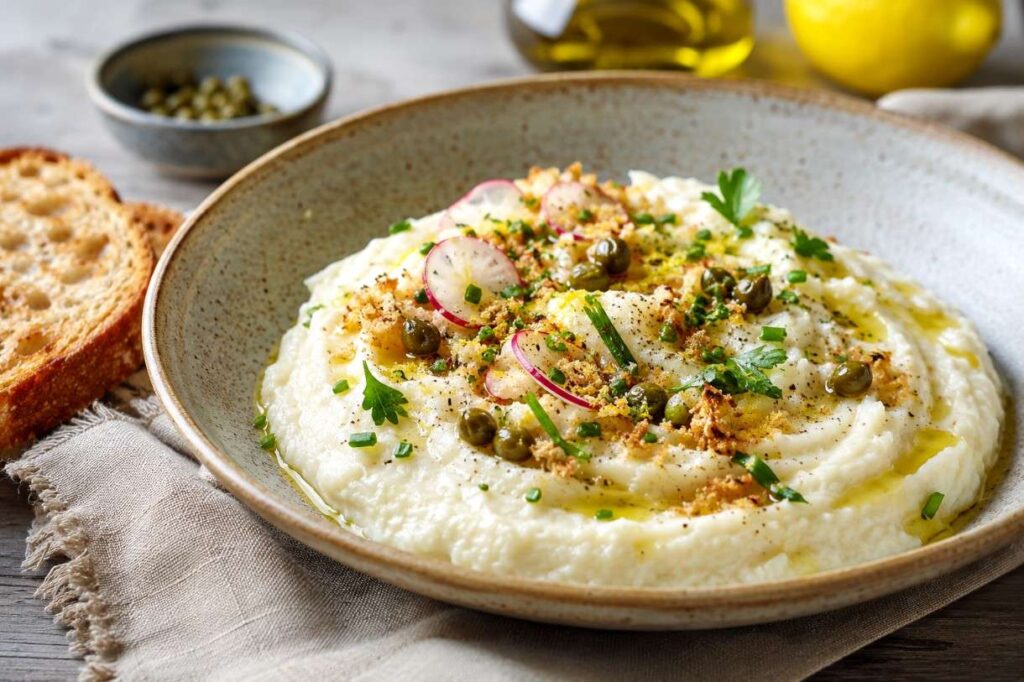
Between Tradition and Modernity: The Renaissance of Brandade de Morue
Brandade de Morue is one of the great classics of southern French cuisine. Originally, the dish comes from Nîmes in Occitania and originated at a time when salted cod was one of Europe’s most important trade goods. Over centuries, from just a few ingredients, one of the best-known specialties of the French Mediterranean region developed: a creamy emulsion of cod, olive oil, and later often potatoes.
While traditional recipes often seem heavy and rustic, Brandade today is experiencing a remarkable rebirth. Modern chefs focus on a lighter texture, finer aromas, and a more elegant presentation. The new generation of Brandade combines French craftsmanship with contemporary lightness, turning a historic dish into a refined appetizer or a stylish main course.
The special thing about Brandade is its versatility. It can be served as a spread, as a gratin, as a filling for vegetables, or as part of a modern tasting menu. At the same time, it retains its unmistakable character: the mild taste of cod, the velvety consistency, and the aromatic depth of garlic and olive oil.
What Makes a Good Brandade?
The name derives from the Provençal verb “brandar,” which means “to stir” or “to toss.” This continuous blending of ingredients forms the heart of the dish.
A high-quality Brandade is characterized by the following features:
- silky, creamy consistency
- balanced fish flavor without dominance
- delicate garlic note
- fresh herbal accents
- harmonious ratio between potato and fish
- elegant emulsion of olive oil and milk
Modern interpretations often add lemon zest, fresh herbs, or toasted spices to create additional freshness and complexity.
Modern Brandade de Morue with Lemon Oil, Roasted Garlic, and Herbs
For 4 People
Ingredients
For the Brandade
- 400 g cod fillet (alternatively desalinated stockfish)
- 350 g starchy potatoes
- 120 ml high-quality olive oil
- 120 ml whole milk
- 1 small head of garlic
- 1 organic lemon
- 2 tbsp crème fraîche
- 1 tbsp finely chopped chives
- 1 tbsp finely chopped parsley
- sea salt
- white pepper
For the Lemon Oil
- 3 tbsp olive oil
- zest of half an organic lemon
For the Topping
- toasted panko breadcrumbs
- fresh herbs
- some capers
- thinly sliced radishes
Preparation
1. Roast the Garlic
Preheat the oven to 180 °C (356 °F).
Cut off the top tip of the garlic head, drizzle with some olive oil, and wrap in aluminum foil. Bake for about 35 to 40 minutes until the cloves are soft and caramelized.
Let cool slightly, then squeeze out the soft garlic pulp.
2. Prepare the Potatoes
Peel the potatoes and cook them in salted water until soft.
Drain and press through a potato ricer while still hot.
Keep warm.
3. Cook the Cod
Poach the fish in gently simmering water or fish stock for about 8 minutes.
Then carefully flake apart and check for bones.
4. Make the Emulsion
Warm the milk.
Put the potatoes, fish, and roasted garlic in a bowl.
Gradually incorporate the warm milk and olive oil.
Stir continuously until a smooth, airy mixture forms.
Fold in crème fraîche, lemon zest, and herbs.
Season with salt and white pepper to taste.
5. Prepare the Lemon Oil
Mix olive oil with fresh lemon zest and let infuse for 10 minutes.
6. Plating
Place the Brandade loosely into deep plates or small bowls.
Drizzle with some lemon oil.
Sprinkle toasted panko breadcrumbs on top and garnish with capers, radish slices, and fresh herbs.
Why This Modern Version Works
The classic Brandade often features a very strong garlic note and a high proportion of potatoes. The modern version takes a different approach:
Roasted garlic develops sweet, almost nutty aromas. This creates more depth without overpowering the delicate fish flavors.
The lemon zest adds freshness and lightness to the dish. Especially in warm months, this makes the Brandade feel much more contemporary.
The crunchy panko breadcrumbs provide a welcome textural contrast to the creamy base. Capers and radishes contribute extra freshness and a slight acidity.
Perfect Accompaniments
Excellent companions to modern Brandade include:
- grilled green asparagus
- marinated fennel
- young mixed salad with herb vinaigrette
- toasted sourdough slices
- confit cherry tomatoes
- grilled lemons
As a wine pairing, mineral-rich white wines from southern France or the Mediterranean region are particularly suitable, as they enhance the salty and fresh elements of the dish.
Conclusion
Brandade de Morue impressively shows how timeless French cuisine can be. From a simple fisherman’s dish, it has become a culinary icon over centuries. The modern interpretation preserves the soul of the original while adding lightness, freshness, and elegant contrasts. The result is a dish that feels both traditional and contemporary—perfect for today’s French cuisine, which combines enjoyment, seasonality, and sophistication.