
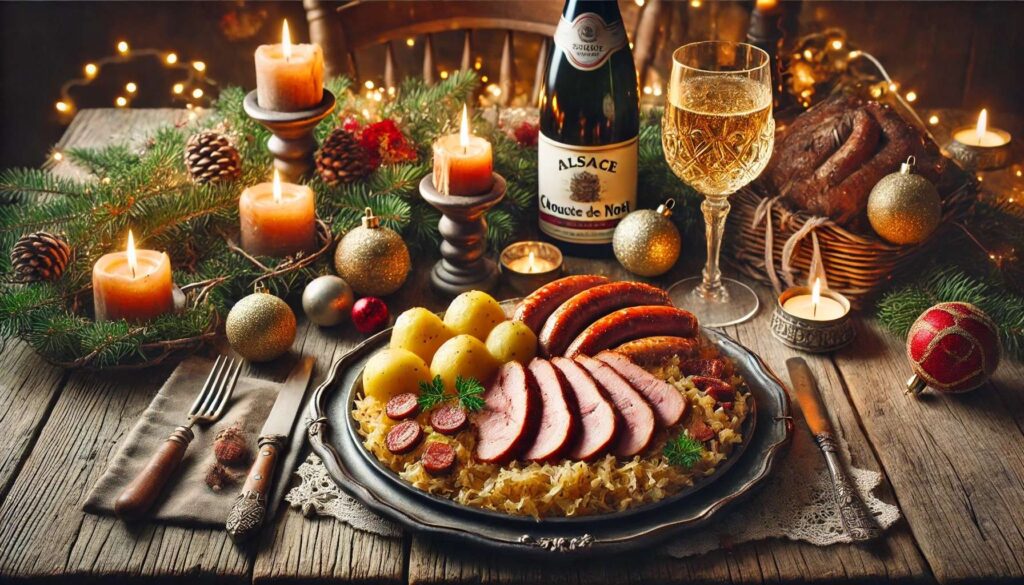
Alsace, this picturesque region in northeastern France, is known for its Christmas markets, half-timbered houses, and a distinctive cuisine. During the Christmas season, Alsace shines with a special radiance, and one of the iconic dishes of this region is Choucroute de Noël, the festive version of sauerkraut.
The History and Origin of Choucroute de Noël
Sauerkraut, known in Alsatian as Choucroute, is one of the oldest and best-known dishes of the region. Its roots go back to the Middle Ages, when sauerkraut was one of the best methods to preserve vegetables through fermentation. With the introduction of white cabbage from Asia by the Huns in the 5th century, sauerkraut quickly became a staple food in Central Europe.
In Alsace, Choucroute was celebrated early on as a symbol of regional identity. While originally a simple dish for farmers, it was refined over time. During the Christmas season, Choucroute de Noël developed – a luxurious version with high-quality meat, spices, and sometimes even seafood such as fish or oysters.
The festive Choucroute reflects the cultural connection of Alsace: the German tradition of fermentation combined with French sophistication. It symbolizes warmth, abundance, and the community spirit of the Christmas celebration.
Choucroute de Noël: Tradition Meets Elegance
The Christmas version differs from the everyday version by its refined ingredients. Besides the classic sauerkraut, the dish often contains fine types of meat such as smoked duck breast, pork tenderloin, or game sausages. Chestnuts, dried fruits, or apples are added to give the dish a sweet note. It is often served with a glass of Alsatian white wine like Riesling or Gewürztraminer.
Recipe for Choucroute de Noël
Ingredients (for 6 people)
For the sauerkraut:
- 1.5 kg sauerkraut (mild, not too salty)
- 200 ml Riesling (or another dry white wine)
- 300 ml poultry broth
- 2 onions, finely chopped
- 2 apples, peeled and cut into slices
- 2 garlic cloves, finely chopped
- 2 bay leaves
- 5 juniper berries
- 1 tsp caraway seeds
For the meat:
- 300 g smoked duck breast
- 300 g pork tenderloin (or cured pork)
- 4 Alsatian sausages
- 4 Merguez sausages (optional for a spicier note)
- 300 g smoked bacon
- 200 g cooked chestnuts (optional)
Side dishes:
- Potatoes (e.g. waxy varieties like Charlotte)
Preparation
- Prepare the sauerkraut:
Rinse the sauerkraut under running water to remove excess acidity. Let it drain well. - Sauté the vegetables:
Sauté onions and garlic in a large pot with some butter or goose fat. Add the apple slices and briefly sauté with them. - Season the sauerkraut:
Add the sauerkraut, bay leaves, juniper berries, and caraway seeds to the pot. Deglaze with the white wine and broth. Mix everything well. - Add the meat:
Place the bacon and pork tenderloin on top of the sauerkraut. Cover the pot with a lid and let everything simmer over low to medium heat for about 1.5 hours. - Sausages and duck breast:
Add the sausages and smoked duck breast to the sauerkraut about 20 minutes before the end of the cooking time so they do not fall apart. - Cook the potatoes:
While the sauerkraut is cooking, boil the potatoes in salted water until they are soft. - Serve:
Arrange the sauerkraut in a large serving bowl. Decoratively place the meat and sausages on top. Garnish with the boiled potatoes and chestnuts.
Serving Suggestions and Wine Recommendation
Choucroute de Noël is best served with a dry Alsatian white wine such as Riesling or Pinot Gris. The acidity of the wine perfectly complements the mild acidity of the sauerkraut and the richness of the meat. A slightly sweet Gewürztraminer is ideal when the sauerkraut is prepared with chestnuts or dried fruits.
A Piece of Alsatian Christmas on the Plate
The Choucroute de Noël is more than just a dish – it is a symbol of the warmth and generosity of the Christmas season in Alsace. With every bite, the rich history and tradition of the region come alive, from humble origins to culinary elegance. So why not bring a bit of Alsatian Christmas magic into your own kitchen this year? Merry Christmas – or as they say in Alsace, “Joyeux Noël!”